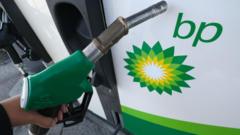
The pump handle is cold, greasy, and indifferent. It clicks shut with a metallic snap that signals another fifty pounds gone from a digital balance that feels increasingly like a work of fiction. Most people standing on the rain-slicked forecourts of middle England or the humid asphalt of the American Midwest don't look toward the Persian Gulf when they hear that click. They look at the price per gallon. They look at the grocery list they might have to trim. They feel the friction of a world that has suddenly become more expensive to inhabit.
But several thousand miles away, the horizon is glowing for all the wrong reasons. For a different look, see: this related article.
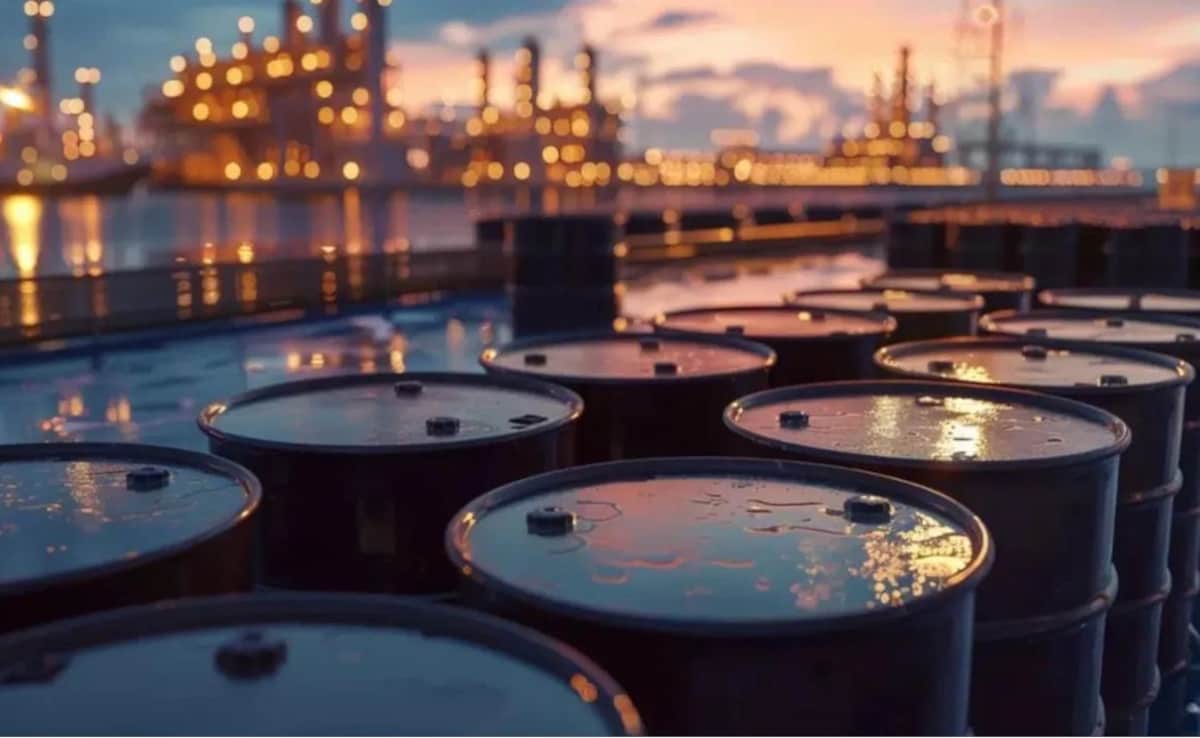
Oil is a ghost. It is the invisible passenger in every delivery truck, the hidden ingredient in every plastic toy, and the silent partner in every heated home. When conflict erupts in the Middle East—specifically the recent escalations involving Iran—that ghost begins to scream. Supply chains don't just tighten; they seize. Risk becomes a currency. And as the geopolitical temperature rises, the price of Brent Crude follows suit, dragging the global economy upward into a fever dream of volatility.
BP recently pulled back the curtain on what this chaos looks like from the top floor. The numbers are staggering. Profits haven't just grown; they have more than doubled, surging to a level that feels disconnected from the lived reality of the person holding that cold pump handle. It is a mathematical paradox. While the world shudders at the prospect of regional war, the balance sheets of the energy giants have never looked healthier. Related insight on the subject has been provided by The Motley Fool.
The Anatomy of a Windfall
To understand how a nightmare in the Strait of Hormuz turns into a dream for shareholders, you have to look at the machinery of the global market. Think of it like a theater where the exits have been narrowed. The moment a spark hits the stage—in this case, the heightened tension between Iran and its neighbors—the crowd rushes for the doors. Demand doesn't change, but the fear of a shortage creates a frantic, artificial value.
BP’s underlying replacement cost profit, the industry’s standard for measuring success, hit $8.2 billion in a single quarter. For context, that is roughly $90 million every single day. This isn't because they found a secret lake of oil or invented a new way to fuel the planet. It is because the world’s existing supply became more precious due to the threat of its destruction.
The company pointed to "exceptionally strong" oil trading as the engine behind these results. Trading is a polite word for navigating the waves of human anxiety. When the Suez Canal feels vulnerable or Iranian tankers are shadowed by warships, the price of a barrel fluctuates wildly. In those fluctuations, there is a fortune to be made for those with the infrastructure to move it.
The Invisible Stakes at the Kitchen Table
Consider a hypothetical family in a drafty terrace house in Leeds. Let’s call them the Millers. They don't track the movements of the Iranian Revolutionary Guard. They don't read the daily briefings on drone strikes or diplomatic failures in Tehran. But the Millers are the primary stakeholders in this conflict.
When BP announces a doubling of profit, the Millers see it as a direct extraction from their future. Every penny added to the cost of a liter of petrol cascades through their life. The bread they buy is more expensive because the ovens are gas-fired and the delivery vans are diesel-heavy. Their winter heating bill isn't just a utility cost; it is a choice between comfort and debt.
This is the emotional core of the energy crisis. We are witnessing a massive transfer of wealth from the private pockets of the many to the corporate coffers of the few, facilitated by a war that no one asked for. It creates a profound sense of powerlessness. You cannot opt out of the global energy market. You cannot choose to ignore the price of oil any more than you can choose to ignore the weather.
The Green Pivot on a Tightrope
BP finds itself in an awkward position of its own making. For years, the company has marketed itself as "Beyond Petroleum," a leader in the transition to renewable energy. They promised to shrink their carbon footprint and invest heavily in wind, solar, and hydrogen.
But there is a gravitational pull to $100-a-barrel oil.
When the profits from fossil fuels are this intoxicating, the incentive to move toward low-margin green energy weakens. It is difficult to tell shareholders you are spending billions on a ten-year wind farm project when you could be reaping immediate rewards from an old oil rig in the North Sea. The Iran conflict has provided a brutal reminder: the world is still addicted to the old stuff, and the old stuff is where the money lives.
The company has actually tweaked its strategy recently. They have slowed their planned reduction in oil and gas production. They are leaning back into the very thing they promised to leave behind. It’s a pragmatic business move, certainly. But for anyone watching the climate clock, it feels like a retreat. The windfall from the war acts as a buffer that allows them to delay the inevitable, painful transition to something cleaner.
The Shadow of the Strait
The geography of this profit is specific. The Strait of Hormuz is a narrow chink in the world’s armor. About a fifth of the world’s total oil consumption passes through that tiny stretch of water. When Iran threatens to close it, or when Western powers increase their naval presence, the global nervous system twitches.
The volatility is the point. If oil prices were high but stable, the economy could eventually adjust. But the Iran war—and the constant "will they, won't they" of escalation—creates a jagged line on the charts. This uncertainty is what fuels the trading profits. It is the gambling of the energy world, where the house (the big oil firms) almost always wins because they own the cards and the table.
We often talk about these events in the language of "geopolitical risk," a sterile phrase that masks the blood and fire on the ground. For the executives in London or Houston, the war is a line item. For the sailor on a tanker or the civilian in a targeted city, it is an existential threat. This disconnect is the defining feature of the modern global economy.
The Question of the Windfall Tax
As BP’s profits soared, the political pressure reached a boiling point. Calls for a windfall tax—a one-time levy on these "unearned" profits—became a roar. The logic is simple: if a company makes billions not through innovation, but through the luck of a rising commodity price driven by war, should that money be used to help the people suffering from the resulting inflation?
Governments have nibbled at the edges of this, but the companies argue that high taxes discourage investment in domestic energy security. It is a high-stakes game of chicken. If the taxes are too high, the companies move their capital elsewhere. If they are too low, the public grows increasingly resentful of a system that rewards conflict and punishes the consumer.
The reality is that these profits are essentially a tax on the public anyway. We are paying it at the supermarket, at the car dealership, and in our tax returns. We are paying for the privilege of a world that hasn't yet figured out how to move past the combustible politics of the 20th century.
The Sound of the Shift
Eventually, the rain stops on that forecourt. The driver replaces the pump and drives away. The car is a little heavier, the bank account a little lighter, and the sky remains a bruised, uncertain purple.
We are living through a period where the old world refuses to die and the new world is struggling to be born. The billions of dollars flowing into BP's accounts are a symptom of that struggle. They are a monument to our dependence. They are a ledger of the cost of conflict.
There is no easy villain here, only a system that functions exactly as it was designed to. It captures the value of scarcity. It monetizes risk. It turns the smoke of a distant war into the cold, hard certainty of a dividend check.
The ghost is still in the machine. It’s in the heater humming in the corner. It’s in the tires on the road. It’s in the very air we breathe. And as long as the horizon in the East continues to glow with the fires of old grudges, the click of the pump will continue to sound like a heartbeat, steady and expensive, reminding us exactly who is paying for the peace, and who is profiting from the war.