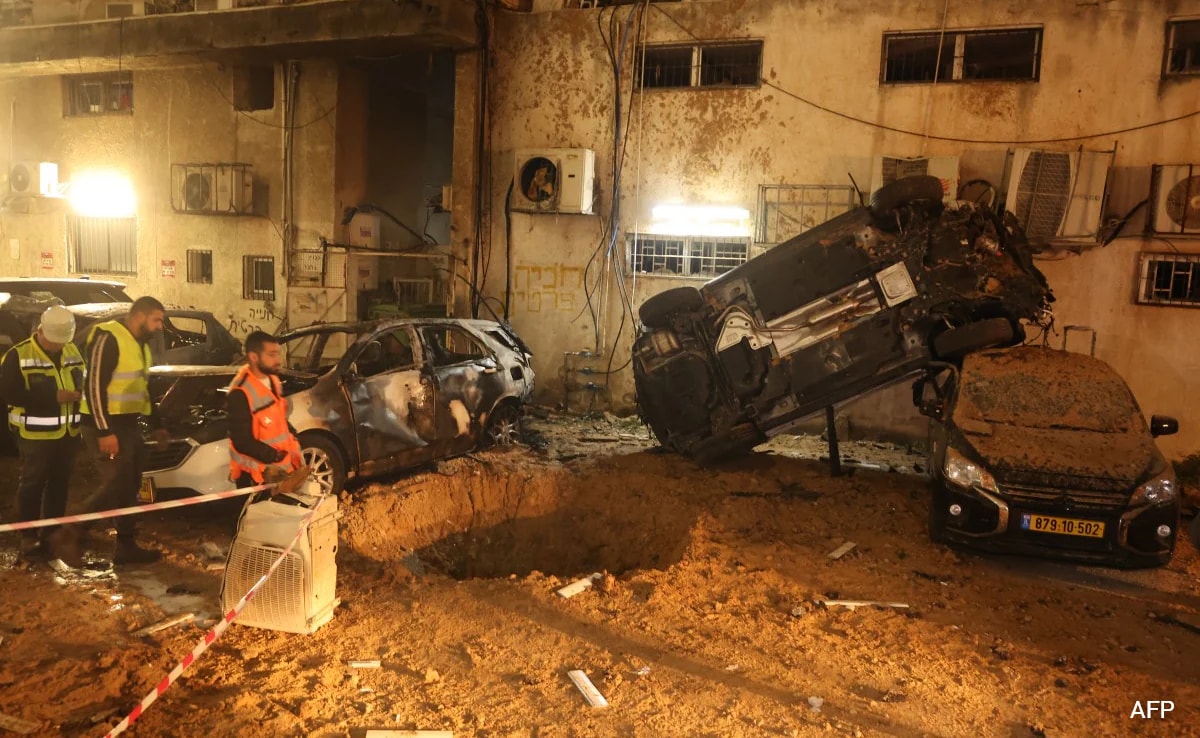
The current expansion of hostilities across the Middle East is not a series of isolated skirmishes but a synchronized stress test of regional security architectures. As of Day 16, the transition from localized containment to a multi-front kinetic exchange indicates that the "threshold of deniability" has collapsed. The simultaneous targeting of US assets in Iraq and explosions in Manama represent a deliberate shift in the escalation ladder, moving from proxy-led harassment to high-frequency, multi-vector operations designed to overstretch Western interception capabilities.
The Triad of Proportionality: Mapping the Conflict Drivers
To understand the tactical shifts in Baghdad and Bahrain, one must analyze the conflict through three specific operational pillars:
- The Interdiction of Logistics: Attacks on bases like those in Baghdad are rarely intended to seize territory. They function as high-frequency interruptions to the "Logistics-to-Lethality" ratio. By forcing US and coalition forces into a permanent defensive crouch (Force Protection Delta), the attacker successfully degrades the ability of these units to project power or provide intelligence support elsewhere.
- The Signal-to-Noise Ratio in Bahrain: Manama serves as the headquarters for the US Navy’s 5th Fleet. Explosions or security breaches in this specific geography are high-value psychological operations. They signal to global energy markets and regional allies that the maritime security umbrella—the primary guarantor of the world’s oil flow through the Strait of Hormuz—is porous.
- The Persistence of the Proxy Buffer: Iran’s strategic depth relies on the "Externalized Attrition" model. By utilizing local militias to execute these strikes, the primary state actor avoids the direct cost of war while imposing maximum operational costs on the adversary.
Tactical Calculus of the Baghdad Base Strikes
The targeting of military installations in Iraq follows a refined "Salami Slicing" strategy. Instead of a singular, massive strike that would trigger a decisive conventional response, the strategy employs a high volume of low-cost munitions (drones and 107mm rockets). This creates a specific economic and psychological asymmetry.
The Cost-Exchange Ratio
The financial burden of defense is significantly higher than the cost of offense in this theater. A standard loitering munition utilized by regional militias may cost between $10,000 and $20,000. Intercepting that same munition using a Patriot PAC-3 or a NASAMS battery costs between $2 million and $4 million per engagement.
- Operational Attrition: The goal is to deplete the interceptor stocks of US and allied forces faster than they can be resupplied.
- Sensor Saturation: Multiple simultaneous launches from different vectors are designed to "blind" or overwhelm automated tracking systems, increasing the probability of a "leaking" round hitting a high-value target (fuel depots or barracks).
The physical damage to the base is often secondary to the political friction it creates between the US and the Iraqi government. Each strike reinforces the narrative that the presence of foreign troops is a magnet for instability, rather than a deterrent against it.
The Manama Dimension: Maritime Sovereignty and Economic Chokepoints
Bahrain occupies a unique position in the regional security matrix. As the host of the 5th Fleet and a key signatory of the Abraham Accords, it is the most vulnerable node in the Western-aligned security chain. The reports of explosions in Manama, whether kinetic or sabotage-based, target the Commercial Confidence Index.
The Persian Gulf facilitates the transit of approximately 20% of the world’s petroleum and liquefied natural gas (LNG). The mechanism of escalation here is not territorial conquest but the War of Insurance Premiums. When security in Manama is compromised:
- War Risk Surcharges for shipping vessels spike immediately.
- Operational Friction increases as tankers are forced to adopt evasive routing or wait for armed escorts.
- Capital Flight begins to affect the local diversification economies that rely on stability to attract foreign direct investment.
This is a direct application of "Non-Linear Warfare," where the goal is to destabilize the economic foundations of the adversary's allies to force a diplomatic concession.
The Israel-Iran Direct Engagement Threshold
The broader conflict has moved past the "Shadow War" phase. We are now observing a transition into Active Deterrence Decay.
Israel’s strategic objective is the "Decapitation of Capability"—targeting the command and control structures of the IRGC and its affiliates to reset the clock on their precision-strike capabilities. Conversely, the Iranian strategy is "Strategic Patience through Proliferation." By spreading missile technology across Yemen, Iraq, Lebanon, and Syria, they ensure that Israel cannot achieve a definitive victory through singular strikes.
The Feedback Loop of Miscalculation
The primary risk in this Day 16 environment is the Information Gap. In high-tempo kinetic environments, the time between an event and the retaliatory decision is compressed.
- Case A: A "lucky" rocket hit on a US barracks in Iraq results in double-digit casualties.
- Response: The US is politically forced to strike Iranian territory or high-level assets directly.
- Case B: An Israeli strike in Syria kills a high-ranking coordinator.
- Response: A swarm drone attack on Haifa or a maritime blockade in the Red Sea.
These are not linear steps but a recursive loop where each side misinterprets the other’s "red lines."
Logistics of the Northern Front
While Baghdad and Manama dominate the immediate news cycle, the structural integrity of the conflict rests on the Israel-Lebanon border. This is the only theater capable of escalating into a full-scale conventional war within hours.
The density of Hezbollah’s rocket inventory—estimated at over 150,000 projectiles—creates a "Saturation Constraint" for the Iron Dome. If the conflict in Iraq and Bahrain is a series of "distraction strikes," the northern front is the "existential battery." Any significant movement of IDF forces away from Gaza toward the north signals that the intelligence community believes a multi-front breach is imminent.
Structural Limitations of Western Containment
The current US and allied strategy relies on Reactive Interception, which has two fundamental flaws:
- Finite Interceptor Inventory: Global production of high-end air defense missiles cannot match the rapid-fire production of low-end suicide drones.
- Political Constraints on Preemption: Western powers are currently unwilling to strike the "head of the snake" (the primary supplier) for fear of a global energy shock. This grants the instigator the "First Mover Advantage" in every tactical exchange.
The current geopolitical architecture is built on the assumption that state actors will act rationally to preserve economic interests. However, in a "War of Ideological Attrition," the value of the economic status quo is lower than the value of shifting the regional power balance.
The Strategic Play: Hardening the Perimeter
For observers and stakeholders, the next 72 hours are critical for monitoring the Deployment of Heavy Assets. If the US moves carrier strike groups closer to the coast of Yemen or increases its footprint in Western Iraq, it indicates a shift from "Active Defense" to "Punitive Deterrence."
The immediate tactical priority for Western forces will be the establishment of an Integrated Air and Missile Defense (IAMD) system that connects Bahraini, Saudi, and Emirati sensors. Without this unified data layer, the "leaker" drone remains the most effective weapon in the regional arsenal.
The conflict has moved into a phase where the frequency of attacks is the primary metric of success for the aggressor. By maintaining a constant state of low-to-medium intensity kinetic activity, they effectively paralyzed the normalization processes and forced a re-evaluation of the entire Middle Eastern security map. The move now is to identify which side possesses the industrial capacity to sustain this rate of expenditure over a prolonged, multi-month horizon.