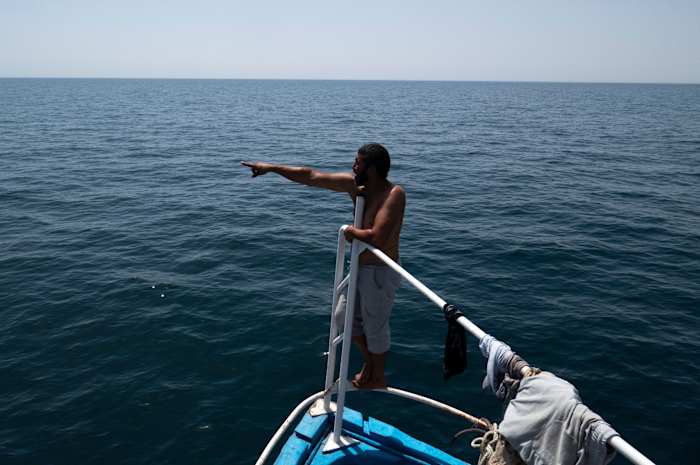
Every time a wooden hull splinters off the Tunisian coast, the media machine grinds into a predictable, performative routine. Two bodies recovered. Twelve missing. Hands wring. Editorial boards publish somber pieces about tragedy on the high seas, demanding more search-and-rescue funding or stricter policing of smuggling networks.
They are arguing about the wrong catastrophe. For a different view, check out: this related article.
Focusing exclusively on the immediate wreckage of a capsized migrant boat is a symptom of intellectual laziness. It treats a systemic structural failure as an isolated maritime accident. I have watched analysts, policymakers, and journalists hyperventilate over individual sinking incidents while completely ignoring the economic pressure cooker that manufactures these perilous voyages in the first place.
Stop treating migration as a localized emergency. It is a persistent market response. Further insight regarding this has been published by BBC News.
The Flawed Premise of Border Enforcement
The lazy consensus in modern political discourse is simple: if you tighten borders, crack down on smugglers, and deploy more coastal patrols, you stop irregular migration.
History and basic economics scream the exact opposite.
When you choke off safe, legal channels and militarize coastlines without altering the underlying push factors, you do not reduce the flow of people. You simply change the logistics. You make the journeys more expensive, more clandestine, and exponentially more lethal. Smugglers adapt. They use flimsier boats, pack them tighter, and launch them into rougher waters to dodge surveillance.
Blaming smugglers for capsized boats is like blaming real estate agents for high housing prices. Smugglers are a symptom of unmet demand. As long as economic desperation at home outweighs the risk of drowning at sea, people will pay whatever it takes to cross.
The Economics of Desperation
Let us look at the data that mainstream coverage consistently glosses over. The countries feeding the Central Mediterranean route are not suffering from momentary bad luck. They are caught in prolonged fiscal stagnation, crippled by inflation, structural unemployment, and domestic instability.
When a young worker in North Africa or sub-Saharan Africa faces zero upward mobility, a lifetime of suppressed wages, and collapsing local currencies, the calculus changes. Risking life on a makeshift dinghy stops looking like a reckless gamble and starts looking like the only rational investment left.
Policymakers love to talk about humanitarian aid packages, but these funds usually arrive with strings attached, funneling straight into bureaucratic security apparatuses rather than grassroots economic development. We spend billions on border hardware to keep people out, while refusing to invest a fraction of that capital into building sustainable economic engines where they start.
Dismantling the Rescue Narrative
Another comforting myth is that increased search-and-rescue operations act as a humanitarian fix.
Do not misunderstand me. Saving lives at sea is a non-negotiable moral duty. Anyone arguing against pulling drowning human beings from the water has lost their humanity. But treating rescue operations as a long-term solution is policy malpractice.
Rescuing survivors without addressing the transit pipeline is like bailing out a sinking ship with a teaspoon while refusing to patch the hull. It creates a perpetual loop of departure, interception, rescue, and repeat, all while human smugglers rake in profits and desperate lives are left at the mercy of geopolitical ping-pong.
The honest truth that neither the left nor the right wants to admit is that migration cannot be stopped by walls, and it cannot be solved by rescue ships alone. It requires economic integration, labor mobility frameworks that match market demands, and brutal honesty about global wealth inequality.
The Real Actionable Shift
If we genuinely want to stop bodies from washing up on Mediterranean shores, we have to flip the script entirely.
First, we must dismantle the fiction that border walls protect nations. They protect politicians from accountability, nothing more.
Second, we need to legalize and regulate circular labor migration. If workers can travel legally for seasonal employment and return home with capital, the black-market smuggling industry collapses overnight. People do not pay thousands of dollars to risk their lives on leaky boats when they can buy a cheap ferry ticket and a temporary work visa.
Third, stop subsidizing corrupt local governance under the guise of border management deals.
The next time a headline breaks about a capsized boat off Tunisia, do not just read the casualty count and feel sad. Recognize it for what it is: the inevitable toll of a broken global system that prefers building barriers over building futures.
Until we fix the market, the boats will keep launching.