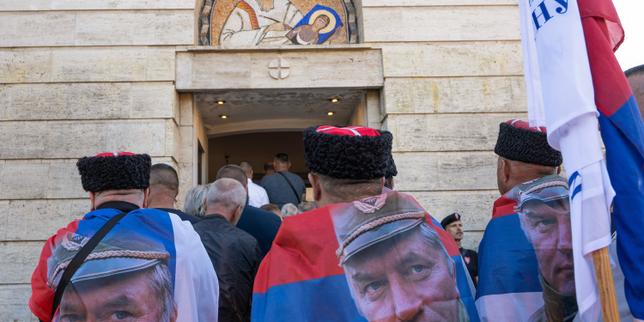
You cannot understand modern Balkan politics if you ignore how the past refuses to stay buried in Belgrade. Thousands of people have gathered in the Serbian capital to pay tribute following the death of Ratko Mladic, the Bosnian Serb military leader convicted of genocide and crimes against humanity.
For outsiders, the scenes of crowds lining up outside churches, flags draped over coffins, and public military tributes look like an obvious PR disaster for a country supposedly chasing European Union membership. But on the ground, the reality is far more complex and troubling. It exposes a deep chasm between official diplomatic goals and the raw, unfiltered nationalist sentiment still pulsing through streets from Belgrade to Banja Luka.
The Anatomy of a Contested Legacy
Mladic wasn't just a general. To a significant portion of the public, he remains the "Butcher of the Balkans" who orchestrated the 1995 Srebrenica massacre—where roughly 8,000 Muslim men and boys were slaughtered—alongside the brutal siege of Sarajevo. Yet, to his supporters who traveled from across the region to flood the capital, he is remembered strictly as a national defender who protected Serbs during the collapse of Yugoslavia.
When his casket arrived via government plane wrapped in national flags and received official honors, it sent an unmistakable message. State institutions and military associations didn't just look the way; they actively participated. Active and retired military officials held a formal ceremony at a Belgrade military site, proving that the romanticization of 1990s militarism goes far beyond street-level graffiti or fringe youth groups.
Diplomatic Fallout and Regional Shockwaves
The international community didn't waste time reacting. European Union enlargement commissioner Marta Kos promptly canceled an upcoming diplomatic visit to Serbia, calling the public glorification completely incompatible with the values underpinning the bloc.
Neighboring leaders raised immediate alarms. Denis Becirovic, a member of Bosnia's presidency, publicly stated that top Serbian leadership was actively identifying with one of Europe's worst mass killers, warning of unpredictable regional consequences.
You have to ask yourself: how can a state claim to pursue European integration while simultaneously allowing military honors for a convicted war criminal? President Aleksandar Vucic chose to steer clear of the physical funeral events due to prior commitments, balancing a tightrope between placating hardline nationalists at home and avoiding total alienation from Western capitals.
What This Means Moving Forward
The events in Belgrade prove that transitional justice has largely failed in the Western Balkans. Generational memory isn't being healed by international tribunals like the one in The Hague; instead, it's being weaponized. Young people born long after the guns fell silent in 1995 are being raised inside a manufactured personality cult, waving banners on highway overpasses and chanting slogans they've inherited rather than questioned.
Until political elites stop winking at nationalism and educational systems start teaching verified court facts rather than street myths, these public spectacles will keep happening. The real crisis isn't just about a funeral. It's about a society that refuses to look its own history in the eye.
Hundreds of Bosnian Serbs attend vigils honoring deceased war criminal Ratko Mladic
This video captures the vigils and public demonstrations held by supporters reacting to the death and legacy of the convicted military leader.
http://googleusercontent.com/youtube_content/1