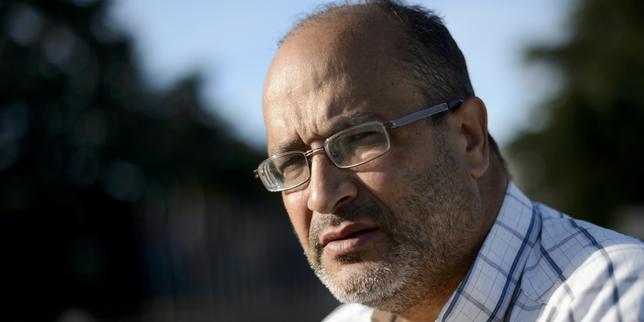
The metal detectors at Tangier airport beep with the same indifferent rhythm as they do anywhere else in the world. Travelers pass through, dragging suitcases filled with souvenirs, summer clothes, and the light anticipation of a Moroccan holiday. But on Sunday evening, when Ali Lmrabet stepped off his flight from Spain, the air in the arrivals terminal grew suddenly heavy.
For Lmrabet, a journalist whose pen has spent decades carving sharp, satirical truths into the stone of Moroccan censorship, crossing this border is never just a journey. It is a gamble. You might also find this similar article insightful: The Quiet Crisis in Kathmandu and the PM Who Walks Away.
By Monday, the gamble had met its familiar, grim reality. The police were waiting.
He was arrested on the spot. By Tuesday, the prosecutor’s office in Casablanca confirmed that his initial detention had been extended. He remains locked in the custody of the National Brigade of the Judicial Police, his freedom measured out in 24-hour increments while authorities dissect years of his online posts. As discussed in detailed coverage by TIME, the implications are notable.
To understand why a 66-year-old dual French-Moroccan national holding a passport from Spain cannot land in his homeland without being met by state security, you have to understand the sheer weight of what he carries. He does not carry weapons. He carries words. And in Morocco, the wrong words can still stop an airport in its tracks.
The Weight of a Satirical Pen
The official charges read like a sterile administrative checklist: "the alleged dissemination of false information harming constitutional institutions" and preliminary inquiries into "slander and defamation." Behind these legalistic phrases lies a long, bruising history.
Lmrabet is not a newcomer to this dance.
Imagine spending your entire life speaking to a home that refuses to hear you, only to find that the moment you try to touch its soil, it reaches out not to embrace, but to restrain. In 2003, Lmrabet was jailed for "offending the king" and undermining the monarchy through his fiercely satirical publication, Demain. Then came 2005, when a court handed down a devastating ten-year ban, forbidding him from practicing journalism on Moroccan territory.
Ten years of silence is an eternity for a writer. It is a quiet eviction from one's own identity.
When the ban finally expired in 2015, the landscape of speech had shifted. The printing presses of Demain were gone, but the internet had built a hundred new avenues. From his exile in Spain, Lmrabet did what any writer with ink in his veins would do. He adapted. He took to social media, using Facebook, X, and online columns to broadcast his unrelenting commentary directly into the pockets of Moroccan citizens.
But the state’s memory is long, and its ears are sharp.
The current investigation stems from a series of digital publications. To the prosecutor's office, these posts represent a systematic campaign of defamation and insults targeting public figures, institutions, and judicial bodies. To Lmrabet's supporters and press freedom organizations like Reporters Without Borders (RSF), they are the vital, albeit provocative, expressions of a dissident who refuses to be housebroken.
The Invisible Stakes of the Border
The mechanics of state control rarely rely on sudden, dramatic gestures. Instead, they function through the slow, exhausting application of pressure. A 24-hour extension of a police custody order seems like a minor procedural detail on paper. In reality, it is a day spent in a cell, away from family, wondering if this detention is the prelude to another years-long prison sentence.
For journalists living in exile, the border is a constant psychological threshold.
"You always believe, perhaps naively, that the passage of time softens the edges of old grudges. But when the handcuffs click into place, you realize the past never actually slept."
This is the silent calculus faced by every exiled dissident. Do you stay safe in a foreign city, shouting into the void of the internet, or do you return to the streets that shaped you, knowing the risks? Lmrabet chose to return.
Morocco today presents a complex, often contradictory face to the world. It is a country of vibrant cultural export, economic ambition, and deep international partnerships. Yet, beneath the polished exterior of its modernizing cities lies a strictly policed line of red lines. Defame a public official, question the territorial integrity of the kingdom, or mock the sacred institutions of the state, and the machinery of the law quickly pivots to face you.
The National Brigade of the Judicial Police in Casablanca is now tasked with reviewing Lmrabet's digital footprint. Every tweet, every shared article, and every satirical comment is being weighed, not just for its truth, but for its capacity to disrupt.
A Waiting Game in Casablanca
As the clock ticks down on this latest extension, Lmrabet’s fate hangs in a delicate balance. He is expected to be presented before the prosecutor once the police finish their questioning.
For the international community and press watchdogs, his arrest is a chilling reminder of the precarity of independent journalism in North Africa. For the Moroccan authorities, it is a matter of law and order, a defense of institutions against what they characterize as destructive, unchecked online hostility.
But beyond the legal briefs and the diplomatic statements, there is a tired writer sitting in a room in Casablanca. He is a man who thought he could simply fly home, step off a plane, and breathe the air of the country he has spent his life writing about.
Instead, he sits and waits, proving once again that for some, the return home is the longest journey of all.

