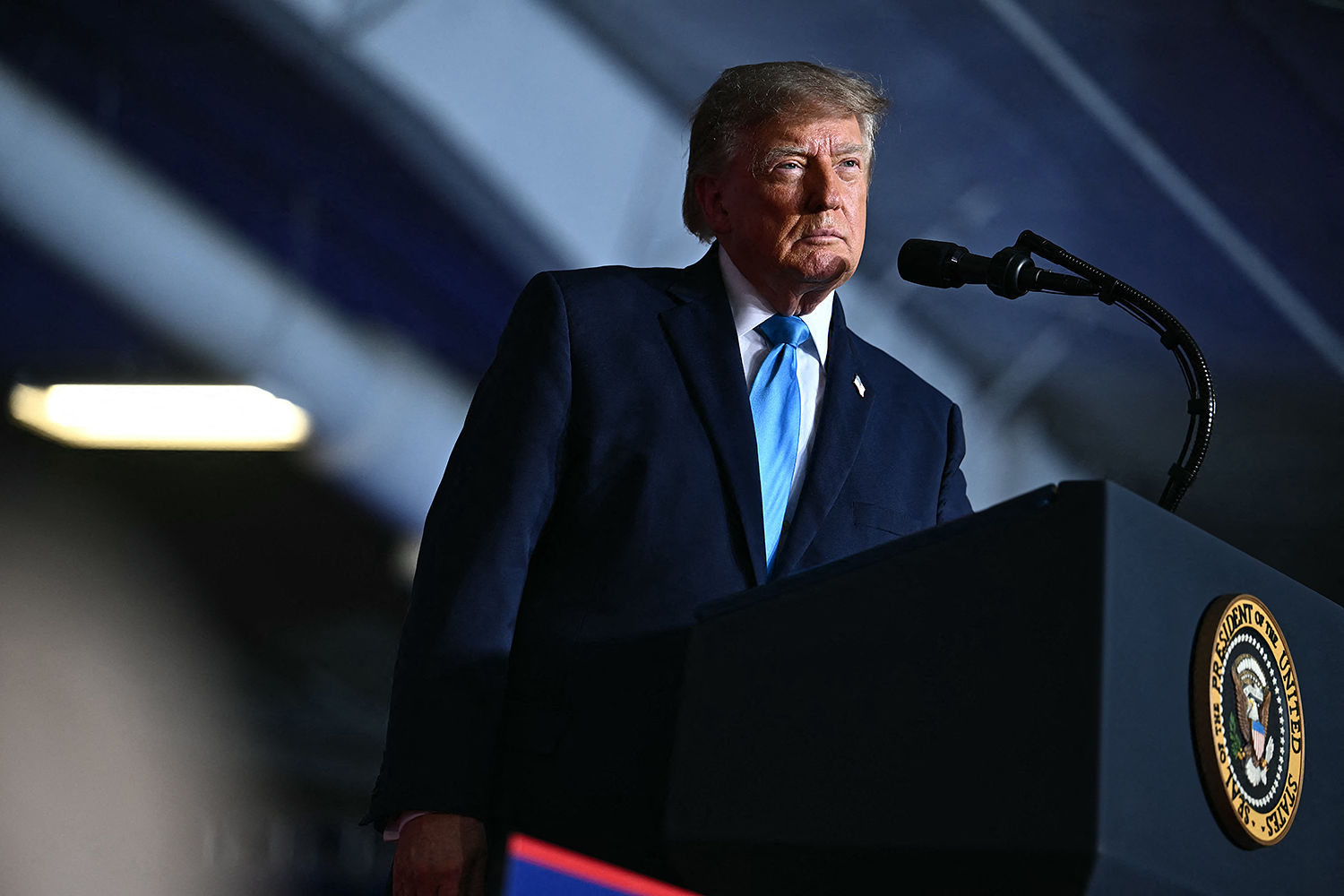
Political rhetoric operating at the intersection of international relations and domestic electoral competition relies heavily on extreme hypothetical scenarios. When high-profile political figures invoke foreign adversaries possessing hypothetical destructive capabilities against domestic metropolitan centers, the immediate reaction from regional officials typically centers on moral condemnation and reputational defense. However, evaluating this dynamic requires separating normative outrage from strategic mechanics. The exchange between federal political figures and state-level leadership in California concerning foreign threats exposes underlying patterns in how security risks are instrumentalized, communicated, and managed within a decentralized governance framework.
At the core of this discourse lies a distinct divergence in objectives. National political figures operate within a framework of competitive positioning, where hyperbolic extremes serve to capture media bandwidth and emphasize broader foreign policy critiques. State and municipal officials, conversely, operate within an operational accountability framework. For mayors and governors in primary urban targets like Los Angeles or San Diego, the primary directive is maintaining public confidence, managing emergency infrastructure, and preventing panic. When a national figure suggests that a foreign power could target specific domestic cities, the statement creates an immediate operational friction point for local leaders, forcing them to balance public reassurance with institutional preparedness. You might also find this connected coverage insightful: What the Court Case Over Iranian Spies Targeting UK Journalists Actually Means.
The Mechanics of Security Posturing
The invocation of specific metropolitan areas as vulnerabilities is a rhetorical tactic designed to frame foreign policy debates around maximum impact outcomes. In strategic communication, citing high-density population centers maximizes perceived stakes. Los Angeles and San Diego represent critical nodes in national economic output, maritime trade, and defense infrastructure. Consequently, naming them activates immediate public anxiety regarding national security continuity.
[National Rhetorical Frame] ──> Focus on Maximum Impact Nodes (LA/SD) ──> Media Amplification
                                                                             │
[Operational Reality]        <── Emergency Preparedness & Infrastructure <── Local Official Response
From an analytical perspective, this communication pattern follows a predictable trajectory. National rhetoric introduces an extreme capability claim. Regional leadership issues formal condemnations to signal institutional stability and reject the normalization of such threats. The media ecosystem accelerates the cycle by contrasting the perceived recklessness of the statement with the measured defensiveness of the local response. Yet, this entire loop often obscures the technical and strategic realities governing the actual posture of foreign adversaries toward domestic population centers. As discussed in latest articles by NBC News, the implications are notable.
Institutional Friction in Decentralized Defense
The United States utilizes a layered security architecture where civil defense and emergency management are distributed across federal, state, and local jurisdictions. When federal discourse introduces foreign threats targeting localized geographic zones, it strains this division of labor.
Local officials are forced into a reactive posture that demands immediate rebuttal. This dynamic reveals a structural vulnerability in domestic political communication: the speed of rhetorical escalation far outpaces the institutional capacity for measured risk communication. Local agencies must expend political and operational capital addressing speculative statements rather than focusing on probabilistic threat assessments managed by intelligence agencies.
- Rhetorical Introduction: A federal actor introduces an extreme hypothetical capability regarding a foreign adversary.
- Immediate Rebuttal: State and municipal leaders issue formal condemnations to preserve public trust and counter destabilizing narratives.
- Operational Disruption: Local emergency management frameworks absorb the friction of addressing public inquiries generated by the discourse.
- Discourse Normalization: The public debate shifts from structural foreign policy analysis to localized reputational defense.
The Cost Function of Public Deterrence
Evaluating the effectiveness of political responses to such statements involves examining the trade-offs between silence and confrontation. Ignoring inflammatory remarks risks letting unverified or destabilizing claims enter the baseline of public assumptions. Conversely, aggressive condemnation amplifies the original statement, giving it wider distribution than it might have otherwise achieved.
California officials consistently choose active condemnation because the political and social cost of inaction in major population centers is unacceptably high. In densely populated urban environments, perceptions of safety directly influence economic activity, municipal stability, and public trust in governance institutions. Allowing unchecked assertions about catastrophic vulnerabilities to circulate without challenge undermines the perceived competence of local leadership.
The long-term consequence of this pattern is a permanent state of heightened sensitivity in public-facing security communication. As political discourse increasingly adopts worst-case framing for routine domestic or international debates, the threshold for public alarm drops. Managing this environment requires institutional actors to reinforce clear distinctions between verified intelligence assessments and rhetorical posturing, ensuring that emergency preparedness remains anchored in empirical reality rather than political messaging cycles.