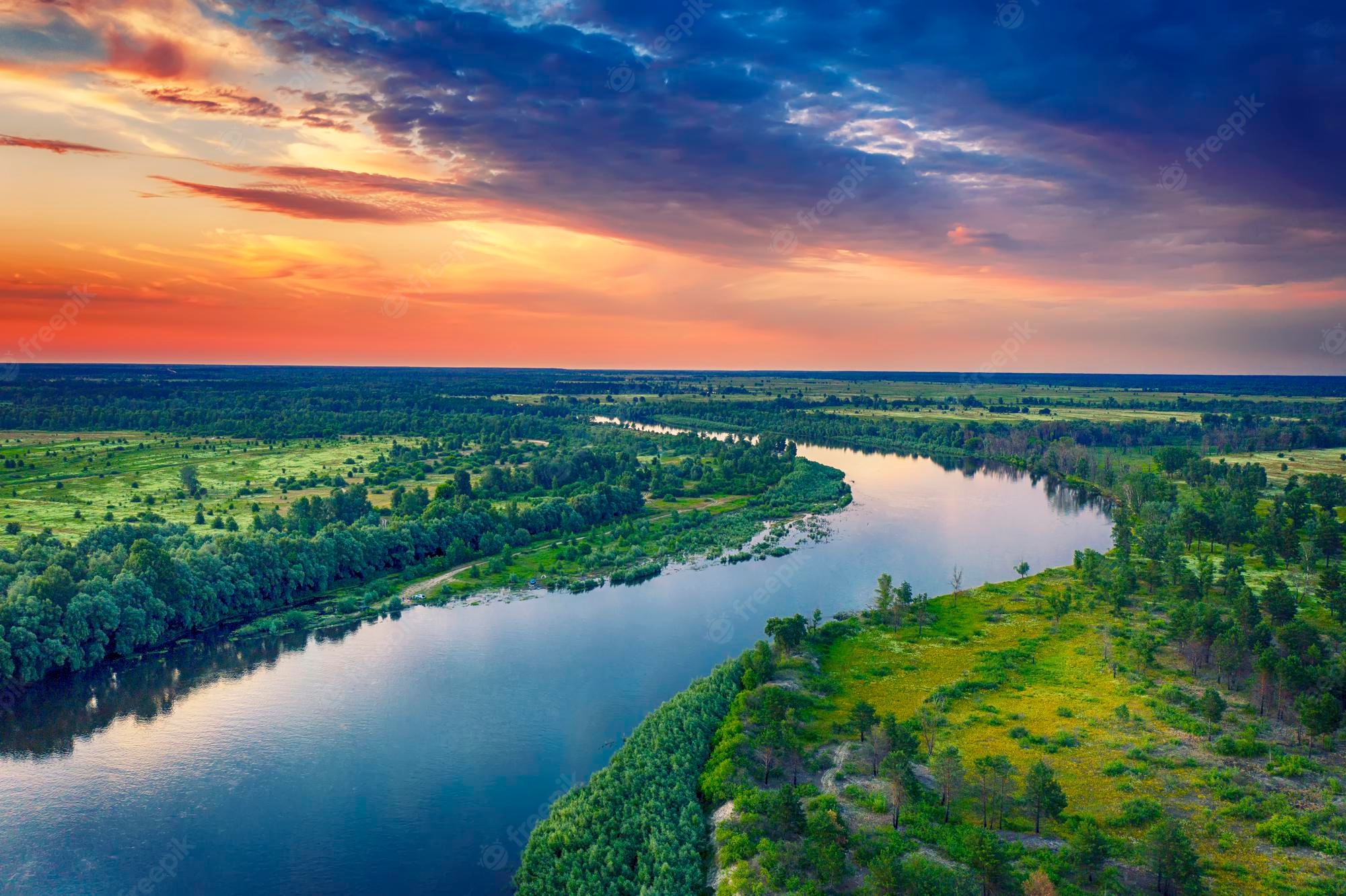
The water of the Litani River looks deceptively peaceful when the sun hits it just right. It winds through southern Lebanon, a ribbon of green cutting through an otherwise arid landscape of ancient stone and olive groves. For generations, this river was life. Farmers washed their hands in it after a day in the soil. Children splashed in its shallows during the suffocating heat of August.
Now, the water reflects only the gray steel of drones and the orange flash of nighttime artillery.
Rivers are supposed to be boundaries, or lifelines, or sanctuaries. But when a body of water becomes a line in the dirt between two heavily armed forces, it ceases to be a natural wonder. It becomes a countdown.
Overnight, the skies above the Litani lit up. Rocket fire from Lebanon tore south across the frontier; Israeli airstrikes tore north, answering the volley with catastrophic precision. The dry ground shook. For those living along this stretch of the Levant, the question is no longer whether a full-scale war will arrive. The question is how much of their world will be left standing when it does.
To understand the sudden, violent acceleration of the conflict between Israel and Hezbollah, you have to look past the political statements issued from sterile press rooms in Beirut and Jerusalem. You have to look at the water. And you have to understand the terror of the people caught between the banks.
The Geography of Fear
Maps make conflict look clean. They use neat red lines to denote borders and shaded blue lines to show rivers. They don't show the laundry hanging on the balconies of homes less than a mile from the launchpads. They don't show the panic of a mother trying to decide whether a basement offers enough protection against a bunker-busting bomb.
The Litani River sits roughly twenty miles north of the Israeli-Lebanese border. To the casual observer, twenty miles seems like a comfortable buffer. To military strategists, it is the magic number.
Under United Nations Resolution 1701—passed back in 2006 to end the last ruinous war here—Hezbollah was supposed to push all its armed fighters and heavy weaponry north of this very river. The space between the Litani and the Israeli border was meant to be a demilitarized zone, patrolled only by Lebanese army soldiers and UN peacekeepers.
That never really happened.
Instead, the region became a subterranean fortress. Over nearly two decades, the hillsides were hollowed out. Tunnels were dug into the limestone. For years, the silence was tense, but it held. Neighbors watched neighbors across the border through binoculars. Everyone knew the peace was a fiction, but it was a comfortable fiction that allowed people to plant crops and build lives.
Then came October. The fiction shattered.
Consider the reality of a resident in northern Israel, a few miles from the Lebanese rim. For months, towns like Kiryat Shmona have been ghost cities. Concrete blocks line the empty streets to shield cars from anti-tank missiles fired from the Lebanese ridges. Over eighty thousand Israelis were forced to pack their lives into suitcases and move into temporary hotel rooms across the country. They want to go home. But they refuse to return while elite commandos sit just across the fence, looking down at their empty kitchens.
Now look across the river. In southern Lebanon, tens of thousands of families have also fled, piling mattresses onto the roofs of battered sedans, driving north toward Beirut with no guarantee they will have a home to return to. The fields are scorched. White phosphorus shells have turned thousands of acres of olive trees—trees that took decades to grow—into blackened stumps.
This is the human math of a border war. Both sides feel entirely justified. Both sides feel entirely terrified.
The Sound of the Night
When the strikes happen at 2:00 AM, the sound does something to your chest. It is not just loud; it is a physical pressure that forces the air from your lungs.
The initial blast is a sharp, metallic crack as an interception missile meets an incoming rocket in the sky. Then comes the secondary thud—the sound of iron hitting earth, followed by the low, rumbling groan of collapsing concrete. In those seconds, time expands. You don't think about geopolitics. You don't think about international law. You think about whether the roof above you is going to hold.
The latest escalation along the river represents a dangerous shift in strategy. For months, the fighting followed a grim, unspoken etiquette. A strike here would be answered by a strike there. Tit for tat. The targets were mostly military outposts, remote hillsides, and empty fields.
But etiquette is a luxury that disappears as ammunition runs low and patience runs out.
The recent overnight strikes targeted deep into Lebanese territory, striking logistics hubs and command structures near the riverbanks. In response, hundreds of rockets rained down on Israeli military installations. The buffer zone is evaporating. The fighting is no longer confined to the border fence; it has crept backward, claiming the Litani as its new frontline.
Why now? Because Israel has made it clear that its patience with diplomacy has expired. The government faces immense internal pressure to return its displaced citizens to the north before a new school year begins, before communities permanently dissolve into refugees within their own country. The message is blunt: either Hezbollah pulls back behind the river voluntarily, or military force will push them there.
But Hezbollah views the territory south of the Litani as its backyard, its homeland, and its primary defensive shield against invasion. To retreat across the river would be seen as an unacceptable surrender.
So, the two sides stand on opposite banks of a narrow river, staring at each other through the crosshairs of modern weaponry, waiting for the spark that turns a localized crisis into a regional inferno.
The Broken Machinery of Peace
It is easy to blame the failure on the ground on a lack of effort. White SUVs belonging to the UN peacekeepers still drive up and down the winding roads of southern Lebanon. Diplomats from Washington and Paris still board flights, carrying thick folders of proposals, rushing from meetings in Jerusalem to dinners in Beirut.
They talk about "frameworks." They talk about "de-escalation pathways."
But these words sound hollow when you talk to the people who actually live near the water. They have heard these phrases for forty years. They know that a piece of paper signed in New York means nothing when a drone is hovering over your village, its high-pitched whine keeping the entire neighborhood awake until dawn.
The tragedy of the Litani River is that it shows how easily the machinery of international peace can be ground to dust by the reality of human fear. The UN cannot enforce a peace that neither side trusts. Israel looks at the river and sees a line that must be cleared to ensure its survival. Hezbollah looks at the exact same water and sees a line that must be defended at all costs to ensure theirs.
What happens when two completely incompatible versions of survival collide?
You get the night sky over Lebanon turning as bright as midday. You get orchards that have fed families for three generations burning into ash. You get a generation of children who can identify the specific model of a fighter jet just by the pitch of its engine before it even clears the clouds.
The Water Keeps Flowing
We tend to view these conflicts through the lens of statistics. We count the number of rockets fired. We tally the casualties. We analyze the range of the missiles and the thickness of the armor.
But the real story of the Litani is found in the quiet moments between the explosions.
It is found in the farmer who sneaks back to his land during a brief lull in the shelling, desperately trying to harvest a few crates of tobacco or lemons before the sky opens up again. He knows it is stupid. He knows a stray fragment could end his life in an instant. But the land is all he has, and to abandon it completely is a different kind of death.
It is found in the Israeli family living in a cramped, two-room hotel accommodation far from home, watching their children grow restless, wondering if the house they spent twenty years paying off is still standing, or if it has been reduced to a pile of splinters by a heavy rocket.
The river does not care about any of this. It continues its long, slow journey from the Bekaa Valley down to the Mediterranean Sea, cool and constant, indifferent to the violence occurring on its shores.
The overnight strikes will fade into the news cycle, replaced by the next day's updates, the next round of statements, the next list of targets. But the tension remains, thick and heavy, hanging over the water like the summer mist. The world watches the border, holding its breath, knowing that the river which once brought life to this ancient valley is now merely a fuse, burning shorter with every passing night.