Crossing a border doesn't guarantee safety when a government keeps tabs on you abroad.
In mid-October 2026, police in Uganda discovered the decapitated body of 50-year-old Sgt. Maj. Robert Kabera near Kampala, roughly 45 kilometers outside the capital in the Kamengo area of Mpigi district. Local residents and relatives identified his remains after the discovery in Luwala village, where he was building a house. Ugandan police announced the find publicly on October 19, noting that his head had not been recovered. You might also find this related article insightful: The Quiet Weight of the Ledger in Moscow.
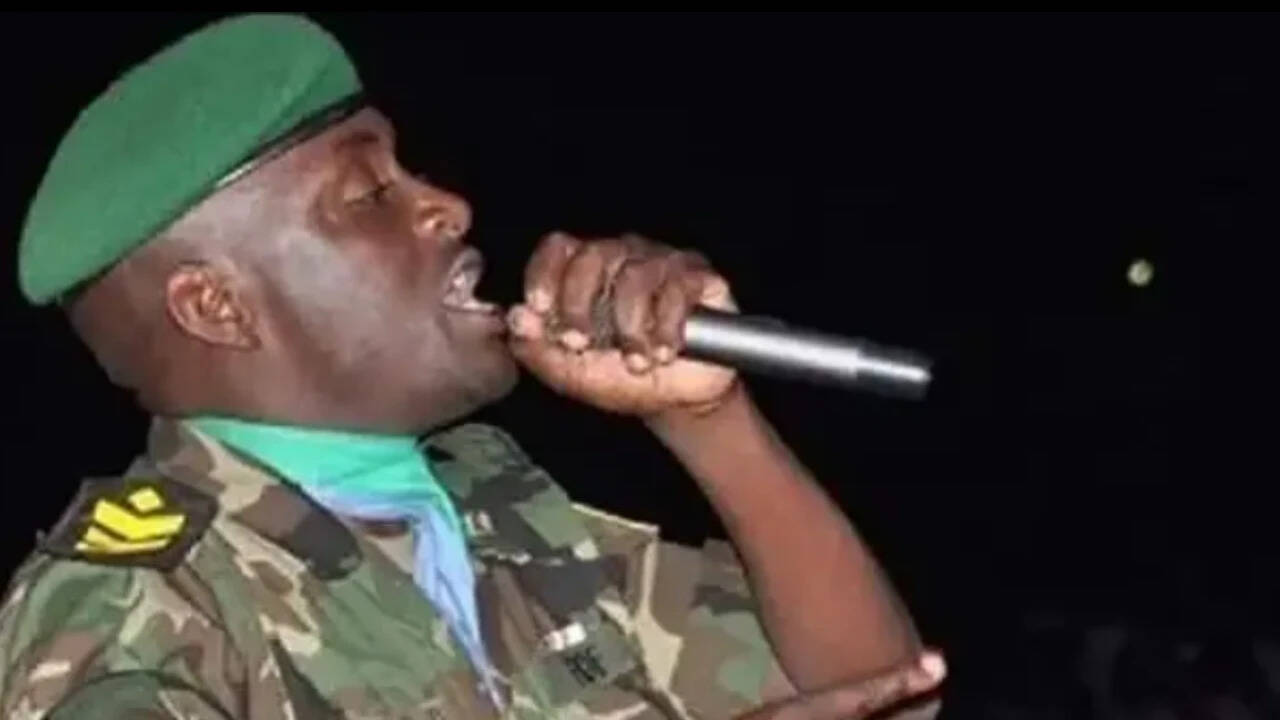
If you've followed Great Lakes politics for any length of time, this story hits a familiar nerve. Kabera wasn't an anonymous refugee quietly blending into a new town. He was a former Rwanda Defence Force soldier, a recognizable musician once tied to the Army Jazz Band, and the face behind "Major Robert TV," a YouTube channel with more than 144,000 subscribers and over 800 videos sharply criticizing Rwandan President Paul Kagame and his administration.
When an exiled critic gets killed like that, two questions immediately collide. Was this a targeted political hit tied to his activism, or a local crime dressed up to look like one? Honestly, right now we don't have a public conviction or forensic proof settling the motive, and pretending otherwise would be sloppy reporting. Still, ignoring the documented warnings Kabera left behind before his death would be just as careless. As reported in detailed articles by The Washington Post, the implications are significant.
Why a Rwandan dissident in Uganda faced mounting danger
A lot of people assume that once someone claims asylum in a neighboring country, the immediate threat drops off. That's rarely how regional politics works in East Africa.
Kabera fled Rwanda in November 2020 and sought asylum in Uganda, saying he faced political persecution. Back home, authorities had declared him a fugitive and accused him of corrupting a minor—charges he denied. His brother, Victor Agaba, told AFP that Kabera had no disputes in Uganda and called the criminal accusation back home a "witch-hunt" orchestrated by the military.
What makes Kabera's case stand out isn't just how he died. It's what he told rights monitors years earlier. According to Human Rights Watch, Kabera repeatedly reported threats and physical attacks while living in Uganda. In a September 2022 interview with the organization, he put his fear bluntly: "They will kill me. They know where I am … I will die before I get resettled."
Think about how chilling that quote sounds in hindsight. He didn't describe a vague worry about his asylum paperwork getting stuck. He described feeling tracked, cornered, and stuck waiting for third-country resettlement that never came fast enough.
The paper trail of earlier intimidation
If you look closely at Kabera's account to Human Rights Watch, the threats weren't just late-night rumors. He alleged that Ugandan police detained him, beat him, and fractured his ankle—an injury a witness later confirmed after his release—while he claimed to spot Rwandan officials at the station, including people connected to the High Commission in Kampala. His arrest warrant was eventually canceled and the case closed.
Then, in late July 2022, Kabera reported being assaulted by young men who took his phone. He told researchers that because his ankle was still healing, he couldn't fight back, and that the attackers spoke Kinyarwanda and warned him they knew where he was and would take him back home. He filed a police report on August 1, 2022.
Police investigations take time, and every detail needs verification. At the same time, when a vocal exile reports attacks, linguistic intimidation, and fears of forced return years before turning up dead near the capital, serious investigators can't treat those warnings as background noise.
How transnational repression plays out in the region
To understand why Kabera's killing drew immediate international scrutiny, you have to zoom out beyond a single village in Mpigi district. Exiles and human rights groups have long pointed to a broader pattern of pressure against critics of Kigali outside Rwanda's borders.
Take the high-profile cases that keep coming up whenever a Rwandan dissident dies abroad. Former intelligence chief Patrick Karegeya was killed in South Africa in 2014, a case in which South African authorities later issued arrest warrants for two Rwandan nationals in 2019. Another prominent exile, former Gen. Faustin Kayumba Nyamwasa—who co-founded the Rwanda National Congress with Karegeya—has survived multiple assassination attempts over the years.
Whenever incidents like these happen, the official narratives split sharply:
- Critics and rights groups argue that vocal exiles—especially those with large digital audiences or military backgrounds—face surveillance, harassment, unlawful detention, and lethal violence across borders.
- Rwandan officials have consistently denied allegations of targeting political opponents abroad or at home, and following Kabera's killing, the government had not issued a public comment in initial reports.
- Host authorities and police often emphasize ongoing criminal investigations, cautioning against jumping to conclusions before evidence is established.
And there's a diplomatic layer here that's easy to miss if you only read headlines. Relations between Uganda and Rwanda have swung back and forth over the years between rivalry, border closures, and cautious diplomatic resets. Even when ties warm up politically, exiled dissidents often find that formal asylum status doesn't automatically translate into airtight physical protection or fast resettlement.
Why YouTube creators and former soldiers draw scrutiny
One detail from Kabera's life deserves extra attention: his blend of military history and online reach. A former soldier who knows how security structures operate—and who also sings, posts commentary, and builds a 144,000-subscriber channel with hundreds of videos—occupies a very visible space in exile media.
His channel even featured a song praising Victoire Ingabire, an opposition figure inside Rwanda who has faced repeated imprisonment. To supporters, Kabera was speaking uncomfortable truths that domestic outlets wouldn't touch. To detractors or government loyalists, his broadcasts were seen as damaging to Rwanda's image.
In modern exile politics, a microphone or a smartphone camera can be just as provocative as a political party manifesto. You don't need an army behind you to get noticed; you just need an audience that listens.
What remains unsettled after the discovery near Kampala
Reporting on a brutal murder means holding two truths in your head at once. First, the human cost is immediate and unmistakable. Following Kabera's burial on October 21 in Kamengo, his widow, Jeanne d'Arc Rwigema Uwizeye, told BBC Great Lakes how terrified she felt without security for herself and their children. Anyone who has ever watched a family lose its protector in a foreign country knows that fear isn't abstract.
Second, gaps in the public record remain real. Ugandan police spokesperson Rusoke Kituuma noted that detectives would establish facts during the investigation, including claims regarding Kabera's prior military service, while still searching for his missing head. As of initial reports, no suspects had been publicly convicted of the killing, and alternative criminal motives haven't been ruled out in public statements.
That distinction matters for credibility. Calling a case a "confirmed assassination" before evidence proves who did it weakens accountability if a different motive surfaces. Conversely, brushing past years of documented threats and prior reports to police would ignore the exact context that makes this case urgent.
Practical steps for tracking accountability and exile safety
If you're following this story—whether as a researcher, journalist, policy reader, or someone supporting vulnerable refugees—don't rely on single-day breaking news alerts. Follow the long-term record:
- Track official police and court updates in Uganda. Watch for formal forensic findings, arrest announcements, or prosecutorial filings from Ugandan authorities rather than relying on unverified social media rumors.
- Read primary documentation from rights monitors. Check reports from organizations like Human Rights Watch and international wire dispatches for dated interviews, police report references, and verified context.
- Pay attention to asylum and resettlement bottlenecks. Look at how host states and international agencies handle protection requests and third-country resettlement when an asylum seeker reports credible cross-border threats.
- Separate verified facts from speculation. Keep a clear line between what witnesses or victims reported prior to an attack, what officials state during an inquiry, and what is proven in court.