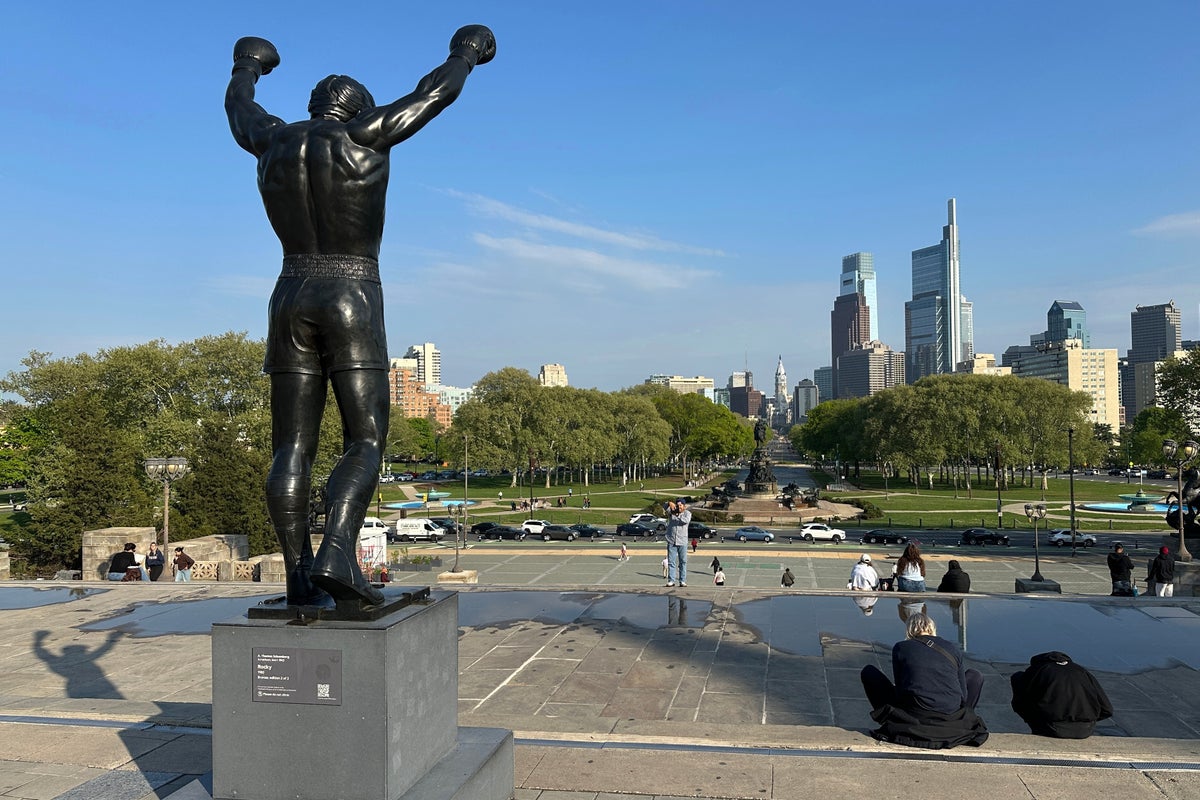
Superstition in professional sports operates as an informal risk-management framework. When Brazilian football fans collectively decided to forgo decorating the iconic Rocky Balboa statue in Philadelphia during international tournament cycles, they were not merely participating in folklore; they were executing a calculated behavioral optimization strategy based on perceived historical precedents. This analysis deconstructs the mechanics of sports curses, maps the causal links between public fan rituals and team performance, and provides an operational blueprint for managing external cultural variables in high-stakes sports environments.
The Tri-Arch Architecture of Sports Superstition Risk
To evaluate why an international fan base would alter its behavior based on a bronze monument in Pennsylvania, the phenomenon must be broken down into three distinct operational variables. In related news, take a look at: What Most People Get Wrong About the UFC Freedom 250 Medical Suspensions.
1. Historical Data Intersections
The "Rocky Curse" emerged from a series of high-profile correlation points where opposing fans decorated the statue, only for their teams to experience catastrophic failures immediately after. The most notable examples occurred during national football playoffs:
- The Minnesota Incident: Prior to the 2018 NFC Championship game, fans decorated the statue in team colors. The subsequent game resulted in a decisive 38-7 defeat.
- The New England Precedent: Similar actions by opposing fan bases coincided with statistically anomalous underperformances in championship settings.
While statistical purists classify these events as instances of clustering illusion—where human minds find patterns in random data—the psychological reality for the fan base creates a feedback loop that alters stakeholder confidence. Yahoo Sports has provided coverage on this important subject in extensive detail.
2. Narrative Contagion and Fan Compliance
The spread of the warning within the Brazilian fan community illustrates how social media networks accelerate risk-mitigation behaviors. The mechanism functions through three phases:
[Observation of Past Anomalies] -> [Digital Amplification via Fan Networks] -> [Collective Behavioral Modification]
When influential fan accounts and sports media outlets began circulating the directive to leave the statue unadorned, the cost-benefit analysis shifted for individual fans. The effort required to dress the statue carried a high perceived risk of social blame if the national team underperformed. Thus, compliance became the default path of least resistance.
3. The Psychological Cost Function of Accountability
Fans operate under an asymmetric accountability model. If a fan engages in a controversial ritual and the team wins, the ritual receives marginal credit. If the team loses, the ritual faces disproportionate blame from the collective community.
$$C_p = R_s \times P_f$$
Where $C_p$ represents the psychological cost to the fan group, $R_s$ is the social visibility of the ritual, and $P_f$ is the probability of team failure. As visibility increases, the potential cost spikes exponentially, driving the collective decision to enforce a strict hands-off policy.
Causal Mechanisms of External Distractions on Team Performance
While fans focus on metaphysical intervention, the actual structural threat of these public displays lies in the generation of unneeded media narratives. The operational bottleneck occurs when external fan actions bleed into the team's preparation space.
The Feedback Loop of Media Narrative Generation
- The Trigger Event: Fans alter a local landmark in a rival or neutral city.
- Local Media Amplification: Local news outlets frame the action as an act of disrespect or hubris, generating localized emotional investment.
- The Press Conference Infiltration: Journalists ask athletes and coaches about the fan behavior during mandatory media availabilities.
- Cognitive Load Inflation: Players are forced to expend mental energy addressing non-tactical variables, diverting focus from execution strategies.
This chain of events shifts the team's internal environment from a controlled, execution-focused state to a reactive, narrative-driven state. By actively suppressing behaviors that trigger this loop, the Brazilian fan base effectively insulated their squad from extraneous media scrutiny.
Strategic Recommendations for Sports Federations Managing External Variables
Sports organizations cannot control fan behavior directly, but they can implement protocols to neutralize its impact.
Establish Narrative Firewalls
Federations must train athletic personnel to treat fan-driven controversies as statistical noise. Media training protocols should mandate a uniform, neutral response to questions regarding fan rituals, thereby starving the narrative of the quotes necessary to sustain a multi-day media cycle.
Proactive Fan Base Engagement
Managing fan behavior requires clear, data-informed communication channels. Federations can utilize digital platforms to redirect fan energy away from high-risk public spaces and toward controlled, sanctioned environments like official fan zones. This minimizes the risk of generating adversarial motivation in opposing markets while maintaining high levels of fan engagement.
The decision by Brazilian fans to leave the Philadelphia landmark untouched represents a sophisticated, albeit informal, understanding of narrative risk management. In high-performance sports, success requires the elimination of negative variables, whether those variables are found on the training pitch or in the psychological dynamics of the public square. Managing these cultural externalities is a necessary component of modern sports strategy.