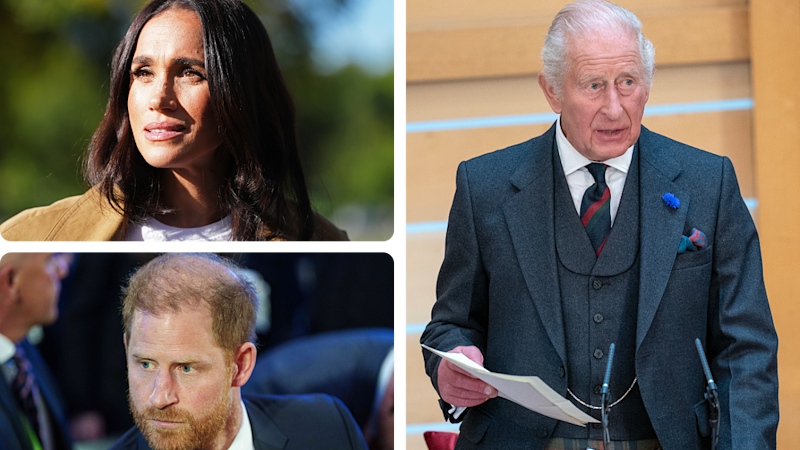
The mainstream media loves a predictable narrative. When the news broke that Prince Harry would return to London alone, the tabloids and royal commentators immediately recycled their favorite script: Meghan Markle and the children are staying behind due to "security concerns." It is a neat, tidy explanation that satisfies everyone. It validates Harry’s ongoing legal battles with the Home Office, paints the UK as inherently hostile, and positions the Sussexes as perpetual targets.
It is also entirely missing the point. For an alternative perspective, consider: this related article.
The lazy consensus across the media landscape assumes that a lack of taxpayer-funded, round-the-clock police protection is the logistical brick wall preventing the Sussex family from landing at Heathrow. This assumption ignores the reality of high-net-worth private security, international diplomacy, and the calculated branding of the modern celebrity. The decision to keep the children in California has very little to do with physical threat levels and everything to do with a deliberate, strategic decoupling from the British state.
The Private Security Myth
Let’s dismantle the premise that a lack of official RAVEC (Royal and VIP Executive Committee) protection makes travel to the UK an existential impossibility for the family. Further reporting on this matter has been published by The New York Times.
I have spent years analyzing high-profile corporate asset protection and VIP logistics. The idea that a multi-millionaire global figure cannot secure a safe environment in a first-world nation without state intervention is absurd. Private security firms staffed by former SAS, Special Forces, and ex-Metropolitan Police royalty protection officers operate globally. They routinely secure billionaires, tech CEOs, and controversial political figures in environments far more volatile than a private terminal at Heathrow or a secure estate in the English countryside.
To suggest that Harry and Meghan cannot afford or organize an airtight security apparatus for a brief trip to London is an insult to their operational capability. They manage it in the United States. They manage it on high-profile international tours to countries with significantly higher violent crime rates than the UK.
The "security issue" is not a logistical barrier; it is a legal and political leverage point. By tying her absence to safety, the narrative shifts from a personal choice to an institutional failure by the British government. It transforms a standard family scheduling decision into a righteous standoff over fundamental rights.
The Power of the Empty Chair
In modern celebrity branding, absence carries far more currency than attendance.
Every time Prince Harry arrives at a UK event alone, the media coverage splits cleanly down the middle. Half the articles focus on the event itself; the other half focus entirely on the missing family members. If Meghan and the children were to accompany him, the media circus would be chaotic, unpredictable, and largely out of their control. The British press would analyze every micro-expression, every wardrobe choice, and every perceived slight from remaining royal family members.
By staying in Montecito, Meghan retains absolute control over her environment, her narrative, and her image.
- Zero Risk of Bad Optics: No hostile crowd photos, no awkward snubs caught on telephoto lenses.
- Maximum Speculation: The media fills the void with endless commentary, keeping the Sussex brand at the center of the cultural conversation without them lifting a finger.
- Boundary Reinforcement: It signals to the institution of the monarchy that access to the next generation of royals—Archie and Lilibet—is a privilege, not a birthright, and certainly not something guaranteed under the current terms of engagement.
This is a masterclass in risk management. In the attention economy, knowing when to withhold the product is just as important as knowing when to market it.
Dismantling the "People Also Ask" Consensus
When looking at the public discourse surrounding this ongoing rift, the questions being asked prove that the public is tracking the wrong metrics.
Why won't the UK government give them automatic police protection?
Because the rules of engagement changed the moment they stepped back as working royals. The Home Office position is legally consistent: taxpayer-funded security is tied to official state duties, not lineage. The counter-argument often presented is that the threat level remains high regardless of status. While true, treating security as an all-or-nothing proposition misses the nuance. The UK government does provide bespoke security based on specific threat assessments for individual visits. The dispute is over control and permanence, not a total abandonment of safety.
Is the rift between Harry and his family getting worse?
The focus on personal drama obscures the institutional reality. This is no longer a mere family squabbling over hurt feelings; it is a corporate restructuring. The Sussexes have built an independent media and philanthropic ecosystem that thrives on being distinct from the palace. Reconciliation is actually a counter-productive business strategy for them right now. A normalized, quiet relationship with the royal family dampens the unique selling proposition of their brand, which is built on being the outsiders who broke free.
The Cost of the Strategy
Admitting this contrarian view means acknowledging the downsides. The strategy of strategic absence is highly effective in the short term, but it comes with a ticking clock.
By keeping the children entirely removed from the UK, the Sussexes are effectively severing any cultural or emotional ties the British public might have had with Archie and Lilibet. Isolation builds a fortress, but eventually, that fortress becomes an island. The long-term risk isn't physical danger; it is cultural irrelevance in the very country Harry spent his entire life representing.
Stop analyzing the court filings and the security briefings looking for logistical excuses. The empty seats on the plane to London aren't a sign of fear. They are a display of leverage.