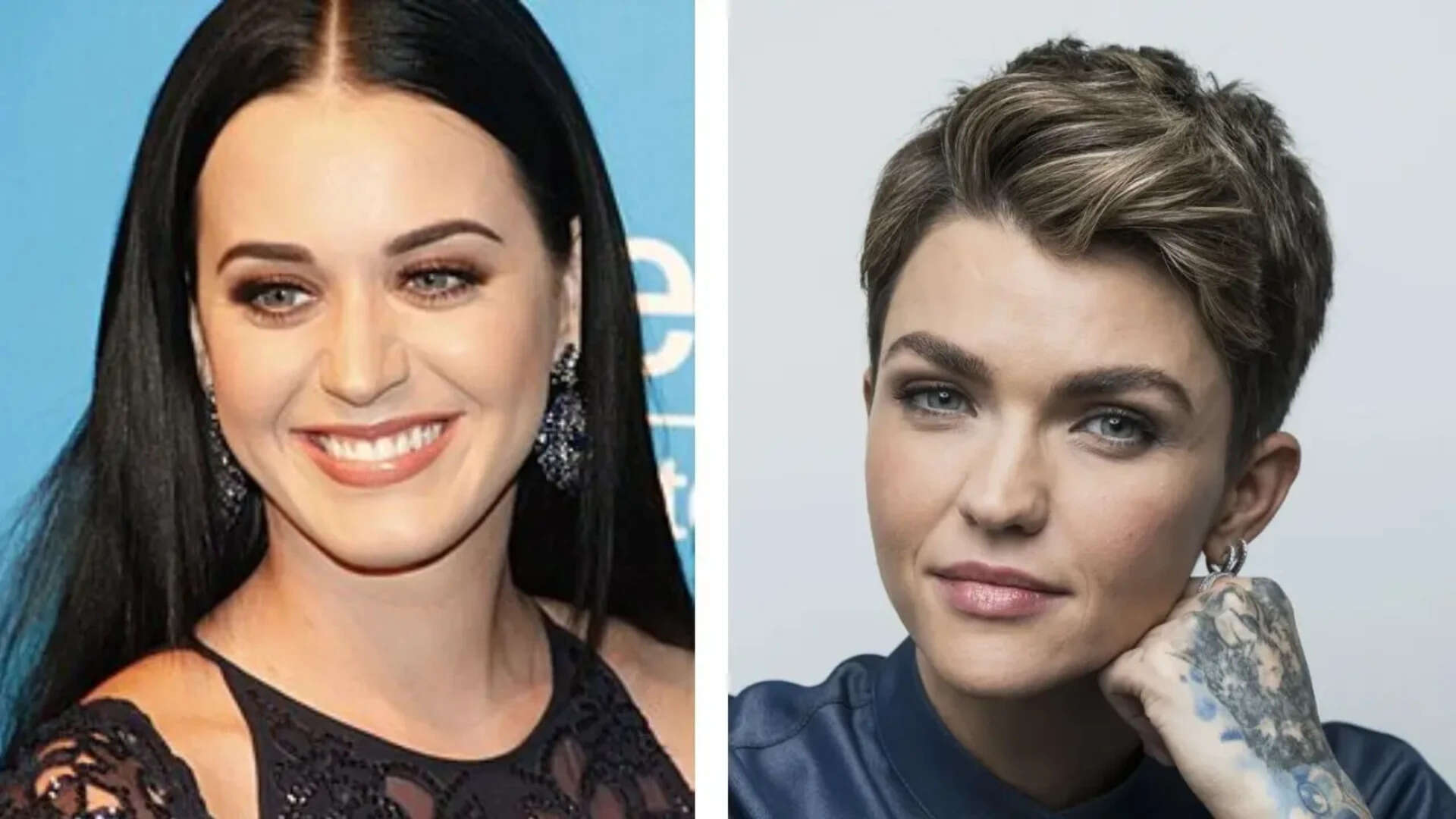
Public feuds are not about truth. They are about narrative control and the high-speed liquidation of reputation for clicks. When Katy Perry hits back at Ruby Rose’s allegations by pointing to a "history" of claims, the media laps it up as a "clapback." It isn't. It’s a calculated defensive maneuver designed to shift the burden of proof from the accused to the accuser’s personality.
We have entered an era where the court of public opinion moves faster than the legal system, yet it operates with a fraction of the intellectual rigor. The common consensus—that you must either "believe all women" or "defend the legacy"—is a false binary. Both positions are lazy. Both positions ignore the mechanics of how celebrity power structures actually function. For a different view, consider: this related article.
The Character Assassination Playbook
Standard crisis management dictates a very specific sequence. If you are a high-profile asset like Katy Perry, you don't argue the facts of a specific night or a specific interaction first. You argue the reliability of the source. By framing Ruby Rose as someone with a "history" of making allegations, Perry’s team isn't just defending a client; they are poisoning the well.
This is a classic logical fallacy known as ad hominem circumstantial. It suggests that because a person has spoken up before, their current speech is inherently invalid. It’s a brilliant, albeit cynical, way to avoid discussing the actual event. I have sat in rooms where publicists map out these "credibility hits" months in advance. The goal is never to prove innocence. The goal is to create enough "reasonable doubt" in the fan base to keep the touring revenue flowing. Further analysis on this trend has been provided by Wall Street Journal.
The High Cost of the "Vengeful Accuser" Trope
The industry loves the "vengeful accuser" narrative because it’s easy to sell. It taps into deep-seated societal biases about women’s stability. When Rose brings up claims, the immediate counter-attack isn't "this didn't happen," it's "look at who is saying it."
Compare this to how allegations are handled in the corporate world. In a $500 million merger, if an executive is accused of misconduct, the board doesn't just tweet about the accuser’s history. They conduct a forensic audit. In Hollywood, the "audit" is a PR blitz.
The nuance missed by the mainstream press is the power imbalance inherent in these "he-said, she-said" (or in this case, "she-said, she-said") dynamics. Perry is a global brand. Rose is a visible but significantly less protected entity. When a brand fights an individual, the brand almost always wins by exhaustion.
Why Your "Stanning" is Rotting the Discourse
Fans treat these allegations like sports matches. If you like Teenage Dream, you find reasons to discredit Rose. If you identify with Rose’s activism, you label Perry a predator. This isn't just stupid; it's dangerous.
By treating sexual assault allegations as a component of "fandom," we strip the gravity from the act itself. We turn a potential crime or a serious ethical breach into a "tea" moment. The industry thrives on this tribalism. It keeps the engagement metrics high while ensuring that no actual systemic change ever occurs.
Imagine a scenario where we stopped looking at the "history" of the accuser and started looking at the NDAs, the set cultures, and the silent witnesses who surround these stars. We don't do that because it’s boring. It doesn't fit into a 280-character thread.
The Myth of the "Perfect Victim"
Ruby Rose is often criticized for being "difficult" or "outspoken." This is the industry’s favorite weapon. To the Hollywood machine, the only "valid" victim is one who is silent, demure, and has never had a public disagreement before.
This standard is impossible. Anyone who has survived the meat-grinder of a major television or film set is going to have "history." They are going to have scars. Using those scars as evidence that they aren't bleeding now is the ultimate gaslighting technique.
I’ve seen managers actively encourage their clients to stay away from "troublemakers"—which is code for anyone who knows where the bodies are buried. Perry’s response isn't a defense of her character; it’s a warning shot to anyone else who might consider speaking up. It says: "If you come for me, we will dig through every tweet, every interview, and every mistake you’ve made since 2010."
The Legal Reality vs. The PR Reality
Legally, a "history of making allegations" is often inadmissible or viewed with extreme skepticism unless it proves a specific pattern of perjury. In PR, it’s a silver bullet.
The public doesn't want a trial; they want a side to join. When Perry’s camp leans into this strategy, they are betting on the fact that the average person doesn't understand the difference between relevance and distraction. They are betting on your lack of critical thinking.
Stop Asking "Who Do You Believe?"
The question "Who do you believe?" is the wrong question. It’s a trap. It asks you to make a moral judgment based on curated Instagram feeds and carefully vetted press releases.
The real question should be: "What structures allowed this interaction to happen, and why is the response focused on personality rather than evidence?"
If you want to actually understand the Perry/Rose fallout, stop reading the "clapback" headlines. Start looking at who benefits from the silence. Start looking at the multi-billion dollar machinery that views human beings as depreciating assets.
The industry isn't protecting Katy Perry. It’s protecting the idea of Katy Perry. Because if one pillar falls, the whole roof starts to look shaky.
Stop being a consumer of manufactured outrage. The next time a celebrity "responds" to an allegation by attacking the accuser's past, realize you aren't watching a search for truth. You’re watching a brand protection agency at work.
Pick a side if you want, but recognize that you’re just a free pawn in their game. The house always wins, and in Hollywood, the house is built on the silence of the "unreliable."