Media outlets love a tabloid scandal. Give them a headline mixing a billionaire tech executive, a high-profile politician, and an alleged foreign intelligence asset, and the clicks practically print themselves.
Look at the recent noise surrounding claims that former or current political figures are pointing fingers at Nvidia leadership over alleged personal entanglements with Chinese operatives. Most commentary treats this like a daytime soap opera or a binary national security panic. Both reactions are completely backwards.
When commentators obsess over unverified gossip, sensationalist claims, or individual personal lives, they miss the actual structural vulnerabilities sitting right in front of them. In the semiconductor and artificial intelligence industries, corporate espionage rarely looks like a Cold War spy thriller. It looks like mundane supply chain dependencies, open-source research collaborations, and legal talent poaching.
The Illusion of the Honey Trap
If you have spent any time watching how corporate security operates inside major chipmakers, you know that modern intellectual property theft does not hinge on dramatic personal affairs.
I have watched enterprise security teams spend millions of dollars locking down executive travel protocols and vetting personal devices, only to lose proprietary architectural insights because a mid-level engineer uploaded debugging logs to an unvetted public repository. The obsession with high-level personal drama is a distraction that lets companies ignore boring, systemic operational risks.
To understand why sensational headlines fail, you have to separate two distinct concepts in counterintelligence:
- HUMINT (Human Intelligence): Traditional espionage relying on interpersonal relationships, coercion, or recruitment of insiders to extract secrets.
- OSINT and Supply Chain Extraction: The systematic harvesting of publicly available academic papers, patent filings, vendor specifications, and hardware reverse-engineering.
While intelligence agencies certainly use human assets, the modern semiconductor race is overwhelmingly won and lost in the second category. A single executive—even a CEO—does not carry the microarchitectural blueprints of a next-generation GPU in their head. Those designs are distributed across thousands of engineers, electronic design automation (EDA) software suites, and foundry process design kits (PDKs) at fabrication plants like TSMC.
Why Political Rhetoric Distorts Market Reality
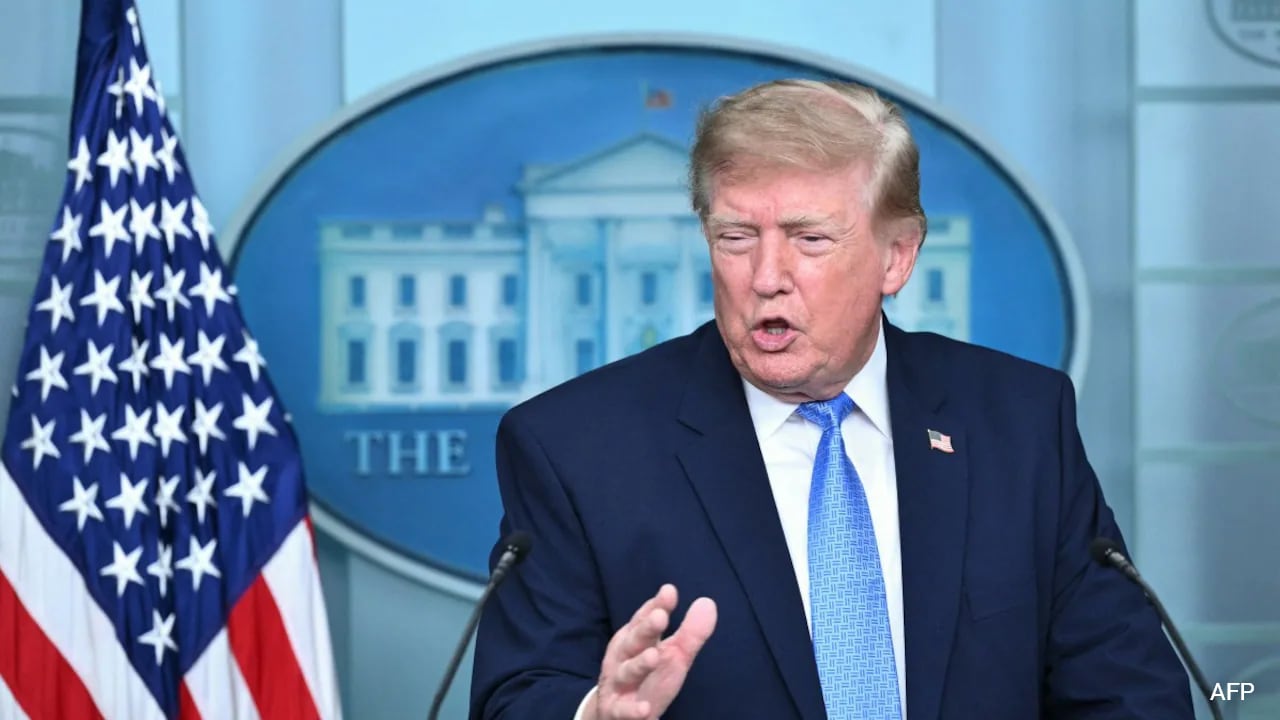
Political statements regarding major technology companies rarely exist in a vacuum. Whether comments come from Donald Trump, members of Congress, or regulatory officials, public accusations involving national security and Silicon Valley serve immediate political and strategic objectives.
According to standard political analysis, tying a dominant American tech firm to foreign adversaries achieves three goals at once:
- Regulatory Pressure: It creates public justification for tighter export controls, such as the Department of Commerce's Bureau of Industry and Security (BIS) restrictions on advanced AI accelerators.
- Market Leverage: Public scrutiny forces corporate leadership onto the defensive, making executives more compliant with domestic industrial policy and manufacturing mandates.
- Narrative Control: Framing complex global trade interdependence as a simple story of loyalty versus betrayal resonates far better with voters than explaining lithography bottlenecks.
The trap for investors and industry observers is taking political rhetoric at face value without verifying underlying facts. Note that in the reference prompt itself, there is no verifiable URL or confirmed Department of Justice indictment backing the headline claim. Treating unsubstantiated rumors as confirmed intelligence briefings is how analysts make terrible capital allocation decisions.
What People Actually Get Wrong About Chip Security
When rumors like this circulate, the public immediately asks the wrong questions. They ask whether a specific CEO is compromised or whether a single company can be trusted. Here is the reality behind the questions people actually ask.
Can one executive leak the blueprints to an advanced AI chip?
No. Modern semiconductor design is too compartmentalized for any single individual to walk out the door with a complete product. Designing a flagship processor requires integrating logic blocks, memory controllers, interconnects, and packaging technologies like CoWoS (Chip-on-Wafer-on-Substrate). Even if an executive wanted to hand over the keys to the kingdom, they do not possess the raw technical files required to replicate a fabrication node.
Is the FBI actively investigating Silicon Valley for foreign espionage?
Yes, continuously. The FBI's counterintelligence division, alongside the National Counterintelligence and Security Center (NCSC), has publicly stated for years that foreign intelligence services aggressively target U.S. semiconductor, AI, and quantum computing firms. However, routine counterintelligence briefings and defensive investigations into foreign talent programs are vastly different from criminal espionage charges against a sitting Fortune 500 chief executive.
Does personal vetting solve corporate espionage?
It barely scratches the surface. Over-indexing on executive personal lives creates a false sense of security. While high-level executives are prime targets for spear-phishing and surveillance, the vast majority of confirmed intellectual property theft cases in Silicon Valley involve departing technical staff downloading CAD files, source code, or trade secrets onto personal drives before joining a competitor.
The Real Vulnerabilities Nobody Wants to Talk About
If we strip away the tabloid sensationalism, what actually threatens American semiconductor leadership? The real risks are structural, legal, and deeply embedded in how global tech operates.
First, look at the talent pipeline. American universities train thousands of top-tier electrical engineers and computer scientists from around the world. When U.S. immigration policy forces those graduates to leave the country after earning their degrees, they take their expertise directly to foreign competitors. No spy ring is necessary when visa restrictions voluntarily export human capital.
Second, look at hardware and software ecosystems. Nvidia's real moat is not just its silicon; it is CUDA, its proprietary parallel computing platform and programming model. Competitors do not need to steal chip layouts to challenge that dominance; they fund open-source alternatives, subsidize local cloud providers, and build translation layers to erode software lock-in.
Third, consider the sheer complexity of the global supply chain. A single server rack relies on raw materials, specialty chemicals, substrates, and assembly facilities spread across dozens of jurisdictions. Monitoring every vendor and sub-tier supplier for unauthorized hardware implants or firmware tampering is an exhausting, unglamorous task that receives a fraction of the media attention given to celebrity-style executive gossip.
The Downside of Cynicism
Dismissing unverified political rumors as mere noise carries its own risk. History shows that corporate leaders and intelligence agencies alike have occasionally been blindsided by compromises they assumed were impossible. History is full of high-ranking officials and corporate insiders who failed basic security protocols because their boards assumed their status put them above scrutiny.
A healthy skepticism toward sensational headlines should never turn into blind trust in corporate governance. Boards of directors at critical infrastructure and technology firms still owe shareholders rigorous, independent oversight of executive conduct, conflict-of-interest disclosures, and communications security.
Stop Reading Tabloids and Watch the Supply Chain
If you want to understand the future of the AI hardware race, stop refreshing social media for rumors about executive scandals and federal investigations that lack primary-source documentation.
Watch export license approvals from the Bureau of Industry and Security. Track capital expenditure shifts at foundries in Taiwan, Arizona, and South Korea. Read the quarterly filings on data center revenue concentration and custom ASIC development by hyperscalers. That is where the real power struggles happen—quietly, legally, and in plain sight.



