The global energy market is currently obsessing over a narrative that sounds incredibly dramatic on paper: Ukraine drones strike Russian oil refineries, Russia’s domestic fuel production takes a hit, and Moscow desperately turns to India to import refined petroleum products.
It makes for a perfect headline. It fits the classic David-versus-Goliath trope of modern warfare.
It is also completely wrong.
The idea that Russia—a nation built on a foundation of massive oil reserves and sprawling energy infrastructure—is suddenly dependent on India for finished fuel is a fundamental misunderstanding of how the global energy supply chain operates. I have spent years analyzing the movement of physical commodities, tracking tankers, and dissecting the spread between crude discounts and refined product margins. The "Russia is running out of gas and buying from India" narrative is a lazy consensus built by commentators who do not understand the difference between a temporary logistical bottleneck and a structural deficit.
Let us look past the sensational headlines and break down the reality of what is actually happening.
The Refinery Strike Illusion
When Ukrainian drones strike a Russian refinery in Nytva or Samara, the immediate media reaction is panic. Mainstream outlets jump to the conclusion that Russia’s domestic fuel supply is collapsing.
Yes, drone strikes cause localized disruption. Yes, they take specific refining units offline for weeks, sometimes months, at a time. But here is the critical distinction: Russia does not have an oil shortage. It has a temporary refining capacity mismatch.
When a refinery goes offline, two things happen immediately:
- The crude oil that would have been refined at that facility is suddenly diverted to the export market.
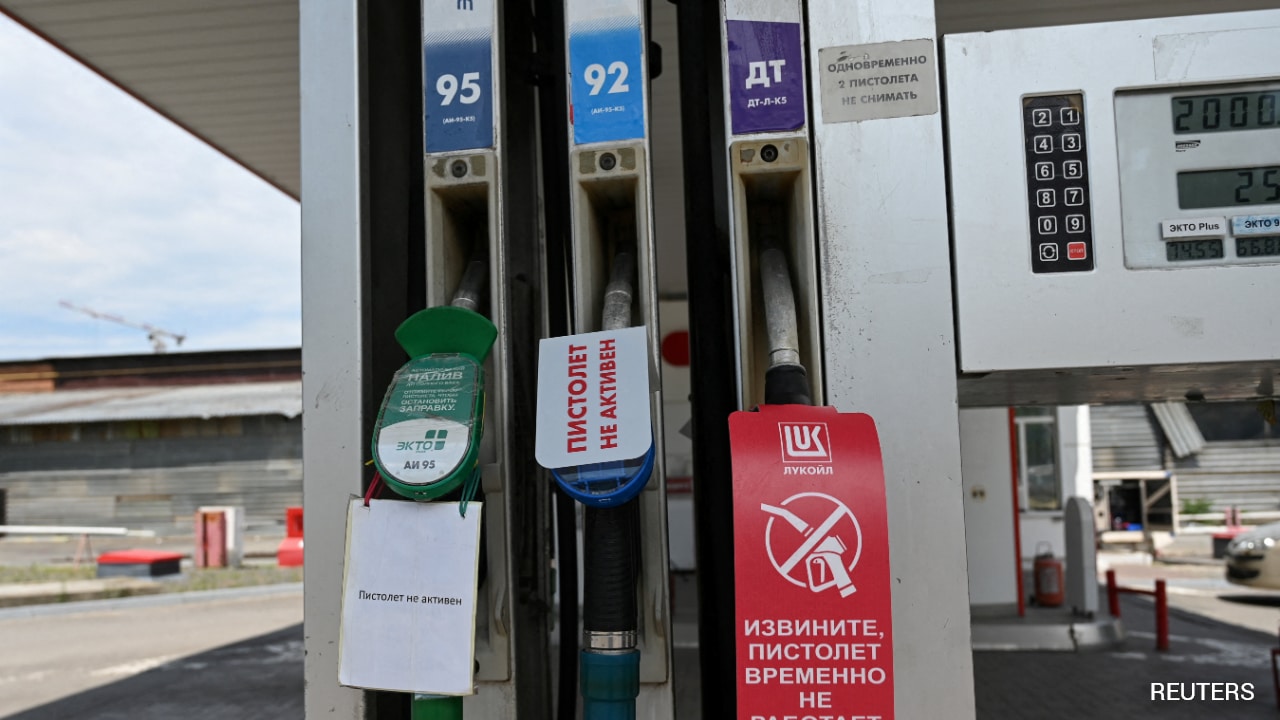
- The regional market served by that refinery experiences a temporary pinch in finished products like diesel or gasoline.
To solve the regional pinch, Russia does not need to beg India for fuel. It merely needs to reroute its own massive domestic production from unaffected refineries in the East or the Urals, or utilize its extensive state reserves.
The belief that Russia is importing Indian fuel to keep its own cars running is a misunderstanding of basic geography and transport economics. Shipping refined fuel from Indian ports like Jamnagar back to Russian ports is an economic absurdity. The freight costs alone would vaporize any margin, especially when Russia can easily swap products internally or buy from neighboring Belarus, which operates massive, highly sophisticated refineries specifically configured to process Russian crude.
The Great Energy Laundering Scheme
What the mainstream media labels as "Russia buying fuel from India" is actually the tail-end of a massive, highly profitable energy laundering loop.
Let us look at the actual mechanics of the trade.
[Russia Crude] ---> (Discounted Price) ---> [Indian Refiners] ---> (Refining Process) ---> [Global Clean Product Market] ---> (Re-exported / Swapped)
Russia exports massive volumes of cheap, discounted Urals crude to Indian refiners like Reliance Industries and Nayara Energy. India runs this crude through its highly complex refineries, converting it into diesel, jet fuel, and gasoline.
India then sells these refined products to the global market—frequently to Europe and the West—at premium prices. The West gets the fuel it desperately needs to prevent inflation from spiraling out of control, India pockets a massive refining margin, and Russia keeps its cash flow alive by selling the initial crude.
Sometimes, paper trades and swaps make it look like product is moving back toward Russian spheres of influence. In reality, these are financial maneuvers designed to bypass Western sanctions, settle payments in non-dollar currencies (like the Indian Rupee or UAE Dirham), and balance complex bilateral trade accounts.
To call this "Russia seeking fuel from India" is like saying a dairy farmer is running out of milk because he sold his cows to a cheese factory and then bought a slice of cheddar. It misses the entire point of the transaction.
The Rupee Trap and Why It Matters
To truly understand why these rumors of Russian fuel purchases persist, you have to look at the banking system, not just the pipeline system.
When Russia started selling millions of barrels of discounted crude to India following the 2022 sanctions, it agreed to accept Indian Rupees (INR) as payment. This quickly created a massive structural problem: Russia accumulated billions of dollars worth of Rupees sitting in Indian bank accounts that it could not easily spend.
The Rupee is not a fully convertible currency. Russia cannot use Rupees to buy machine parts from China, electronics from Taiwan, or services from Europe.
To solve this "Rupee Trap," Moscow has been forced to find creative ways to recycle this capital back into the Indian economy. They invest in Indian infrastructure, buy Indian manufactured goods, and engage in complex product-swap agreements.
When reports surface of Russia "negotiating fuel deals" with India, they are almost always looking at sovereign-level currency clearing mechanisms. It is not an act of desperation to keep Russian trucks running. It is a desperate attempt by the Russian central bank to extract value from a mountain of trapped Indian currency.
Dismantling the "Refinery Crisis" Premise
Let us address the "People Also Ask" questions that dominate this topic, with the bluntness they deserve.
Can Ukraine’s drone campaign permanently cripple Russian refining?
No. Refining units—even sophisticated catalytic reformers—are made of steel and concrete. They can be repaired. More importantly, Russia’s total refining capacity is roughly 5.5 million barrels per day, while its domestic consumption of refined products is barely half of that. Even if drone strikes permanently knocked out 20% of Russia's refining capacity, the country would still have a surplus of refined products. The crisis is one of logistics and distribution, not absolute volume.
Why doesn't Russia just stop exporting crude and refine it at home?
Because exporting crude is far more lucrative under the current sanctions regime. Crude oil is highly fungible. Once a Russian barrel of Urals is loaded onto a "shadow fleet" tanker, it can easily disappear into the global supply chain, changing ownership multiple times at sea. Refined products, however, are subject to much stricter tracking, tighter price caps, and different insurance markets. Exporting crude to India and letting India do the heavy lifting of refining and distributing is the path of least resistance for Moscow.
The Cost of Getting This Wrong
The danger of believing the "Russia is running out of fuel" narrative is that it leads to disastrously flawed foreign policy and market assumptions.
Investors who short energy markets because they believe Russian supply is collapsing are consistently caught off guard. Governments that believe sanctions are on the verge of causing a systemic fuel collapse in Moscow are making decisions based on a fantasy.
The global energy market is not a moral theater. It is a hydraulic system. If you apply pressure at one point (Russian refining), the liquid simply finds another path of lower resistance (Indian refining, Chinese processing, grey-market ship-to-ship transfers).
Stop looking at the localized damage of drone strikes and calling it a systemic collapse. Russia is not dependent on India for fuel. India and Russia have simply co-authored the most lucrative, sanctions-busting energy arbitrage loophole in human history. And both sides are laughing all the way to the bank.