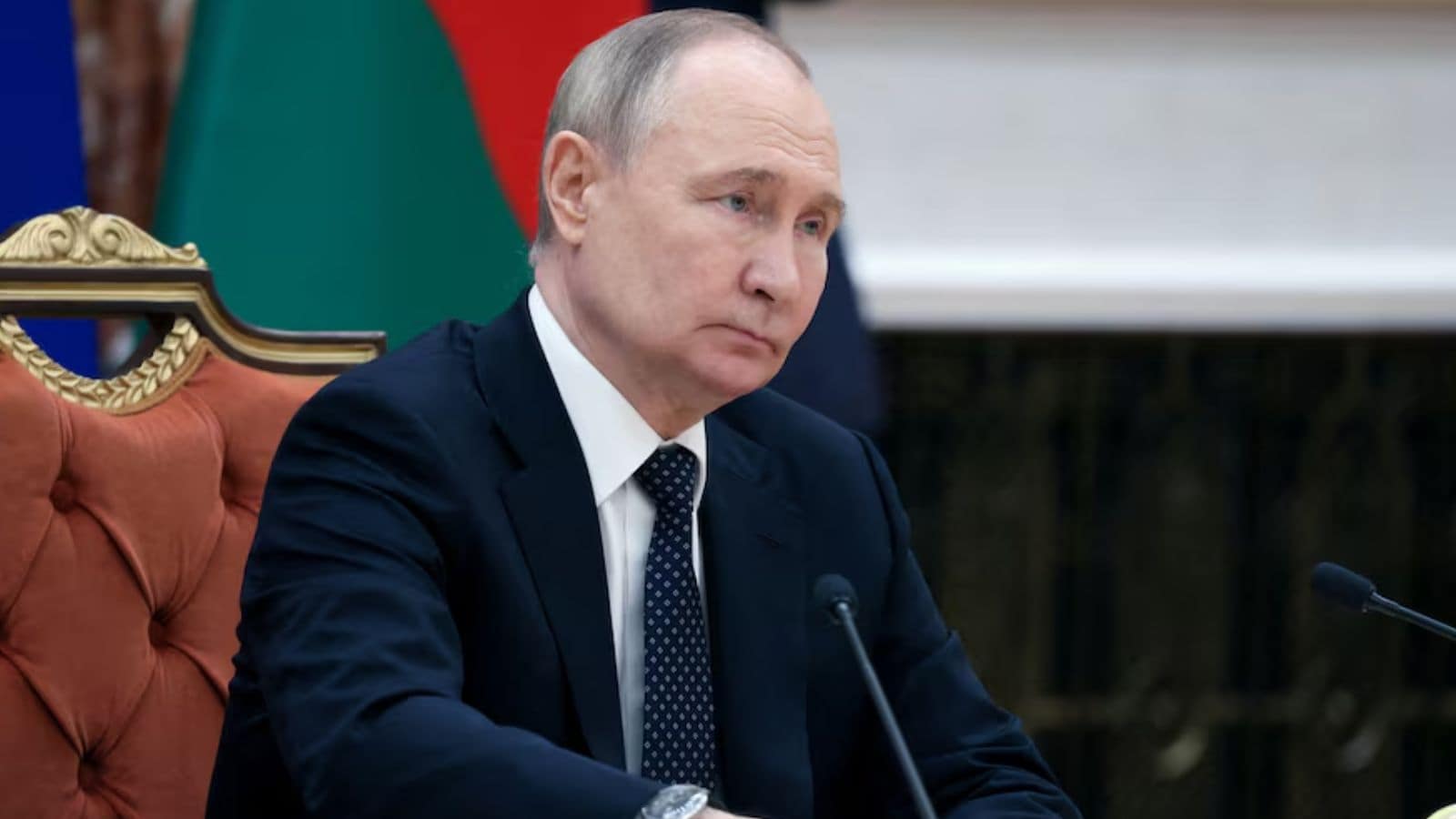
Every time Vladimir Putin hosts African heads of state in St. Petersburg or Sochi, Western foreign policy desks publish the exact same copy-pasted obituary for Western dominance. They call it a "scramble." They talk about Moscow "regaining" Cold War-era influence. They frame African leaders as passive chess pieces being swept off the board by Russian grain, Wagner mercenaries, and anti-colonial nostalgia.
That narrative is lazy, historically illiterate, and dangerously wrong.
Russia isn't regaining influence in Africa. You cannot regain something you never possessed in the way pundits imagine. The Soviet Union didn't run Africa through deep economic integration; it ran a subsidized ideological insurgency that collapsed the second the rubles dried up in 1991. Today's Kremlin isn't rebuilding the USSR. It is operating an asymmetric, low-cost disruption firm designed to buy diplomatic cover on the cheap while extracting maximum geopolitical nuisance value against Washington and Brussels.
If you analyze the Russia-Africa Summit through the lens of traditional superpower competition—comparing trade volume, foreign direct investment, and infrastructure loans—you will miss the entire game. By those metrics, Russia is a rounding error. Yet Moscow routinely gets African nations to abstain from UN General Assembly resolutions condemning its invasion of Ukraine.
How does a country with less trade volume in Africa than the Netherlands command that kind of diplomatic loyalty? Because Moscow isn't selling development. It is selling regime survival and transactional autonomy.
The Cold War Nostalgia Trap
Mainstream coverage loves the romantic myth of Soviet solidarity. Journalists dutifully remind readers that Moscow trained African liberation leaders, built the Aswan High Dam, and funded anti-apartheid movements. The implication is that African leaders today feel a lingering debt of gratitude.
Talk to actual policymakers in Nairobi, Abuja, or Pretoria, and they will laugh at that premise.
African foreign ministries are not run by sentimentalists. They are run by hardened pragmatists navigating debt crises, youth bulges, and climate shocks. The Soviet Union disappeared thirty-five years ago. An entire generation of African citizens—and a growing cohort of cabinet ministers—has zero lived memory of the KGB or Soviet technical advisors.
Furthermore, the Soviet model was an economic dead end. Moscow's Cold War footprint was built on state-to-state barter, heavy weaponry, and ideological lecturing that often wrecked local economies from Ethiopia to Mozambique. When the USSR imploded, Russia shuttered embassies, cancelled scholarships, and abandoned the continent for nearly two decades.
I've watched Western diplomats waste millions of dollars on "counter-messaging" campaigns aimed at debunking Soviet-era myths, completely missing the fact that nobody in Bamako or Bangui cares about 1975. They care about Tuesday. They care about who will sell them helicopters without attaching human rights conditions, and who will veto a UN Security Council resolution if their domestic politics get messy.
Follow the Money (Or the Lack of It)
If you want to dismantle the "Russian takeover" panic, look at the balance sheet. Numbers do not care about summit photo-ops.
Total trade between Russia and the entire African continent hovers around $18 billion to $20 billion annually. To put that in perspective:
- China-Africa trade: Over $280 billion.
- European Union-Africa trade: Roughly $300 billion.
- United States-Africa trade: Around $65 billion.
Russia accounts for roughly 1% of Africa's total foreign trade. Even worse, that trade is overwhelmingly lopsided. Over 70% of it is concentrated in just four countries: Egypt, Algeria, Morocco, and South Africa. And what is Russia actually selling? Wheat, fertilizer, refined petroleum, and weapons.
Russia does not build railways in East Africa. It does not finance 5G networks in West Africa. It does not construct deep-water ports or industrial parks. Moscow lacks the capital, the banking infrastructure, and the corporate depth to compete with Beijing or Brussels on development finance.
When the Kremlin announces billions of dollars in "memoranda of understanding" at a Russia-Africa Summit, treat those press releases like monopoly money. Historically, less than 15% of Russian investment pledges in Africa ever materialize into actual capital deployment. Rosatom's nuclear power deals—like the massive El Dabaa plant in Egypt—are the rare exception, heavily subsidized by Russian state loans to lock in multi-decade geopolitical dependency. Everything else is mostly vaporware.
What Moscow Actually Sells: The "Sovereignty" Shield
So if Russia brings almost no capital, zero tech transfer, and minimal trade to the table, why do dozens of African delegations fly to Russia?
Because Western analysts consistently misunderstand what African incumbents value most. Western policy operates on the assumption that African governments want economic growth, institutional reform, and foreign direct investment above all else.
In reality, for many fragile regimes, the primary currency is regime security.
When a military junta takes power in the Sahel—whether in Mali, Burkina Faso, or Niger—Washington and Paris immediately freeze aid, impose sanctions, and demand a timeline for democratic elections. Their security assistance comes tethered to governance benchmarks, anti-corruption audits, and human rights compliance.
Moscow shows up with a completely different value proposition: We do not care how you got power. We do not care how you keep it. Pay us in mining concessions or diplomatic votes, and we will keep you alive.
This is where the transition from the Wagner Group to the Kremlin-controlled Africa Corps becomes crystal clear. Critics call them mercenaries, which is technically true, yet misses their structural function. They are a vertically integrated regime-protection racket. They provide praetorian guards for vulnerable presidents, counter-insurgency muscle without rules of engagement, and coordinated disinformation campaigns on Facebook and TikTok to manufacture domestic consent.
In exchange, Moscow takes direct equity in gold mines in Sudan and the Central African Republic, uranium access in Niger, and diplomatic backing at the United Nations. It is a closed-loop, self-financing geopolitical operation. It costs the Russian taxpayer almost nothing, generates hard currency to bypass Western sanctions, and humiliates former colonial powers like France.
The Grain Weapon Myth
A common talking point surrounding recent Russia-Africa summits is that Putin holds Africa hostage with food exports. When Russia pulled out of the Black Sea Grain Initiative, headlines screamed that Moscow was weaponizing hunger to force African compliance.
This argument collapses under basic agricultural economics.
Yes, Russia and Ukraine together supply roughly 30% to 40% of Africa's wheat imports, with countries like Egypt, Sudan, and Somalia heavily reliant on Black Sea grain. And yes, Putin's theatrical promise at the St. Petersburg summit to ship 25,000 to 50,000 tons of free grain to six impoverished African nations made for great television.
Look at the math, though. Fifty thousand tons of grain is a rounding error in global food markets—barely enough to feed a mid-sized city for a few weeks. The World Food Programme moves millions of tons annually, funded predominantly by the United States and the European Union.
African leaders know this. President Cyril Ramaphosa of South Africa explicitly told Putin to his face in St. Petersburg that African nations did not come to the summit begging for free handouts—they wanted the Black Sea corridor reopened so commercial markets could stabilize.
Moscow isn't using grain to buy loyalty; it is using grain to manage reputational damage. The Kremlin knows that surging global food prices caused by its invasion of Ukraine alienate the exact Global South audience it is trying to court. The free grain shipments are a public relations Band-Aid, not a strategic lever of control.
Why African Leaders Are Playing Both Sides (And Winning)
The biggest blind spot in Western commentary is the persistent, patronizing assumption that African leaders are being duped by Russian propaganda.
Stop treating African heads of state like naive victims. They are executing a deliberate strategy of active non-alignment.
For thirty years after the Cold War, African governments lived in a unipolar world. If you wanted debt relief from the IMF, security aid from AFRICOM, or trade access under AGOA, you played by Washington's rules. There was no alternative bidder.
Today, the international system is fracturing into multipolar competition, and African policymakers are ruthlessly exploiting the arbitrage. By showing up at the Russia-Africa Summit, an African president sends an unmistakable signal to Washington, Brussels, and Beijing: We have options. Stop taking us for granted.
Imagine a scenario where a mid-sized West African nation needs coastal radar systems and agricultural subsidies. If its president exclusively aligns with the West, those requests sit in bureaucratic committees for three years. The moment that president shakes Vladimir Putin's hand on state television, high-level envoys from the U.S. State Department and the European Commission suddenly clear their schedules to visit the capital with expedited aid packages.
Russia is not the destination for most African states. Russia is the leverage they use to extract better terms from the West and China.
The Fatal Flaw in Moscow's Africa Strategy
Before anyone crowns Vladimir Putin the new master of the Global South, we need to look at the glaring structural weaknesses inside Russia's own approach. Contrarian analysis means admitting where the disruption hits a brick wall.
Moscow's playbook relies entirely on instability, grievance, and short-term extraction. That works brilliantly when you are trying to topple a pro-Western government in Ouagadougou or spark anti-French protests in Niamey. It fails miserably when you actually have to govern or deliver sustained prosperity.
Consider the security track record of Russian paramilitaries in the Sahel:
- Escalating Violence: Since Mali expelled French forces and brought in Russian contractors, jihadist attacks by JNIM and ISIS-Sahel have not decreased. Civilian casualties have spiked dramatically, and militant groups have expanded their territorial reach closer to Bamako.
- Resource Depletion: Unlike Chinese state-owned enterprises that build roads and power grids alongside their mining operations, Russian outfits strip-mine gold and diamonds with minimal environmental oversight and zero local infrastructure investment.
- Diplomatic Overreach: Russia's obsession with weaponizing African grievances against the West eventually grates on African leaders who actually want to attract Western private-sector capital. You cannot build a thriving tech ecosystem in Lagos or Kigali on anti-Western rhetoric alone.
Eventually, the sugar high of anti-colonial populism wears off. Young populations in Africa—where the median age is under 20—do not want geopolitical posturing. They want jobs, electricity, functioning ports, and digital connectivity. Russia cannot provide a single one of those things at scale.
Stop Asking the Wrong Question
Journalists and analysts keep asking: "How can the West stop Russia from winning Africa?"
That question is broken from the start. Russia isn't winning Africa, and treating the continent as a zero-sum battlefield guarantees Western policy failure. Every time Washington lectures an African diplomat about the evils of Moscow, it reinforces the exact narrative of Western arrogance that Russian information operations thrive on.
If Western policymakers actually want to neutralize Moscow's influence, they need to abandon the summit-watching obsession and fix their own structural bottlenecks:
- Reform Development Finance: Stop forcing African nations through five-year compliance mazes for basic infrastructure loans while offering lectures on governance. Speed up capital deployment through institutions like the U.S. International Development Finance Corporation.
- Decouple Security from Ideology: Recognize that fragile states facing immediate existential threats from insurgencies need tactical hardware and intelligence now, not a three-year seminar on civil-military relations. When the West refuses to sell weapons, Russia steps into the vacuum within forty-eight hours.
- Respect Agency: Treat African nations as sovereign commercial partners rather than charity cases or Cold War proxies. Show up to build manufacturing capacity, refine critical minerals locally, and integrate African economies into global supply chains.
Moscow thrives in the shadows of Western neglect and bureaucratic paralysis. The Kremlin doesn't have a grand blueprint for African prosperity; it has a crowbar designed to pry open cracks in Western alliances.
Quit staring at the crowbar. Fix the foundation.