The North Sea wind does not care about diplomatic communiqués.
It sweeps off the gray water at IJmuiden, forty kilometers west of Amsterdam, carrying the sharp tang of salt and industrial coal dust across one of Europe’s largest integrated steelworks. Inside the sprawling, clangorous belly of the Tata Steel Nederland plant, orange sparks arc through the gloom like captive lightning. Molten iron—heated to over fifteen hundred degrees Celsius—pours with a low, seismic roar that you feel in the fillings of your teeth before you hear it in your ears.
Most people reading a headline about a trade negotiation between New Delhi and Brussels never smell that salt air. They never feel the heat radiating off a blast furnace. To the casual observer, a Free Trade Agreement is an anesthetic phrase, conjuring images of gray-suited bureaucrats trading spreadsheets in windowless rooms in Brussels or New Delhi.
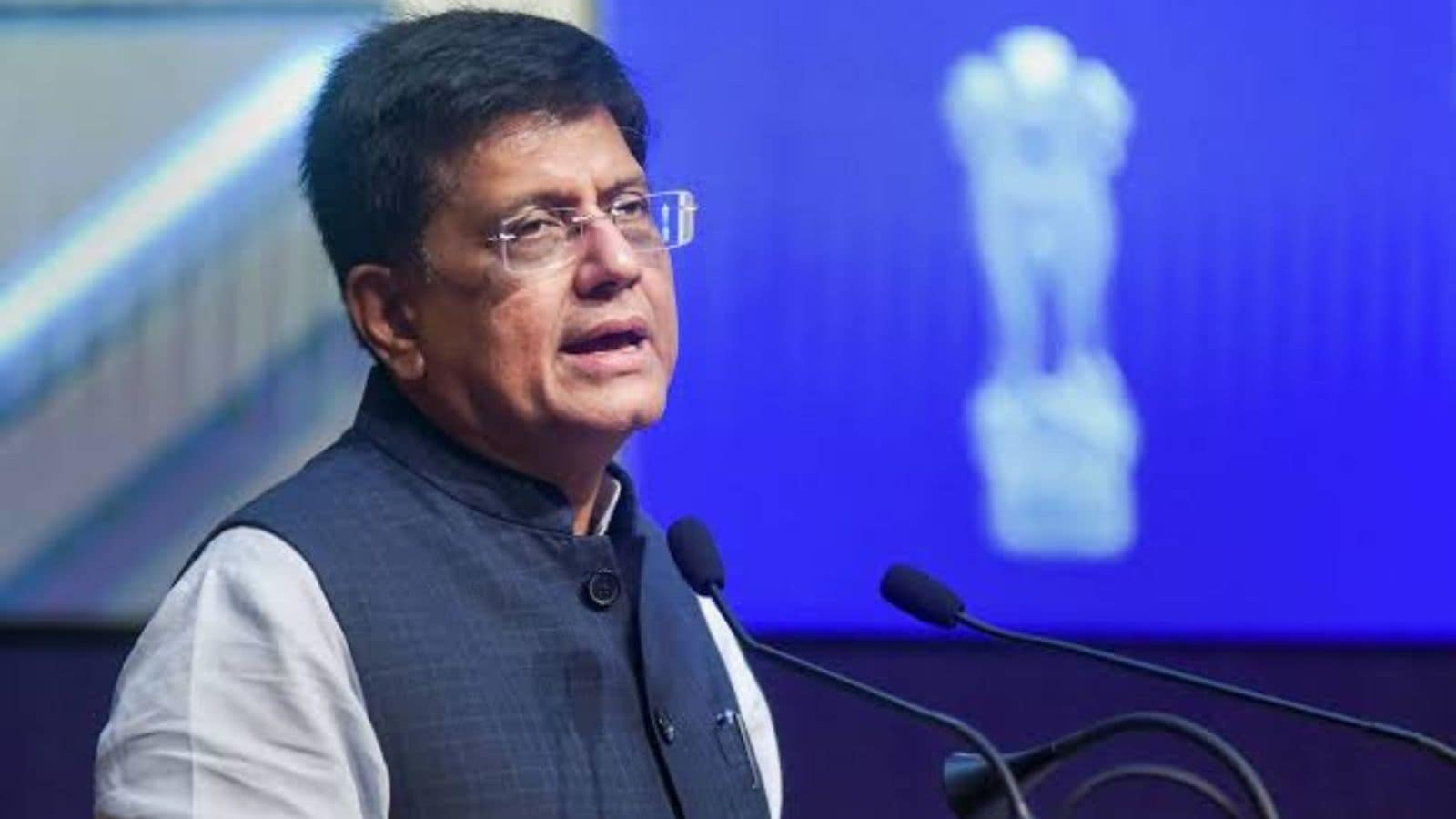
Yet when India’s Commerce and Industry Minister, Piyush Goyal, recently pointed to that exact coastal Dutch steel plant while championing the long-awaited India-EU trade deal, he was pulling back a curtain. He was showing us that international trade is not an abstract ledger of tariffs and quotas. It is a living, breathing nervous system. And right now, the nerves connecting two of the world's largest democratic markets are begging for a stronger pulse.
The Weight of a Steel Beam
To understand why a minister from Mumbai was talking about a factory on the Dutch coast, you have to understand what it feels like to stand on a factory floor when the global economy shifts beneath your boots.
Consider a hypothetical scenario—let us call him Hendrik, a third-generation metallurgist in North Holland, and Priya, a logistics coordinator in Jamshedpur, four thousand miles away. Neither has ever met the other. Yet their mortgages, their children’s school fees, and the quiet dignity of their daily labor are bound by corporate ownership and supply chains that stretch across oceans. When Tata Steel acquired Corus back in 2007, it was hailed as a bold reversal of colonial history—an Indian industrial giant buying a flagship European steelmaker.
Two decades later, the reality is far grittier than any celebratory press release.
European heavy industry is fighting for its life against soaring energy costs, strict environmental regulations, and cheap, state-subsidized steel flooding global markets from elsewhere. Meanwhile, Indian manufacturers are hungry for high-grade European engineering, green hydrogen technology, and predictable access to the single market of four hundred and fifty million European consumers.
Without a comprehensive trade pact, Hendrik and Priya are separated by friction. Every customs delay, every regulatory mismatch, every stubborn tariff acts like sand thrown into a precision gearbox. The machinery still turns, yes. Goods still move between Rotterdam and Mumbai. Bilateral trade in goods between India and the European Union already exceeds one hundred and twenty billion euros annually.
Numbers that large tend to numb the mind. So shrink them down.
Think of a single turbine blade, a pharmaceutical vial, or a ton of specialty automotive steel. When tariffs linger at ten or fifteen percent, or when non-tariff barriers force a mid-sized engineering firm in Pune to spend eighteen months certifying a valve that has already passed rigorous testing at home, the cost is paid in lost time and abandoned ambition. A small business owner simply gives up on the European market. A Dutch tech startup decides India is too complex to navigate.
Goyal’s invocation of the IJmuiden plant was deliberate. It is one of the largest private-sector employers in the Netherlands, supporting roughly nine thousand direct jobs and tens of thousands more in the surrounding region. By highlighting an Indian company anchoring livelihoods in the heart of Europe, the minister was dismantling an old, quiet prejudice—the idea that trade with India is a one-way street where European jobs vanish eastward.
In IJmuiden, the opposite is true. Indian capital is keeping European furnaces lit.
Why This Agreement Has Taken a Generation
If the mutual benefit is so obvious, why have India and the European Union been circling each other like cautious boxers since 2007?
Because trade deals are never really about goods; they are about fear.
I have sat in rooms with mid-level exporters in both Delhi and Antwerp, listening to the same anxieties spoken in different accents. In Europe, the fear wears a green and social mask. European policymakers, pressured by their own voters and industries, insist that any trade deal must bind partners to strict climate standards, labor protections, and intellectual property rules. Look at the EU’s Carbon Border Adjustment Mechanism—a policy designed to tax carbon-intensive imports like steel and cement so European manufacturers aren't undercut by dirtier production abroad.
To a policymaker in Brussels, this is moral and ecological necessity.
To a steelworker or factory owner in Odisha or Gujarat, it feels like a protectionist wall painted green. Developing nations argue—with undeniable historical weight—that Europe industrialized using cheap coal for two centuries, and is now pulling up the ladder while demanding poorer nations pay the price for a climate crisis they did not create.
India’s fears are equally visceral. New Delhi remembers what happened when previous trade agreements flooded domestic markets with cheap imports, hollowing out nascent local manufacturing before it could learn to walk. India is trying to lift hundreds of millions of people into the middle class through initiatives like "Make in India." Opening the floodgates too wide, too fast, to European agricultural conglomerates or heavily subsidized dairy products could devastate millions of small-scale Indian farmers who survive on two acres of land and a good monsoon.
So for years, talks stalled. Both sides wanted the prize without the vulnerability.
Negotiations relaunched in earnest in 2022, driven not by sudden ideological harmony, but by cold geopolitical reality. The world fractured. Supply chains that looked indestructible in 2019 snapped during the pandemic. War returned to European soil, severing cheap Russian gas and forcing Brussels to rethink its dependencies. Across Asia, aggressive industrial policies and territorial posturing made Western capitals realize that putting all their manufacturing eggs in one authoritarian basket was a strategic catastrophe.
Suddenly, India and Europe stopped looking at each other as awkward negotiating partners and started seeing each other as indispensable lifelines.
The Architecture of Trust
When Piyush Goyal speaks about boosting ties through this pact, he is selling a vision of complementarity—a fancy economic word for two people carrying a heavy sofa up a narrow staircase because neither can lift it alone.
Europe has aging demographics, extraordinary deep-tech research, precision machinery, and massive pools of institutional capital looking for growth. It lacks young labor and domestic market expansion.
India has the world’s largest youth population, breakneck digital infrastructure, cost-competitive engineering, and a domestic market expanding faster than almost any major economy on earth. It lacks deep capital reserves and certain high-end industrial technologies.
Consider what happens next if the ink finally dries on a balanced agreement.
Imagine—again, as a concrete illustration of how policy ripples outward—an electric vehicle battery consortium. A German chemical engineering firm holds patents on a cobalt-free cathode design, while a Dutch research institute has pioneered clean smelting processes. An Indian conglomerate brings massive manufacturing scale, software integration, and access to a domestic market projected to buy millions of electric two-wheelers and cars every year.
Under the status quo, cross-border tariffs on components, data localization friction, and visa bottlenecks for specialized engineers slow that partnership to a crawl. Under a modernized India-EU trade framework, components cross borders smoothly, engineers move freely between Bengaluru and Stuttgart, and shared green standards allow steel made in IJmuiden—which is currently undergoing a multi-billion-euro transition toward hydrogen-based, low-carbon production—to serve as the blueprint for decarbonizing plants in India.
That transition in the Netherlands is crucial to understanding the subtext of Goyal’s remarks.
Tata Steel Nederland has been under intense scrutiny from Dutch environmental groups and local residents over emissions and dust pollution from its aging blast furnaces. The company is negotiating massive state support from The Hague to replace coal-fired furnaces with Direct Reduced Iron technology powered by natural gas and, eventually, green hydrogen. It is an eye-wateringly expensive gamble.
If Europe and India align their trade and sustainability frameworks, that technological leap doesn't remain trapped on a windy Dutch peninsula. It becomes transferable intellectual property—a bridge allowing Indian heavy industry to leapfrog dirty legacy methods without sacrificing economic growth.
The Skeptic’s Ledger
It would be dishonest, however, to pretend this story ends in effortless harmony. Anyone who has watched trade politics up close knows that the final ten percent of a negotiation is always the bloodiest.
Even now, thorny questions refuse to dissolve. Brussels wants deep tariff cuts on European wines, spirits, and automobiles—products India has historically taxed at punishing rates exceeding one hundred percent to protect local industries and raise revenue. India wants easier movement of its IT professionals and service workers into Europe, along with a genuine seat at the table when Brussels writes environmental rules that affect Indian exports.
There is also the quiet, lingering doubt among ordinary citizens on both sides.
If you ask a textile worker in Tiruppur or a dairy farmer in Normandy what a Free Trade Agreement means to them, you will rarely hear excitement. You will hear suspicion. Global trade has a terrible public relations problem because its benefits are diffuse—a slightly cheaper smartphone, a pension fund growing by half a percent, a factory staying open that might otherwise have closed—while its pain is concentrated, sudden, and personal. When a factory closes because of foreign competition, an entire town feels the wound.
Bridging that gap requires more than ministerial speeches in New Delhi or Brussels. It requires proving that trade can be structured to protect the vulnerable while empowering the ambitious.
Where the Sparks Fall
Step back onto that gantry above the steelworks in IJmuiden.
Look down at the ladle of molten metal swinging across the bay. Every ton of steel poured there carries a history that no tariff schedule can fully capture. It carries the iron ore dug from the earth, the engineering refined in European laboratories, the capital risk shouldered by an Indian boardroom in Bombay House, and the sweat of Dutch operators watching pressure gauges through a long night shift.
Politicians love to talk about trade deals as historic milestones, as if signing a document creates prosperity out of thin air. It does not. Documents only remove obstacles. They clear away the bureaucratic brush so that human ingenuity—the relentless, messy drive to build, trade, and improve one's lot—can actually flow.
For decades, India and Europe have treated each other with polite distance, bound by warm rhetoric about shared democratic values while keeping their economic doors half-latched. In a fracturing world, half-latched doors are a luxury neither side can afford.
When the wind blows off the North Sea tonight, the furnaces at IJmuiden will keep burning, casting an orange glow against the dark water—a quiet, roaring reminder that the future of both continents is already forged in the same fire.