Six-year-old Maya sits at a low wooden table, her small fingers slick with bright blue fingerpaint. She smears it across a heavy sheet of white paper, her brow furrowed in deep, quiet concentration. There is no blue light reflecting in her eyes. There are no pings, no digital rewards, no synthetic voices cheering her progress. For a few hours a day, her world shrinks to the physical resistance of paper, the grainy texture of kinetic sand, and the erratic, real-world physics of a rolling wooden block.
This is not a high-priced progressive commune or an elite tech-free boarding school in the hills of Northern California. This is a kindergarten classroom in the Los Angeles Unified School District (LAUSD).
A quiet revolution just swept through the second-largest school district in the United States, and it did so by pulling the plug. Under a sweeping new policy, LAUSD has banned all instructional screen time before the second grade. No tablets passed out during morning circle. No educational apps filling the gaps during quiet hours. No smartboards flashing digital phonics flashcards at children who are still figuring out how to tie their shoes.
It is officially one of the strictest digital health policies in the nation. While the rest of the country spent the last decade racing to put a screen in every lap, Los Angeles just built a fortress around its youngest minds.
The policy sounds radical. In the context of modern American schooling, it feels like an admission of defeat from the digital age. But if you look closely at the data, the neurobiology, and the families living on the front lines of this experiment, it looks less like a retreat and more like a rescue mission.
The Mirage of the Digital Edge
To understand how we arrived at a total ban, you have to look at the promises we were sold.
A decade ago, the narrative was simple: tech was the great equalizer. If a school district could hand an iPad to every five-year-old, it could bridge the socioeconomic divide. Software would personalize learning. Artificial intelligence would catch the struggling readers. The glow of the screen was marketed as the light of progress.
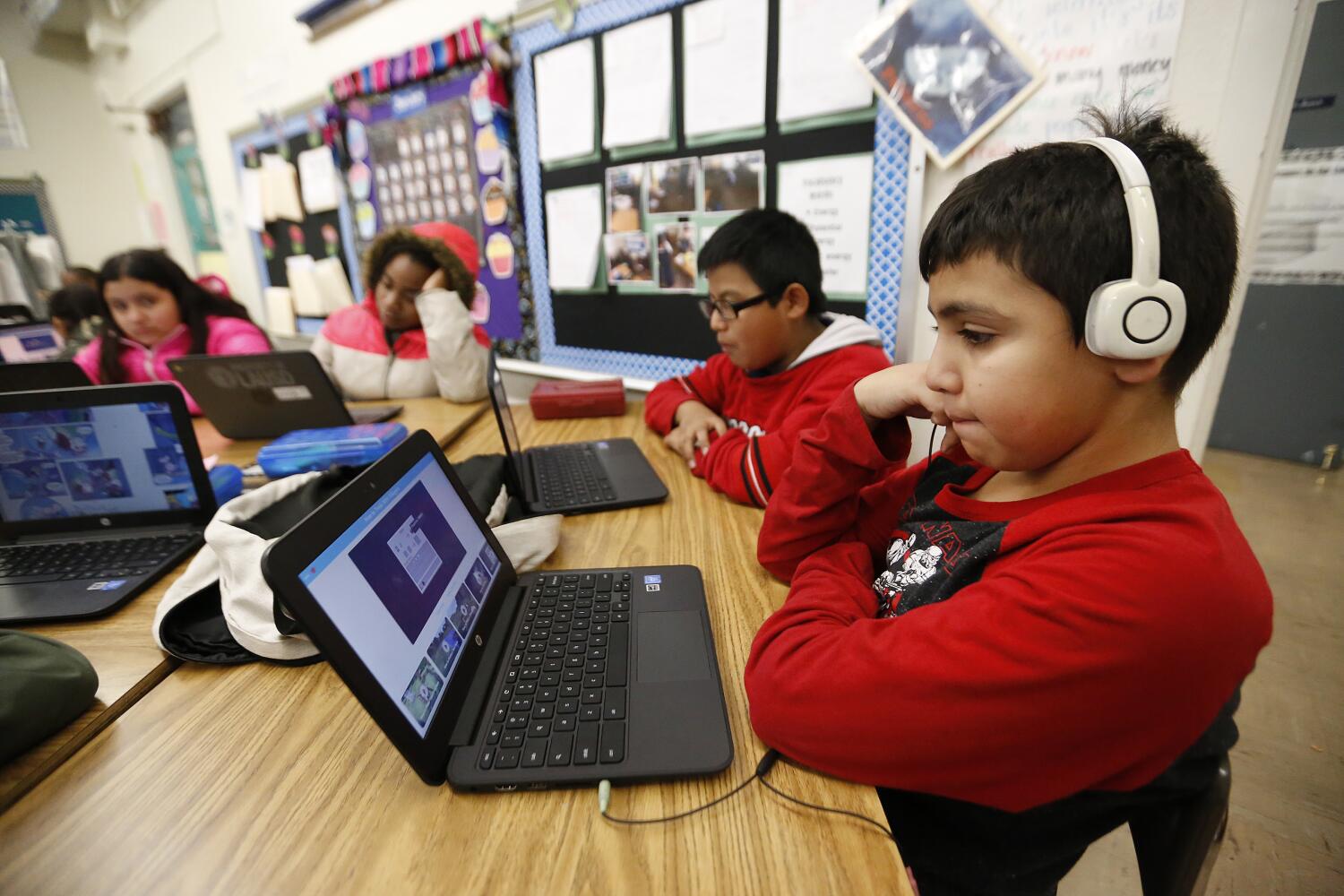
We bought into it. Billions of public dollars poured into ed-tech contracts. Kindergarten classrooms began to look like miniature corporate cubicles, with children wearing oversized headphones, staring into glossy panels, isolated in their own private algorithms.
But the promises did not match the reality.
Consider what happens inside a child’s brain during those critical early years. Between the ages of zero and seven, the human brain is in a state of hyper-plasticity. It builds neural pathways based on sensory feedback. When a child plays with physical blocks, their brain calculates gravity, weight, spatial awareness, and friction in real time. When they slide a digital block across a piece of glass, they learn only one thing: how to slide a finger across glass.
The digital edge turned out to be a cliff. Teachers began noticing a shift. Children arrived at first grade with weaker fine motor skills because they spent more time pinching screens than holding crayons. Attention spans fractured. The natural, messy, chaotic socialization of the playground was replaced by the rigid, predictable input of software.
The district’s leadership faced a uncomfortable truth. The tech we thought would save our schools was actually flattening the very terrain of childhood development.
The View from the Living Room
The data on early childhood development is clear, but data rarely changes policy on its own. The real pressure came from the quiet desperation building in living rooms across Southern California.
Talk to any parent who survived the early 2020s, and they will tell you about the "screen transition tantrum." It is a specific, volatile brand of rage that occurs when a tablet is removed from a child's hands. It isn't a normal tantrum; it looks like withdrawal.
That is because, biologically, it is.
Early childhood apps are engineered by some of the most sophisticated minds in the world to maximize engagement. They use intermittent dopamine rewards—bright colors, celebratory sounds, virtual stickers—to keep a child’s eyes locked on the glass. When the screen turns off, the real world feels painfully slow, gray, and unrewarding by comparison.
Parents found themselves caught in a hypocritical loop. They spent their evenings fighting to keep their children off phones and tablets, only to send them to school the next morning where the state handed them those exact same devices under the guise of curriculum.
The LAUSD ban recognizes that schools cannot ask parents to fight this battle alone while actively undermining them during the day. By drawing a hard line at the second grade, the district has effectively called a truce in the living room. It gives children a chance to develop a baseline of attention, frustration tolerance, and social cues before they are introduced to the hyper-stimulating architecture of the internet.
The Irony of the Architects
There is a deep, uncomfortable irony at the heart of the digital education movement. For years, the executives who design these devices and software packages have famously sent their own children to tech-free Waldorf schools in Silicon Valley.
The people who profit off digital attention know exactly how dangerous it is to consume it too early. They understood what the public education system is only now realizing: coding can wait, but the formation of human empathy cannot.
Empathy is not a textbook subject. It is learned by looking at a classmate’s face when you accidentally take their toy. It is learned by reading facial expressions, body language, and tone of voice. A screen offers no facial feedback. It doesn’t care if you are sad, angry, or bored; it only cares that you are looking.
By banning screens for kindergarteners and first-graders, LAUSD isn't rejecting technology. It is respecting human chronology. It acknowledges that you cannot effectively teach a child to navigate a digital world until they have learned to stand firmly in the physical one.
The New Daily Bread
Walk through an LAUSD elementary school now, and the silence of the screen has been replaced by something much louder.
You hear the clatter of plastic counters in a math circle. You hear the scratch of pencils on thick paper. You hear children arguing over the rules of a game they made up themselves on the asphalt.
The transition hasn't been seamless. Teachers have had to reinvent lesson plans that had been outsourced to software programs for years. It requires more energy, more physical resources, and more patience to manage twenty-five six-year-olds without the pacifying effect of a glowing screen.
But the alternative is a generation of children who can swipe before they can write, who can navigate an interface but cannot navigate a conflict with a peer.
The real test of this policy won't be found in standardized test scores next semester. It will be found a decade from now, when these children enter middle school and high school. The district is gambling that by protecting the early years, they are building a deeper, more resilient foundation of literacy and critical thinking that will make these students better at using technology when the time is right.
For now, the victory is small, fragile, and deeply human. It is found in a classroom where a child drops a wooden block, watches it fall, and reaches down to pick it up again, entirely unaware of the digital world waiting just beyond the window.