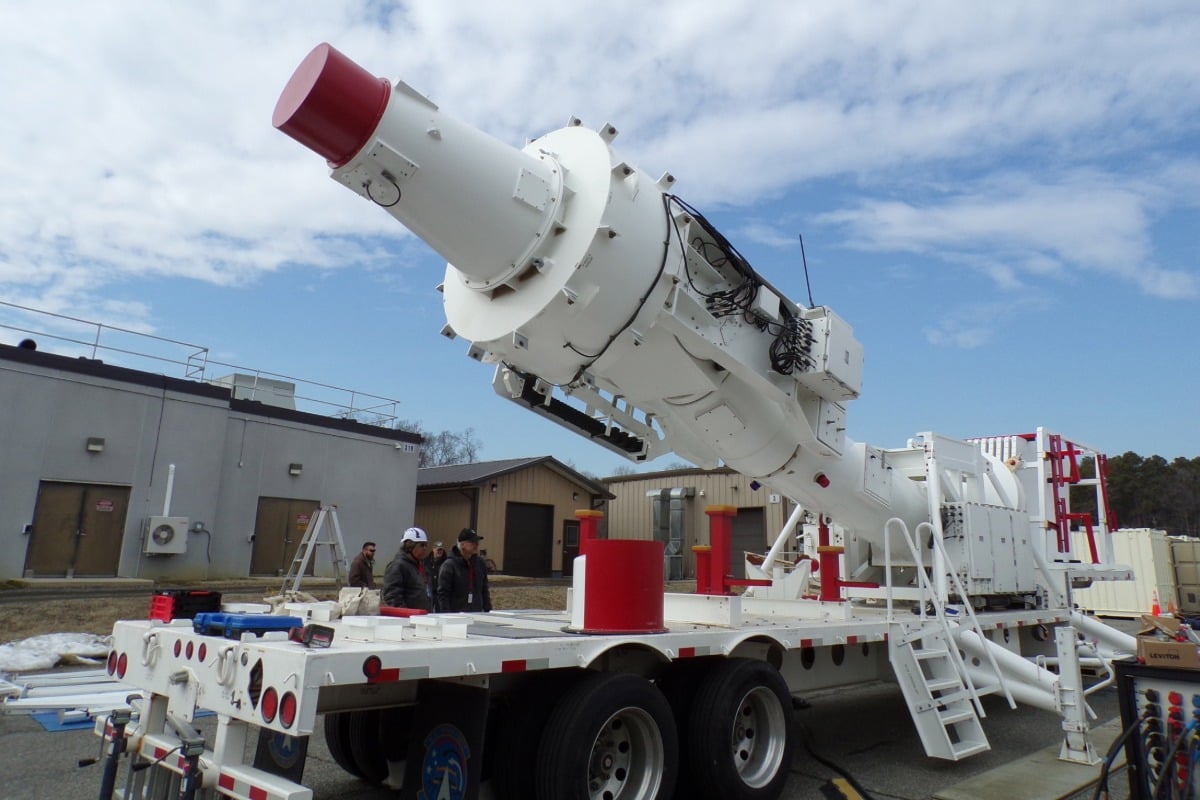
The headlines want you to celebrate a victory for military cooperation. They point to the U.S. Navy’s recent acquisition of specialized Space Force hardware for thermal vacuum testing and call it a masterclass in bureaucratic efficiency. They tell you that sharing expensive environmental simulation gear between branches is how a modern military optimizes its budget.
They are dead wrong.
What the defense establishment praises as inter-service resource optimization is actually a smoke screen. It hides a deep structural failure in how the United States builds, tests, and deploys space hardware. Moving a few pieces of testing infrastructure across organizational lines does not solve the fundamental crisis of slow, risk-averse military procurement. In fact, it reinforces the very bottleneck that keeps American defense tech lagging years behind commercial innovation.
The Lazy Consensus of Shared Infrastructure
The standard narrative surrounding this hardware transfer assumes that defense laboratories suffer from a simple lack of equipment. The logic follows that if the Navy’s standard labs get access to Space Force assets, satellite testing backlogs will vanish.
This view ignores the physical reality of space qualification testing.
Satellite testing is not a software update. You cannot simply plug a new payload into a simulated environment and press run. Thermal vacuum (TVAC) testing, vibration testing, and electromagnetic compatibility evaluation require months of precise configuration, calibration, and engineering manpower.
Giving a Navy facility new hardware without a massive, corresponding increase in specialized personnel simply shifts the bottleneck from an equipment shortage to a human resource crisis. I have watched defense programs sink tens of millions into state-of-the-art simulation chambers, only to let them sit idle because the facility lacked the certified technicians required to run the systems 24 hours a day.
Furthermore, the "shared infrastructure" model introduces massive scheduling friction. When the Navy and the Space Force both need to validate critical orbital components simultaneously, who blinks? The bureaucracy will inevitably generate prioritized tier lists, turning what should be an agile verification process into an administrative turf war.
The Flawed Premise of Military Environmental Testing
The current defense strategy relies on a flawed premise: that the military must build and maintain bespoke, highly classified test facilities for every single component destined for orbit.
Look at how the commercial space sector operates. Companies like SpaceX, Planet Labs, and Rocket Lab do not wait for government-approved test windows at federal research centers. They build internal, hyper-lean testing loops or utilize commercial, merchant-model testing facilities that operate at a fraction of the cost and three times the speed.
| Testing Metric | Traditional Military Lab Model | Commercial Agile Model |
|---|---|---|
| Chamber Setup Time | 4–6 Weeks | 3–5 Days |
| Hardware Iteration Cycle | Months to Years | Weeks |
| Infrastructure Overhead | High (Taxpayer Funded) | Low (Capital Efficient) |
| Risk Tolerance | Zero (Failure is a Scandal) | Moderate (Test to Failure to Find Limits) |
By keeping satellite validation cooped up inside rigid military laboratories, the Pentagon ensures that every test remains a high-stakes, slow-motion event. The goal of hardware testing should not be to achieve a perfect, zero-risk simulation on the first try after five years of paperwork. The goal should be to break components quickly, identify the failure points, iterate the design, and re-test within days.
Shuffling Space Force gear to a Navy lab does not change the culture of risk aversion that governs these facilities. It just gives the same slow processes a shiny new coat of paint.
The Hidden Costs of Inter-Service Hardware Integration
Let's address the technical friction that nobody in leadership wants to talk about. Space Force hardware is built to meet specific architectures, telemetry standards, and security protocols. Navy space payloads often operate on entirely different frameworks, optimized for maritime integration and tactical fleet communications.
When you force these two worlds together in a single test environment, you create an integration nightmare.
- Software Mismatch: Custom automation scripts written for Space Force hardware must be rewritten, verified, and re-certified to handle Navy payloads.
- Security Domain Conflicts: Merging data streams from different classification levels across distinct military branches requires complex data guards that slow down real-time analysis.
- Calibration Drift: Moving sensitive environmental simulation assets between commands frequently results in calibration discrepancies that require weeks of troubleshooting to resolve.
This is the downside of the contrarian argument: building dedicated, redundant commercial testing pipelines requires upfront capital. It forces the military to cede total control over the physical testing footprint. But the alternative is what we have now—a system that spends millions in taxpayer money to engineer stopgap integration solutions for hardware that was never meant to coexist.
Dismantling the People Also Asked Delusions
The defense tech community regularly asks questions that reveal how fundamentally they misunderstand the problem.
Does sharing equipment reduce the cost of satellite development?
No. It reduces the visible acquisition cost of a single piece of machinery on a balance sheet. But it drives up the lifecycle costs through extended program timelines, delayed launch windows, and thousands of hours of additional engineering labor spent managing scheduling conflicts and custom integration. A delayed launch is always more expensive than a purchased test chamber.
Will this transfer help counter rapid foreign space deployments?
It accomplishes the exact opposite. By doubling down on the centralized government lab model, the U.S. military signals that it is unwilling to adopt the rapid commercial practices that its adversaries are leveraging. While a legacy lab spends six months calibrating a shared vacuum chamber, an agile competitor can build, test, and launch three iterations of a small satellite constellation using commercial test pipelines.
Shift the Paradigm from Assets to Outcomes
If the goal is genuine strategic readiness, the military must stop treating hardware transfers as meaningful progress. The solution is not to build a more complex web of shared government laboratories.
The military needs to aggressively outsource environmental testing to the commercial sector.
Stop buying test chambers. Buy testing hours from private providers who face market pressure to maximize throughput and minimize downtime. Force the internal labs to compete with commercial entities on speed and cost. If a Navy lab cannot logistically validate a payload faster than a private contractor, that lab should be decommissioned, and its funding diverted to direct commercial procurement.
The current system rewards bureaucracy for doing the bare minimum—sharing tools while the house burns down. True innovation requires tearing down the walls of the traditional military test facility and forcing defense procurement to move at the speed of commercial flight hardware.
Until the Pentagon stops worshiping the infrastructure and starts prioritizing the deployment timeline, all the shared hardware in the world won't keep American assets safe in a contested orbit. Stop celebrating the transfer. Demand a completely different system.