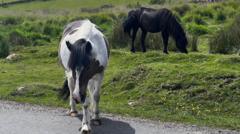
The emotional blackmail surrounding the Dartmoor hill pony has officially reached a boiling point. Local headlines are shrieking about a "potential cull," local activists are weeping into their organic tea, and the public is being fed a sugary, Disneyfied narrative about wild, majestic beasts facing execution.
It is a beautiful story. It is also an ecological lie.
The lazy consensus dominating the debate is simple: the ponies are wild, they are endangered, and any reduction in their numbers is a crime against nature. This worldview treats the Dartmoor commons like a petting zoo rather than a highly fragile, collapsing ecosystem. Having spent years tracking land management policies and watching conservation boards cave to public relations pressure, I can tell you exactly what the mainstream media refuses to print.
The current population of ponies on Dartmoor is not a triumph of nature. It is an artificial surplus driven by sentimentality, and it is actively destroying the biodiversity of the moor. If we want to save Dartmoor, we need to stop romanticizing the ponies and start managing them. Brutally, if necessary.
The Wild Pony Myth
Let us dismantle the foundational lie of this entire debate: Dartmoor hill ponies are not wild animals.
They are livestock. Every single pony on the commons belongs to a local commoner. They are gathered during the annual autumn drifts, branded, sorted, and owned. To treat them as a feral, self-regulating wildlife population is biologically illiterate.
Because they are managed as semi-domesticated livestock without natural predators, their numbers do not fluctuate based on ecological carrying capacity. They fluctuate based on human intervention and market demands. When the market for pony meat or riding ponies collapses—as it did spectacularly over the last few decades—the ponies are simply left on the moor to multiply.
+--------------------------+-------------------------------------------------------+
| The Romantic Myth        | The Ecological Reality                                 |
+--------------------------+-------------------------------------------------------+
| Wild, native keystone    | Semi-domesticated livestock with zero apex predators  |
| species                  |                                                       |
+--------------------------+-------------------------------------------------------+
| Grazing benefits all     | Overgrazing selectively destroys heather and nesting  |
| flora                    | bird habitats                                         |
+--------------------------+-------------------------------------------------------+
| Any population reduction | Failing to manage numbers leads to starvation and    |
| is cruel                 | ecological collapse                                   |
+--------------------------+-------------------------------------------------------+
When you overstock a localized area with heavy, non-selective grazers, you do not get a thriving wilderness. You get a biological desert. The ponies rip up the delicate purple moor grass and dwarf shrub heaths. They trample the nesting sites of curlews and lapwings—birds that are actually facing genuine extinction on the peninsula.
We are sacrificing real, irreplaceable biodiversity on the altar of an animal that looks good on a postcard.
The Defra Subsidies Incentive
Follow the money. The debate isn't just about animal welfare; it is about agricultural survival. The Department for Environment, Food and Rural Affairs (Defra) has spent years shifting its subsidy models toward environmental land management schemes.
Commoners are caught in a bureaucratic trap. On one hand, they are told to reduce grazing pressure to restore the peat bogs and heather. On the other hand, the cultural heritage of the pony keeps them tethered to unsustainable herd sizes.
I have spoken with upland farmers who are terrified of the public backlash. They know the land is overgrazed. They see the degradation of the soil and the lack of regeneration in the ancient oak woodlands like Wistman's Wood. But the moment a farmer suggests that herd numbers need to be slashed by 30% or 40% to let the land breathe, animal rights groups launch a digital crusade, threatening their agritourism businesses and livelihoods.
We have created a system where ecological truth is punishable by public ruin.
Dismantling the People Also Ask Nonsense
The public discourse around this issue is plagued by fundamentally flawed premises. Let us address the questions people are asking, with the uncomfortable honesty they deserve.
Aren't Dartmoor ponies a recognized endangered breed?
This is a classic bait-and-switch. The Dartmoor Pony—the pedigree, closed-herd breed registered with the Dartmoor Pony Society—is indeed rare and endangered. The Dartmoor Hill Pony, however, is a genetically mixed, semi-feral population. Activists deliberately conflate the two to weaponize conservation funding. Funding a genetically muddy herd of 1,000+ unregistered animals under the guise of "rare breed conservation" is a misuse of limited environmental resources.
Can't we just use contraception to manage the herd?
Immunocontraception (like Dart-PZP) is the favorite talking point of suburban animal lovers. It sounds clean. It sounds humane. It is also completely unworkable on a massive, rugged landscape like Dartmoor.
- Tracking down hundreds of semi-feral mares across thousands of hectares of treacherous terrain every single year is logistically impossible.
- The labor costs alone would bankrupt the local associations.
- It does absolutely nothing to solve the immediate crisis of overgrazing happening right now.
Why can't we just rehome them all?
Rehome them where? The UK equine market is utterly saturated. Every rescue center from Cornwall to the Scottish Highlands is bursting at the seams with abandoned horses. The idea that there are hundreds of idyllic homes waiting to adopt unhandled, semi-feral hill ponies is a fiction designed to make people feel better while doing nothing.
The Dark Side of Sentimentality
The alternative to active population management—which includes culling—is far more cruel than a bullet.
When populations swell beyond what the winter forage can support, the animals suffer. We have seen winters where ponies scratch out a miserable existence, starving, ribs showing, ridden with parasites, because the commoners cannot afford to feed them and the law prevents them from effectively thinning the herd.
"True conservation isn't about keeping every single individual animal alive. It is about maintaining the balance of the entire system. If you lose the system, you lose the animals anyway."
If we refuse to allow a controlled, humane cull to regulate numbers to an ecologically viable level, we are choosing to let nature do it through starvation, disease, and systemic neglect. That isn't compassion. It is cowardice wrapped in moral superiority.
The Hard Truth of Land Management
If you want a thriving Dartmoor, you have to accept that the landscape cannot be everything to everyone. It cannot be a wild playground for tourists, a profitable monoculture for intensive grazing, and an untouched carbon-sink peat bog all at once.
To restore the blanket bogs—which are vital for carbon sequestration—we need less pressure on the land. That means fewer sheep, fewer cattle, and yes, significantly fewer ponies.
The contrarian reality is that reducing the pony population isn't an attack on Dartmoor's heritage. It is the only way to preserve it. A smaller, healthier, genetically managed herd of genuine pedigree Dartmoor ponies would do far more for the cultural identity and ecological health of the region than thousands of unregistered, roaming crossbreeds slowly turning the moor into a muddy wasteland.
Stop signing petitions written by people who live two hundred miles away and have never stepped foot on a peat bog. Stop letting emotion dictate environmental policy. The moor is dying, and our obsession with saving the ponies is the weapon we are using to kill it.
Manage the herd. Thin the numbers. Save the moor.