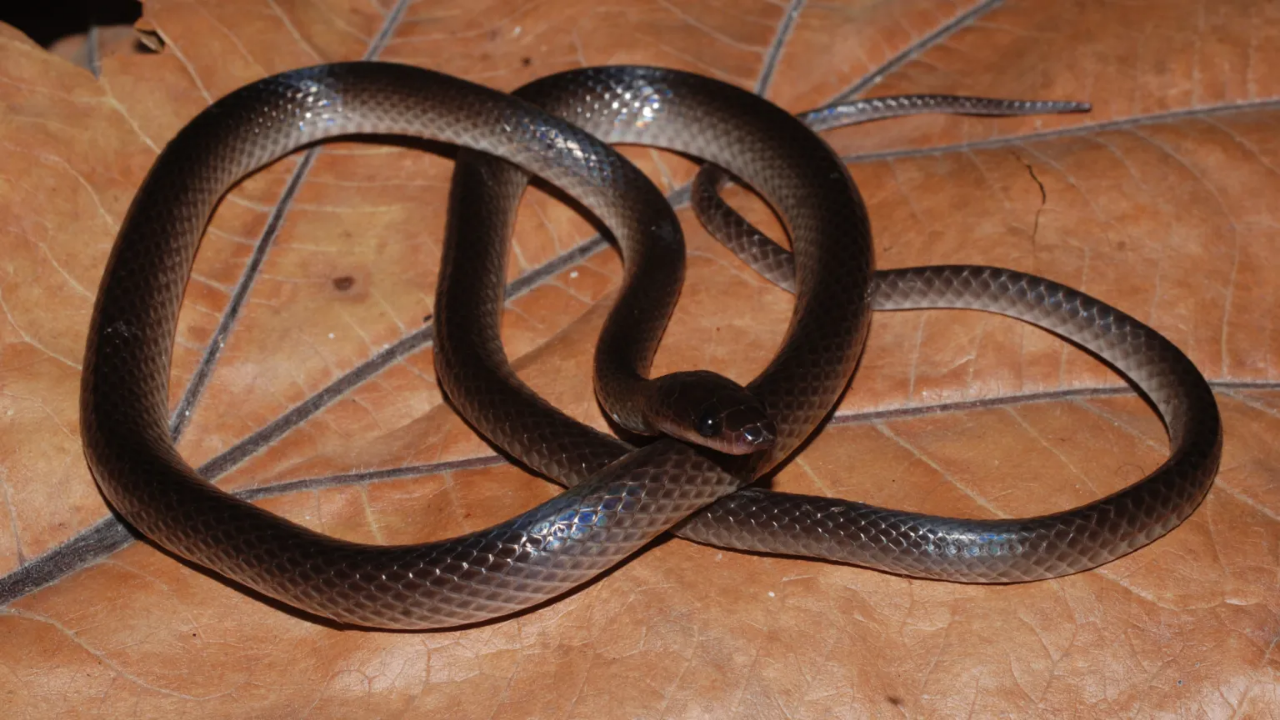
Science has a funny way of bringing childhood dreams full circle. Researchers have officially named a newly discovered reptile species Lielaphis slashi, commonly known as Slash's groundsnake, after the legendary Guns N' Roses guitarist. If you think this is just a quirky publicity stunt, you are missing the genuine scientific backstory.
The animal isn't just a random pop-culture reference. It is a legitimate biological discovery with a deep personal connection to the researchers who found it. Read more on a similar subject: this related article.
Meet the New Resident of New Guinea
The newly described snake hails from the dense lowland forests of New Guinea. It measures about 28 inches long and sports a distinct reddish-brown color. It is entirely non-venomous, meaning it poses zero threat to humans.
For years, field researchers misidentified or overlooked the creature in museum collections and field notes. It wasn't until scientists deployed rigorous genetic sequencing and detailed scale counts that they realized this nocturnal ground-dweller was an entirely distinct species. Further analysis by Popular Science highlights related views on this issue.
Finding new species on the massive island of New Guinea happens more often than people think, but giving one a rock-star namesake turns heads. The credit goes to Dr. Sara Ruane, an associate curator of herpetology at the Field Museum in Chicago.
The Childhood Inspiration Behind the Name
Dr. Ruane didn't wake up yesterday and decide to honor a rock legend. Her obsession with both reptiles and Guns N' Roses started early. By the fifth grade, she had already decided she wanted to spend her life studying amphibians and reptiles.
When she was twelve years old, a specific magazine arrived in her mailbox. The cover featured Slash holding his pet reticulated python. Inside, an interview detailed the musician's childhood fascination with searching for snakes, visiting zoos, and supporting natural history museums. That issue stuck with her through decades of academic research and fieldwork.
When her team needed a name for the distinct New Guinea groundsnake, Slash was the obvious choice. The musician, whose real name is Saul Hudson, has long worn his love for reptiles on his sleeve—even forming the rock supergroup Slash's Snakepit back in 1994.
Upon hearing the news, Slash expressed genuine surprise and gratitude. He noted that as a lifelong reptile enthusiast, he never imagined having a real animal species named in his honor.
Why Naming Species Still Matters
Some critics roll their eyes when scientists name animals after celebrities. They think it cheapens formal taxonomy. The reality is quite the opposite.
Conservation stories rarely make front-page news unless they have a hook that catches the public eye. A dry academic paper published in a scientific journal about a 28-inch reddish-brown groundsnake usually stays confined to university labs. Attach a rock icon to it, and suddenly millions of people are learning about the fragile ecosystems of New Guinea.
The forests where Lielaphis slashi lives face intense pressure from habitat loss, mining, and agricultural expansion. Scientists can't protect animals if they don't even know they exist yet. Formal descriptions of hidden biodiversity give conservationists the legal and ecological baseline required to fight for habitat preservation.
If a legendary guitar player helps bridge the gap between obscure tropical biology and public awareness, science wins. Next time you crank up an old rock anthem, remember that the wild world is still full of surprises hiding right beneath the forest canopy.