National Democrats love talking about the New South. They pour tens of millions of dollars into Georgia, chase every single swing voter in North Carolina, and obsess over the suburban margins in Texas. Yet when you cross the state line into Mississippi, the checkbooks slam shut and the party leadership practically vanishes.
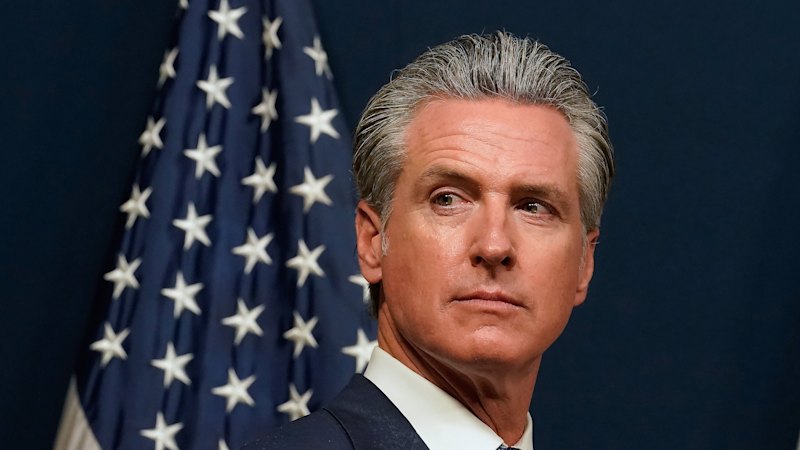
Scott Colom has had enough of it. The longtime Mississippi prosecutor and Democratic figure recently called out the national party for refusing to invest real money and infrastructure into the Magnolia State. His critique isn't just local venting. It exposes a massive strategic blind spot that keeps Democrats playing defense across the Deep South while Republicans lock down statehouses and Senate seats for decades at a time.
You don't have to be a political strategist to see the frustration. Mississippi holds the highest percentage of Black residents of any state in the country—roughly 38 percent of the population, according to U.S. Census Bureau data. On paper, that demographic reality should make Mississippi a prime target for a party whose base relies heavily on Black turnout. Instead, the Democratic National Committee and major Washington fundraising committees routinely treat the state like a lost cause, leaving local candidates to run shoestring campaigns against heavily funded GOP machines.
The Math Behind the Mississippi Neglect
Washington consultants operate on a cold, simple formula. They look at the last presidential margin, calculate the cost per electoral vote or Senate seat, and funnel cash toward states where a two-point shift flips a race. Because Donald Trump carried Mississippi by roughly 16 points in 2020 and widened that margin in 2024, national donors view every dollar spent in Jackson, Tupelo, or the Delta as a bad return on investment.
Scott Colom argues that this spreadsheet mentality completely misses how political power actually builds. You can't skip three election cycles, ignore county-level party infrastructure, and suddenly expect high voter turnout when a close race finally materializes.
Think about what happens when a state party goes unfunded for ten years.
- Local Democratic county committees go dormant because nobody is paying for field organizers or basic voter registration drives.
- Talented young candidates look at the lack of institutional backing and decide not to run for the state legislature, city councils, or judicial seats.
- Voters in rural areas—especially Black voters in the Mississippi Delta—never see a canvasser at their door until two weeks before Election Day, which breeds deep cynicism.
- Republicans run unopposed in dozens of legislative districts, allowing them to pass strict voting laws and draw maps that cement their supermajority.
Colom knows this terrain intimately. Serving as District Attorney for Mississippi's 16th Circuit Court District—a largely rural, majority-white area in northeast Mississippi that includes Columbus and Starkville—he actually won elections where national Democrats assume a progressive Black prosecutor has zero shot. He did it by showing up, building coalitions, and refusing to cede rural turf. When he looks at Washington strategists writing off the entire state, he's speaking from experience, not theory.
What Happened During the 2023 Governor's Race
If you want proof of what happens when Mississippi Democrats actually get a competitive candidate, look back at the 2023 gubernatorial election. Brandon Presley, a moderate Democrat and former Public Service Commissioner, mounted a surprisingly strong challenge against incumbent Republican Governor Tate Reeves.
Presley ran on Medicaid expansion, hospital closures, and the massive welfare scandal involving the Temporary Assistance for Needy Families program. Those issues cut right across racial lines in one of the poorest states in America. By November, Presley pulled in nearly 48 percent of the vote, losing to Reeves by just over three percentage points.
It was the closest governor's race in Mississippi in twenty years.
Yet even with a scandal-plagued incumbent and a populist Democratic challenger within striking distance, national Democratic investment arrived late and felt hesitant compared to the tidal wave of cash Republicans deployed to save Reeves. Many Mississippi operatives—Colom among them—walked away from 2023 convinced that earlier, sustained national backing could have pushed Presley over the finish line. Instead, the lesson Washington seemed to take away was "close, but still a loss," and the money dried up right back to baseline.
Why Ignoring Deep Red States Hurts Democrats Everywhere
Here is what national strategists get wrong when they treat states like Mississippi as pure charity cases. Politics doesn't respect state borders. The cultural narratives, media ecosystems, and voter habits forged in places like Mississippi bleed directly into neighboring battlegrounds.
When Democrats abandon rural white voters and fail to energize Black voters in Mississippi, those exact same demographic trends show up in Georgia, North Carolina, and even parts of the Midwest. You can't test messages on rural healthcare, agricultural policy, or public education if you aren't actually contesting races in rural states.
Honestly, it's also a question of basic credibility. Every four years, national Democratic leaders fly into Mississippi churches, praise the civil rights legacy of Fannie Lou Hamer and Medgar Evers, and ask Black voters to save the party. Then the plane takes off, and the party leaves local organizers without year-round funding to fight gerrymandering or register new voters. People notice that. When Colom blasts the party for underinvesting, he's voicing a frustration that grassroots organizers in Jackson and Hattiesburg have whispered for years.
The Judicial Nominee Fight That Raised Colom's Profile
Colom's willingness to challenge the political establishment isn't new, and his frustration with national party dynamics carries extra weight because of his own battle in Washington. In 2022, President Joe Biden nominated Colom to serve as a federal district judge for the Northern District of Mississippi. Colom had bipartisan support at home, strong credentials as a prosecutor, and backing from major legal groups.
Then Republican Senator Cindy Hyde-Smith refused to return her "blue slip"—a Senate Judiciary Committee tradition that effectively gives home-state senators a veto over federal district court nominees. Hyde-Smith cited Colom's past campaign contributions from groups linked to George Soros and claimed his prosecutorial philosophy was out of step with Mississippi.
Despite pressure from civil rights groups to scrap the blue-slip tradition for judicial picks, Senate Democrats largely stuck to institutional norms, and Colom's nomination stalled out. He watched firsthand how Washington plays by polite rules while conservatives use every procedural lever available to hold power. That experience sharpened his view that national Democrats are far too passive when it comes to fighting for ground in states like Mississippi.
What Real Investment in Mississippi Actually Looks Like
Throwing a few million dollars at television ads in October isn't investment. TV ads in Jackson or Biloxi don't build lasting political power, and most voters tune them out anyway. If national Democrats actually took Scott Colom's warning seriously, their spending would look completely different.
Real investment starts with permanent, year-round field operations. That means hiring local organizers who live in the Delta, the Pine Belt, and the Gulf Coast—people who know the pastors, the union leaders, and the community activists by their first names. It means funding voter registration drives in high schools and community colleges every single year, not just during presidential cycles.
It also means recruiting candidates for down-ballot races. Right now, Republicans hold supermajorities in both chambers of the Mississippi Legislature. You don't break a supermajority overnight, and you certainly don't break it by ignoring uncontested districts. Even if a Democrat loses a state House race by ten points this cycle, running a credible campaign forces Republicans to spend money at home, trains a future candidate, and keeps local voters engaged.
The Bigger Risk for the Democratic Party
Mississippi isn't going to turn blue in the next election cycle. Nobody—not even Scott Colom—is claiming that a sudden influx of DNC cash will magically flip the state's six electoral votes tomorrow.
The real danger is what happens if nothing changes. If national Democrats keep writing off entire regions of the country because the short-term math looks tough, they shrink their own map year after year. Worse, they send an unmistakable message to millions of loyal Black voters in the Deep South that their votes only matter when they happen to live in a swing state like Georgia.
If you're a voter, organizer, or donor who cares about breaking the political stagnation in Mississippi, stop waiting for Washington to rescue the state party. Support local county committees directly, back down-ballot candidates early in the primary cycle, and put pressure on national fundraising groups to fund year-round organizing rather than last-minute media buys. Until national Democrats start treating Mississippi like a place worth fighting for, local leaders like Scott Colom are going to keep calling them out—and they'll be right to do it.