A single steel wall, barely an inch thick, separates Captain Mykhailo from a dark, shifting abyss.
He stands on the bridge of a 100,000-ton container ship. Beneath his boots, the engines hum with a deep, vibrating thrum that has been his lullaby for thirty years. But tonight, there is no comfort in the rhythm. Outside, the Persian Gulf is pitch black. The water is slick, flat, and deceptively calm.
Ahead lies the Strait of Hormuz.
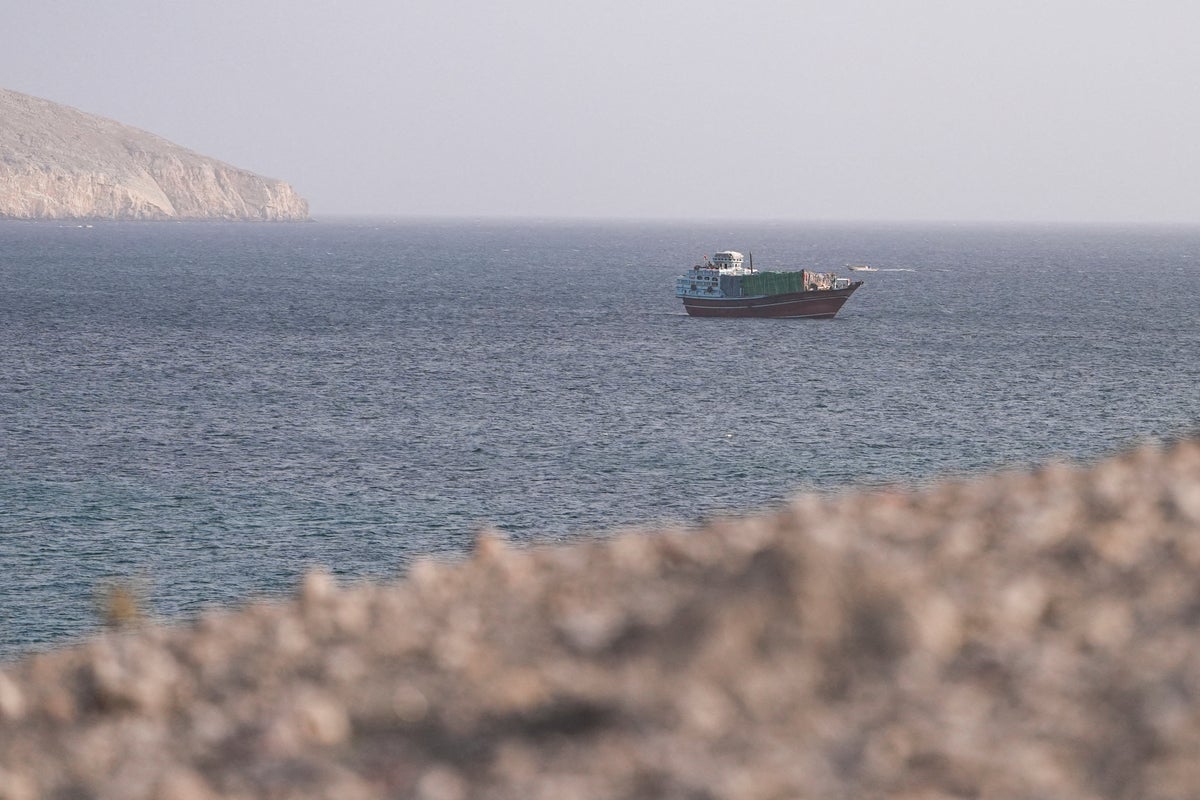
It is a narrow, choking throat of water. At its tightest point, the shipping lanes are just two miles wide. If you stand on the deck of a supertanker, you can see the jagged, sun-bleached cliffs of Oman on one side and the hazy coastline of Iran on the other. For decades, this ribbon of blue has been the undisputed windpipe of the global economy.
Right now, that windpipe is closing.
Over the last seven days, the quiet hum of global trade has shattered. A flurry of missile strikes, drone attacks, and aggressive naval maneuvers between US forces and Iranian military units have turned this vital passageway into a shooting gallery. The statistics are clinical, cold, and terrifying. Ship traffic through the strait has plummeted by over 70% in a single week. Millions of barrels of oil, thousands of tons of grain, and endless rows of shipping containers are suddenly frozen in place, idling in the safe waters of the Arabian Sea or scrambling to find a desperate, wildly expensive way around.
But statistics do not capture the dry, metallic taste of fear in a mariner’s mouth.
The Geometry of a Chokepoint
To understand how a strip of water barely wider than a runway can paralyze the modern world, you have to understand the sheer scale of our reliance on it.
We live in an era of illusions. We tap a glass screen, and a product arrives at our door thirty-six hours later. We pull up to a pump, squeeze a plastic handle, and fuel flows effortlessly into our cars. We treat the global supply chain as a cloud-based service—immaterial, infinite, and instant.
It is none of those things. It is stubborn, heavy, and fragile.
More than a fifth of the world’s petroleum passes through this single, narrow gate. When the US and Iran exchange fire, the ripple effect is not a slow wave. It is a lightning strike.
Consider a hypothetical merchant ship, the Aura. She is carrying liquid natural gas destined for a terminal in Rotterdam. If the Aura cannot pass through Hormuz, she cannot simply take a detour down a side street. Her captain has two choices.
First, she can drop anchor and wait. Every single day a massive cargo vessel sits idle costs the charterer upwards of $80,000 in fuel, crew wages, and port fees. Multiply that by the hundreds of ships currently waiting outside the strait, and the economic bleeding becomes a torrent.
Second, she can turn around.
Going around Africa’s Cape of Good Hope adds thousands of miles to the journey. It tacks weeks onto delivery times. It burns ocean-spanning mountains of extra fuel. When you burn more fuel, the cost of the cargo skyrockets. By the time that natural gas finally reaches Europe, the price tag has doubled.
The crisis is not just about oil. It is about everything. It is about the microchips bound for factories in Munich, the grain meant to feed families in Cairo, and the cheap plastic goods heading to store shelves in Chicago.
The Human Cost of a Standoff
On the bridge of his ship, Mykhailo watches the radar screen. A green sweep line rotates, painting faint, glowing dots on the glass.
Some of those dots are civilian vessels, moving slowly, practically holding their breath. Others are gray hulls. Warships. Destroyer escorts. Speedboats belonging to the Islamic Revolutionary Guard Corps, darting through the waves like water striders.
Two days ago, a sister ship just ten miles ahead of Mykhailo’s position took a drone strike to the port quarter. No one died, but the explosion tore through the crew quarters, leaving a jagged, blackened crater where young men had been sleeping an hour before.
"You don't think about the geopolitics when you're out here," Mykhailo says, his voice flat, worn thin by sleepless nights. "You think about whether the hatch covers will hold. You think about your wife in Odessa. You look at the water and you wonder if today is the day the sea turns to fire."
There is a profound disconnect between the sterile press releases issued in Washington and Tehran and the reality on the water. Policymakers speak of "proportional responses," "deterrence frameworks," and "strategic red lines." They play a high-stakes game of chicken with aircraft carriers and anti-ship missiles.
But the chess pieces are made of flesh and bone.
The crews of these merchant vessels are not soldiers. They are underpaid sailors from the Philippines, Ukraine, India, and China. They signed up to haul cargo, to send money back to their families, to build a modest house in a quiet village somewhere. Now, they find themselves drafted into the front lines of a shadow war they do not understand, trapped inside floating tinderboxes loaded with millions of gallons of highly flammable fuel.
The Broken Mirror of Global Trade
The current deadlock reveals a truth we prefer to ignore: the entire structure of modern life is built on trust.
We trust that ocean lanes will remain free. We trust that nations will respect international law. We trust that the invisible network of maritime insurance, salvage rights, and shipping registries will hold the ceiling up.
When a conflict like this erupts, that trust evaporates instantly.
Insurance companies are the first to react. Within forty-eight hours of the initial strikes, "war risk" premiums for vessels transiting the Persian Gulf surged by over 400%. For many shipowners, this was the breaking point. It was no longer profitable to sail. The risk of losing a $150 million vessel—and the priceless lives aboard—outweighed any potential payout.
So, the ships stopped.
The silence stretching across the Strait of Hormuz right now is deafening. Usually, the shipping lanes are crowded, a bustling maritime highway where giant vessels pass close enough for crews to wave to one another. Now, the satellite AIS tracking maps show a vast, empty void. A dead zone.
This is how a global recession begins. Not with a sudden crash on Wall Street, but with a quiet decision made by a nervous executive in a glass tower in Copenhagen to halt all transits through a tiny strip of water half a world away.
The Weight of the Horizon
Back on the bridge, the sky is beginning to turn a bruised, violet gray. Dawn is coming, but it brings no warmth, only visibility. Visibility makes you a target.
Mykhailo grips the wooden railing of the bridge console. His knuckles are white. He has received a coded message from the company's headquarters. They are ordering him to proceed. The factory in Yokohama is running out of raw materials; the cargo must get through.
He looks out at the narrow passage ahead. The water looks identical to the water he has sailed his entire life, but the air feels charged, heavy with the static electricity of impending violence.
He knows the arguments. He knows the history. He understands that both sides believe they are right, that both sides claim they are merely defending their sovereignty. But none of those arguments will patch a hole in his hull. None of those political philosophies will bring a drowned sailor back to the surface.
He takes a deep, slow breath, smelling the salt and the faint, bitter tang of diesel smoke.
He looks at his first mate, a twenty-two-year-old kid from Manila who is staring at him with wide, terrified eyes, waiting for an order. Mykhailo nods, a barely perceptible movement of his chin.
"Steady as she goes," he says.
The massive ship edges forward, creeping into the shadow of the cliffs, sliding slowly into the narrow throat of the world.