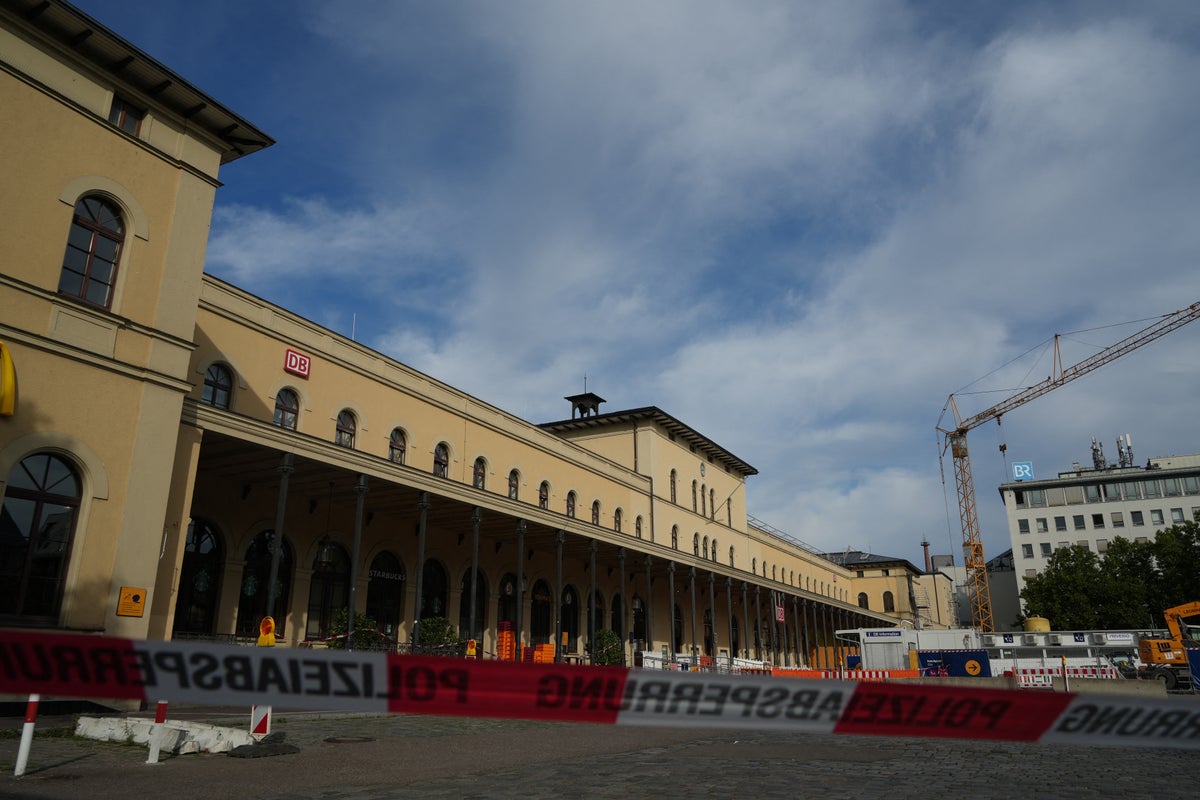
The commuter knows every millimeter of the concrete beneath their boots. They know where the shade falls at 8:00 AM, where the floor tiles are slightly loose near the newsstand, and exactly how many seconds the electronic board gives you to sprint before the doors slide shut. Commuting is a choreography of muscle memory. It is a daily ritual built on an unspoken contract of absolute predictability.
Then, an explosion shatters the glass.
Consider a hypothetical traveler named Marcus, standing on that German train station platform just as the morning rush begins to hum. For Marcus, the station is not a transit hub; it is simply the tunnel between his front door and his desk. He is holding a lukewarm cup of coffee, half-listening to the announcements crackling through speakers that have seen better decades. He is thinking about a spreadsheet, a mortgage payment, or what to make for dinner.
Noise.
Not the rhythmic clatter of steel wheels on iron rails, but a concussive shockwave that hits the chest before the ears can even process the sound. The air turns thick with plaster dust and the acrid, metallic stench of sulfur. The familiar concrete floor heaves. The world narrows to a blinding flash and the scream of twisting metal.
When the smoke finally starts to thin, two people are left injured. Two human beings who woke up with ordinary plans, standard anxieties, and routine schedules, only to find themselves at the center of an extraordinary violence.
The initial wire reports are chillingly sparse. They deal in the currency of emergency services: an explosion rocks a German train station, leaving two people injured, area cordoned off, federal police investigating. To the algorithm, it is a data point. A coordinate. A headline generated to satisfy the digital hunger for breaking news.
The numbers are small. Two injured. In a world desensitized by global catastrophes and sprawling geopolitical conflicts, two casualties can easily feel like a footnote. A localized disturbance. Something to read while waiting for an elevator and forget before the doors open.
That is the great danger of modern reporting. It turns human suffering into a statistic.
Pause. Look closer.
An explosion in a civilian transit hub is not merely a local crime or an isolated mechanical failure; it is an assault on the nervous system of daily life. Railways are the circulatory system of modern society. They carry the nurse to the hospital, the baker to the oven, the child to school. When an artery is ruptured by an unexplained blast, the panic does not stay confined to the platform. It ripples outward through every connected line, every delayed train, every anxious text message sent by someone whose loved one hasn't answered their phone yet.
Investigators swarmed the scene within minutes. Federal police, bomb squads, and forensic teams moved with methodical urgency, searching for shrapnel fragments, chemical signatures, and the faint digital breadcrumbs left by security cameras. Was it an erratic device? An act of sabotage? A discarded remnant of an older conflict, or something newly manufactured and deliberately placed?
The answers will emerge slowly. They always do. Bureaucracy moves at the speed of caution, while public anxiety moves at the speed of fiber optics.
We live in an era where public spaces are simultaneously hyper-monitored and profoundly vulnerable. Every pillar has a camera, every corner a sensor, yet the illusion of safety remains fragile enough to be shattered by a single concealed device. We walk through these monumental halls of glass and steel trusting that the invisible machinery of state security is working quietly in the background.
And most days, it is. Most days, the trains run on time, the platforms remain quiet, and the commute is delightfully uneventful.
Until it isn't.
For the two individuals caught in the blast radius, the statistical insignificance of the number two vanishes entirely. Their reality has fractured into surgical wards, questions from investigators, and the long, psychological recovery from a morning that started just like any other. They bear the physical scars, while millions of commuters bear the invisible weight of a renewed paranoia.
Tomorrow morning, the station will reopen. The broken glass will be swept away. The soot-stained pillars will be scrubbed or repainted. The commuters will return, stepping over the exact same floor tiles, perhaps looking a little more closely at an unattended bag or lingering longer near the exit. The choreography of daily life will resume, clumsy and hesitant at first, before smoothing back into its old habits.
The platform is repaired. The noise fades. But the silence left in the wake of the shockwave remains long after the last siren has faded into the gray European dawn.