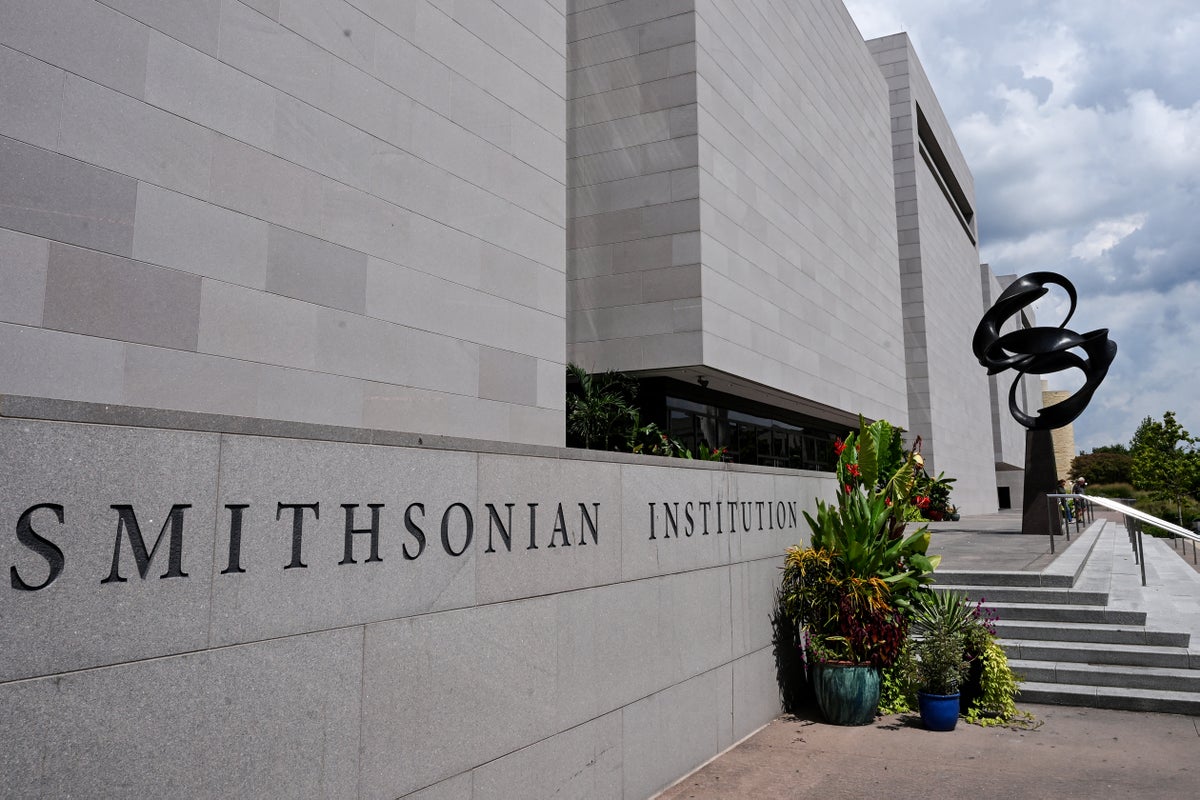
A scathing White House investigation has blasted the Smithsonian Institution's top officials, declaring the current leadership unfit to safeguard America's national heritage. The report alleges widespread financial mismanagement, deep ideological fractures, and a toxic top-down culture that has paralyzed the world's largest museum complex. At its core, the crisis stems from a bitter tug-of-war between traditional historical preservation and aggressive, modern political agendas. This institutional gridlock now threatens the survival of invaluable historical collections and decades of public trust.
The breakdown did not happen overnight. For years, the Smithsonian has drifted from its foundational mandate to increase and diffuse knowledge, transforming instead into a bureaucratic battlefield. For another perspective, read: this related article.
A Legacy in Decay
The physical infrastructure of the Smithsonian is rotting from the inside out. While executive suites enjoy lavish renovations and ballooning administrative budgets, the actual museums face billions of dollars in deferred maintenance. Roofs leak over priceless artifacts. Outdated climate control systems fluctuate wildly, endangering delicate centuries-old textiles and documents that require precise environmental conditions.
Curators, speaking on the condition of anonymity for fear of professional retaliation, describe a grim reality. They spend their days placing plastic buckets under ceiling leaks rather than conducting world-class research. The leadership has prioritized high-profile, politically trendy temporary exhibitions over the unglamorous, essential work of basic preservation. This shift in funding allocation reveals a deeper flaw in how the institution measures success. For the current administration, positive press releases and corporate sponsorships matter far more than the structural integrity of the National Mall's historic buildings. Further insight on this matter has been shared by Al Jazeera.
The White House report underscores this misallocation of capital. Investigators found that millions of dollars earmarked for structural repairs were quietly diverted to fund administrative expansions and public relations campaigns designed to shield the executive team from scrutiny.
The Ideological Chasm
Beyond the crumbling walls lies a deeper, more corrosive problem. The Smithsonian has lost its editorial neutrality. Museums have always been spaces for debate, but the current leadership has enforced a rigid ideological conformity that alienates a massive segment of the American public.
Historical narratives are being flattened. Complex figures from the American past are either entirely sanctified or completely demonized, leaving no room for nuance or historical context. This approach insults the intelligence of visitors and violates the institution's charter. When a national museum network adopts a partisan stance, it ceases to be a shared cultural treasury and becomes a weapon of cultural warfare.
The Silencing of the Curators
The institutional rot has choked out academic freedom. Senior historians and researchers find their exhibits heavily censored or completely rewritten by compliance officers and public relations managers who lack any background in history or anthropology. The goal is no longer historical accuracy, but total risk aversion and ideological alignment.
This top-down censorship has triggered an exodus of talent. Experienced scholars who spent decades building expertise within the Smithsonian's various museums are resigning in protest. They are being replaced by compliant, mid-level managers who view the museums not as centers of learning, but as platforms for social engineering. The result is a noticeable drop in the depth and quality of new exhibitions. Visitors are increasingly treated to superficial displays that tell them what to think, rather than presenting the evidence and allowing them to draw their own conclusions.
The Shell Game of Private Funding
To understand how the Smithsonian reached this point, you have to follow the money. The institution relies on a mix of federal appropriations and private donations. In recent years, the balance has shifted dangerously.
Corporate donors and wealthy philanthropists now wield unprecedented influence over exhibition content. A donor backing a specific gallery can quietly demand revisions to historical narratives that conflict with their corporate interests or personal worldviews. The leadership, desperate to hit fundraising targets that trigger their own performance bonuses, routinely caves to these demands.
This commercialization of public history creates a dangerous precedent. If the highest bidder can dictate how America's story is told, the integrity of the entire institution collapses. The White House investigation exposed several instances where major corporate sponsors were given direct editorial oversight over scientific and historical displays, a blatant violation of long-standing museum ethics.
Rebuilding the Foundation
Fixing the Smithsonian requires more than a simple change of personnel at the top. It demands a structural overhaul that insulates the institution from both political whim and corporate overreach.
First, Congress must tie federal funding to strict oversight mechanisms. An independent oversight board, entirely separate from the Smithsonian's current Board of Regents, must be established to monitor how funds are allocated between administrative costs and physical infrastructure maintenance. The leaks must be stopped, literally and figuratively.
Second, the institution must codify strict protections for academic freedom. Curators must have the final say over the content of their exhibitions, guided by peer review and historical evidence, not by the dictates of public relations executives or political appointees.
The Smithsonian belongs to the American people, not to the temporary custodians who currently occupy its executive offices. Restoring trust in this vital institution will be a slow, painful process. It requires a clearing out of the bureaucratic rot and a renewed commitment to the messy, complicated, and beautiful truth of the American story.