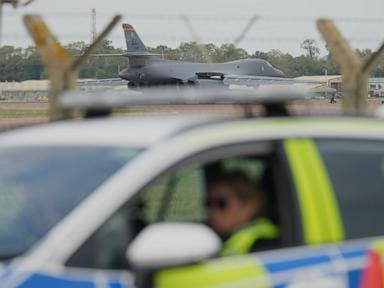
The headlines read like a procedural television script. Another arrest. The seventh man hauled in by county authorities following a security breach at a US-run air base in the UK. The media treats every single detention as a victory for domestic counter-intelligence, framing each pair of handcuffs as proof that the net is tightening.
It is a comforting illusion. It is also completely backwards.
When security apparatuses boast about catching seven suspects after an infiltration or a perimeter probe, they are not advertising competence. They are publishing an autopsy. If you need seven subsequent sweeps to clean up a mess at a sovereign military installation, your baseline security architecture failed the moment the first trespasser crossed the fence line.
I have spent two decades advising critical infrastructure operators on physical asset protection, and I am tired of watching the defense industry celebrate clean-up operations while ignoring structural rot. We are obsessed with counting arrests because counting arrests requires zero imagination. Fixing the foundational physics of site defense requires actual engineering.
The Myth of the Hardened Perimeter
Look at the standard playbook for military site security. You string up chain-link fencing topped with razor wire, pepper the acreage with thermal cameras, zone the interior with motion sensors, and trust that a roving patrol of armed personnel will respond within minutes if an alarm trips.
This model worked in the twentieth century. Today, it is an absolute relic.
Commercial-off-the-shelf drone hardware can map a base’s entire radar dead-zone in an afternoon. Cheap signal-jamming kits can blind localized sensor loops before an intruder even touches the earth. Relying on perimeter alarms backed by human response teams is like installing a screen door on a submarine and bragging about how fast your crew can mop up the water.
When seven men manage to penetrate, compromise, or gather intelligence around a high-value US asset on British soil, the failure is systemic. It points to a deep vulnerability in threat vector anticipation. The security teams are reacting to yesterday's tactics while intruders operate with tomorrow's agility.
Let us be precise about the terminology. A security incident at a joint-use or foreign-operated military site is never just a local policing problem. It is a failure of deterrence. If the penalty for probing a base is merely getting caught two weeks later by local constabulary detectives, the deterrent value drops to zero. Deterrence must happen at the boundary, not in a holding cell six weeks post-breach.
Why Localized Arrests Mask Global Weaknesses
The UK police deserve credit for executing warrants and rounding up suspects. That is their job, and they do it well. But let us not confuse police work with defense architecture.
Every time a suspect is dragged before a magistrate, the public breathes a sigh of relief. The state has acted. Justice is grinding forward. Meanwhile, the underlying vulnerability remains unpatched. The air base is still sitting on acres of flat, predictable geography with response times governed by rural traffic patterns and shift rotations.
Imagine a scenario where a hostile state actor uses a wave of low-level, deniable civilian probes to map response times, communication frequencies, and guard deployment routes. They do not need to steal an aircraft or plant a device on the first try. They just need to feed your security operations center enough false positives until complacency sets in. Then, when the real operation launches, your guards are suffering from alarm fatigue and your response protocols are bogged down in bureaucratic friction.
That is what a string of seven arrests actually represents: a successful reconnaissance-by-attrition campaign against a sluggish defender.
I have seen corporate boards blow millions on shiny new camera arrays while ignoring the fact that their security guards are undertrained contractors making minimum wage who would rather quit than engage an active threat. The military is not immune to this rot. When budgets get squeezed, physical security is often the first line item trimmed in favor of software upgrades and cyber defense.
Cyber defense is critical, yes. But a server farm can be disabled by a pair of wire cutters and a motivated trespasser with a crowbar. Physical security is the anchor of all operational security. If someone can walk up to your fence and probe your defenses with impunity, your air-gapped networks and encryption keys are just expensive paperweights.
The Uncomfortable Truth About Insider Complacency
There is another element here that nobody in uniform wants to discuss publicly: insider complacency.
Air bases are massive, sprawling ecosystems. They rely on thousands of civilian contractors, logistics personnel, maintenance crews, and local service providers to function daily. You cannot background check every single mechanic or caterer to the level of a deep-cover intelligence asset.
When security incidents happen repeatedly at the same installation, it signals that the operational friction for outsiders mingling with legitimate traffic is far too low. The bad actors are not always ninja-clad operatives scaling walls in the dead of night. Often, they are blending into the background noise of civilian support infrastructure, wearing high-visibility vests and carrying clipboards.
If your gate security relies on a bored private flashing an ID card for three seconds while sipping a lukewarm energy drink, you do not have a security force. You have a greeting committee.
How to Actually Fix the Problem
If we want to stop writing articles about the seventh, eighth, and ninth arrests, we need to completely scrap the reactive policing model and replace it with proactive denial.
First, automate the kinetic response. Human guards should never be the first line of physical verification. Ground-penetrating radar, automated micro-lidar grids, and autonomous defensive drones can detect and track sub-surface and aerial intrusions instantly, rendering human blind spots obsolete.
Second, implement zero-trust physical zoning. Just like in modern cybersecurity where no user is trusted by default inside the network, a military base must segment its high-value assets behind multiple, independent internal moats. Crossing the outer fence should not grant an intruder access to the operational heart of the base.
Finally, stop treating base security as a static real estate problem. Treat it like a living, breathing conflict zone. If an installation cannot repel or instantly neutralize an unauthorized presence at the perimeter, it is an administrative liability, not a secure base.
The police can keep making arrests. But until base commanders stop treating perimeter breaches as statistical anomalies and start treating them as existential design failures, the next headline is already written.