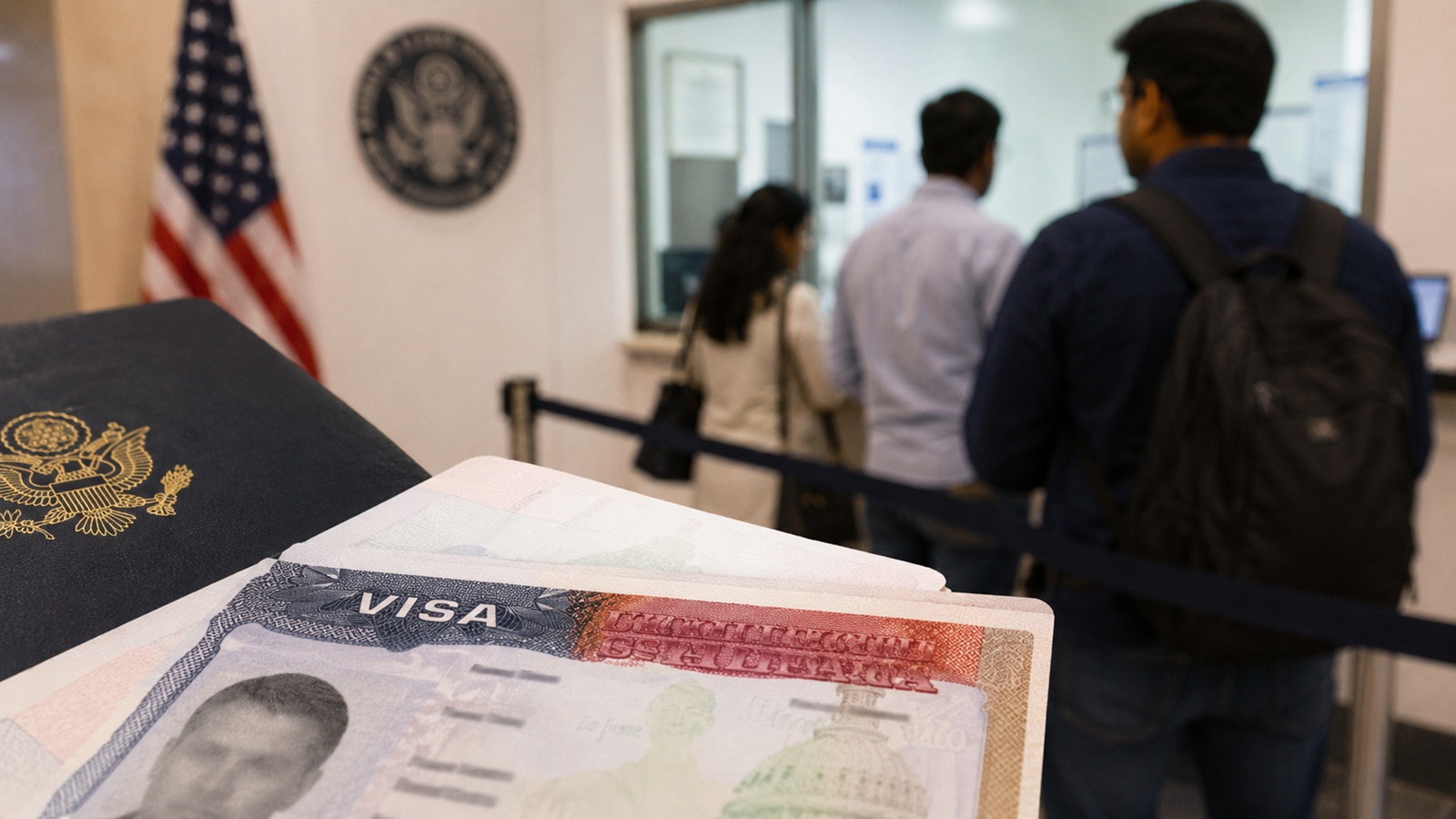
Every travel blog and visa consultancy is currently having a collective meltdown over the United States Department of State rolling out a paid expedited tourist visa appointment pilot. The lazy consensus is predictable: panic over the price tag, anxiety about who gets left out, and endless hand-wringing over whether India or any other high-demand nation made the cut.
Stop worrying about whether your country is on the list. You are asking the wrong question entirely.
The real story is not about geographic exclusions or the extraction of an extra seven hundred fifty dollars on top of the standard one hundred eighty-dollar application charge. The real story is that the federal government has officially commercialized its own administrative dysfunction, turning a systemic failure of state capacity into a luxury product.
The Great Consular Shell Game
Let us define terms because the public relations machine surrounding this pilot is deliberately slippery. The Department of State rolled out a temporary rule allowing B-1 and B-2 visitor visa applicants at select consular posts to pay seven hundred fifty dollars for an interview slot within ten business days.
Notice what you are actually buying. You are buying a seat in a chair across from a consular officer ten days from now instead of ten months from now. You are not buying a visa. You are not buying a higher approval rate. You are buying a ticket to the lottery earlier. If you get rejected—and refusal rates for tourist visas remain entirely at the whim of the adjudicating officer—that money vanishes into the Treasury. It is non-refundable, non-transferable, and entirely detached from any outcome other than the privilege of being told "no" faster.
I have watched corporations blow millions on expedited logistics and priority queues, treating capital as a direct substitute for time. But this is different. This is a public monopoly creating an arbitrary bottleneck, failing to clear it through normal operations, and then charging a ransom to skip the line they built.
Dismantling The Geographic Obsession
The media fixates on exclusions. Headlines scream about whether Indian applicants or other major populations can access this pilot. As of right now, posts in India are not part of the participating locations, which span places like Mexico, Canada, Colombia, Guatemala, Costa Rica, and Honduras.
This exclusion triggers a predictable wave of indignation. Commentators call it unfair. They argue that high-demand nations with multi-hundred-day wait times deserve access to priority lanes the most.
That perspective fundamentally misunderstands how government capacity operates. Imagine a scenario where the State Department opens this pilot in New Delhi or Mumbai. Consular posts in South Asia already operate at absolute physical capacity. Injecting a priority tier into an overwhelmed system does not create new interview slots out of thin air. It simply shifts the scarcity. It cannibalizes the standard queue. Every time a cash-rich applicant buys a ten-day slot, a standard applicant gets pushed further down a backlog that already stretches into years.
The absence of certain countries from this pilot is not an oversight. It is an admission of limits. Consular leadership knows that in ultra-high-demand regions, a paid expedite option would instantly break the booking portal under a tidal wave of capital, rendering the system completely unusable.
The Uncomfortable Truth About Bureaucratic Revenue
Let us look at the economics. For a single traveler, combining the standard fee and the pilot surcharge brings the baseline administrative cost to nine hundred thirty-five dollars before you even book a flight or hotel. Multiply that across a family, and you are looking at thousands of dollars just for permission to plead your case for temporary entry.
Defenders of the policy argue this is a voluntary free-market mechanism. It helps business travelers with urgent, short-notice needs bypass deadlocked appointment schedules.
That defense collapses under scrutiny. A true market allocates resources based on supply and demand to clear a clearing price where supply meets need. This is not a market. This is a fixed-price toll booth operated by a sovereign entity with zero competition. The government sets an arbitrary price ceiling, caps the daily volume at a tiny fraction of interview capacity, and leaves millions of stranded applicants to fight over crumbs.
If the United States wanted to solve visa backlogs, it would invest in staffing, modernize digital infrastructure, or expand remote adjudication frameworks. Instead, it built a tiered class system where basic government services require premium insurance.
What You Should Do Instead
Stop waiting for pilot expansions to save your travel timeline. If you are navigating the nonimmigrant visa maze, relying on government efficiency or hoping for policy loopholes is a losing strategy.
Acknowledge the structural reality. If your travel is truly mission-critical, budget for the friction. If you fall outside participating pilot zones or find yourself locked out of limited daily allocations, do not waste cognitive energy complaining about the unfairness of the fee structure. The system does not grade on fairness. It grades on compliance.
Prepare your documentation with ruthless precision. The interview is where applications live or die, and no amount of expedited scheduling will save a poorly constructed DS-160 or a weak ties-to-home profile. Treat the standard timeline as your default operating environment, assume zero grace from consular services, and keep your capital liquid for actual travel execution rather than administrative lottery tickets.
The system is engineered to extract maximum revenue from your urgency. Do not feed it blindly.
Refuse to play a rigged game on their terms.