The marble floors of Bishkek's state guest house still echo with a very specific kind of silence. It is the silence that follows a door closing firmly in a room where you were not invited to sit. Outside, the Kyrgyz capital wears its mountain air like a thin, cold veil, the snow-capped peaks of the Tian Shan range pressing down against a grey sky. Inside, the Shanghai Cooperation Organisation summit unfolds behind heavy mahogany doors. Beijing and Moscow have laid out their banquet. They have poured the tea. They have drafted the communiqués that speak of a Eurasian century, a multipolar order, a future carved out far from the gaze of Western capitals.
Yet, down the street, in a quiet hotel lobby that smells of stale espresso and high-grade printer toner, United States diplomats are watching the screens. You might also find this similar article useful: The Night the Sky Almost Caught Fire.
They are not at the table. They are shadowing it.
Consider what happens when superpowers play hide-and-seek across Central Asia's ancient crossroads. To understand this diplomatic choreography, you have to look past the official press releases filled with diplomatic pleasantries about mutual cooperation and regional stability. You have to look at the geometry of power. For decades, Washington viewed this region through a singular, narrow lens: a logistical corridor for military supply lines, a temporary staging ground, an afterthought on the grand chessboard of the Middle East and South Asia. But empires do not get to pack up and leave without consequences. When the tents were folded and the transport planes flew out, the vacuum did not remain empty for long. As discussed in latest coverage by The Washington Post, the results are notable.
Nature abhors a vacuum. Geopolitics abhors it even more.
Walk through the central bazaar in Bishkek on a Tuesday morning, and you can smell the transition. It smells of roasting meat, cheap Chinese electronics stacked in cardboard pyramids, and Russian fuel barrels traded at volatile rates. This is the daily reality of the SCO's gravitational pull. The economic gravity here points resolutely east and north. When a young Kyrgyz merchant buys wholesale goods to sell in Osh, she does not look to New York or Frankfurt. Her supply chain runs through Urumqi and Moscow. The hardware of daily survival—the rails, the pipelines, the mobile networks—was bolted down by engineers answerable to different flags.
This is the turf the American envoys are shadowing. It is unfamiliar ground. It is an arena where Washington's traditional tools—stern lectures on human rights, demands for structural transparency, and conditional aid packages—often bounce off the thick armor of pragmatic survivalism practiced by Central Asian leaders.
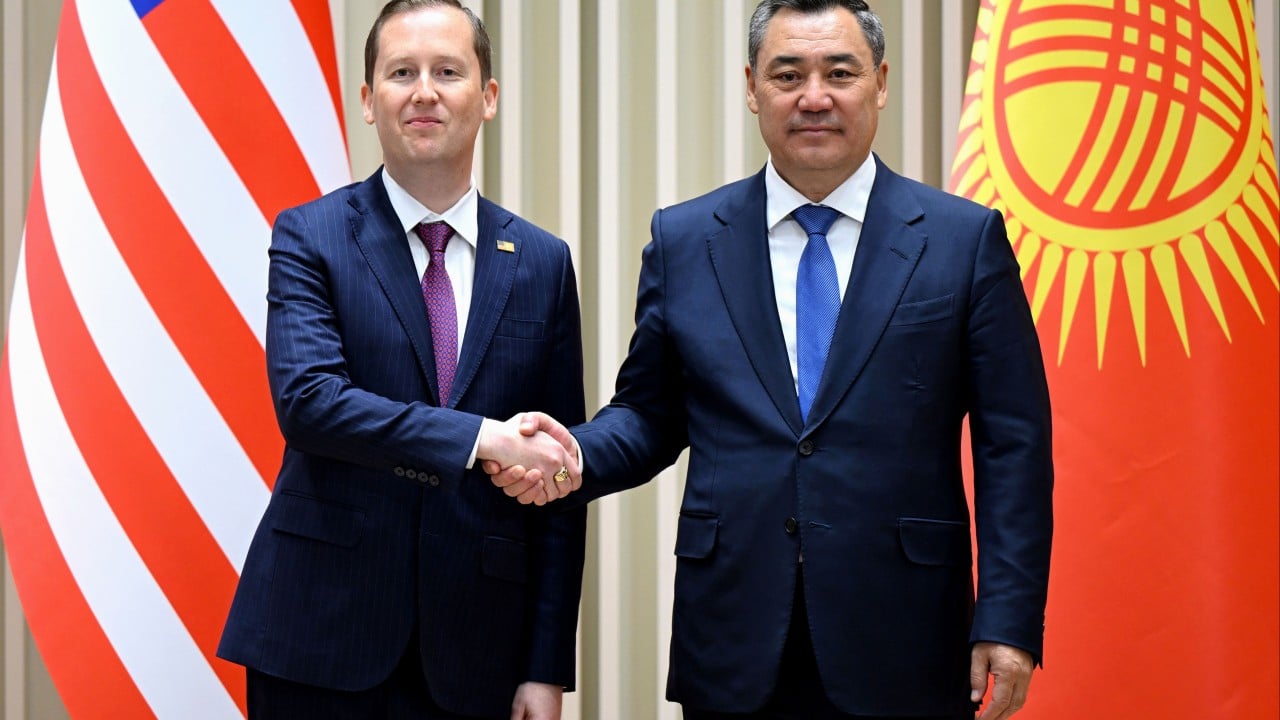
Picture a hypothetical diplomat we will call Marcus. He has spent twenty-five years in foreign service outposts, learning the quiet art of reading the room when his country is explicitly not wanted in it. Marcus sits in a corner booth, nursing a lukewarm cup of tea, watching local television coverage of the summit. On the screen, leaders in tailored suits shake hands beneath enormous flags. The handshakes are staged to project absolute harmony. But Marcus knows the secret anxieties hidden behind those smiles.
Central Asia does not want to be swallowed by Beijing's economic titanism, nor does it want to be reduced to a vassal state in Moscow's security architecture. The leaders in Bishkek, Astana, Tashkent, and Dushanbe are master tightrope walkers. They have spent centuries surviving between larger predators. They accept Chinese infrastructure investments because roads and railways are the difference between national starvation and prosperity. They maintain historical and security ties with Moscow because the neighborhood is dangerous and old habits die hard.
Yet, they also crave options.
That is why American envoys are here, lingering in the margins. They are not here to storm the citadel. They cannot match the sheer volume of capital that Beijing brings in shipping containers, nor can they replicate the deep-rooted military cooperation that Moscow enforces through regional pacts. Instead, they are offering something subtler: diversification. They are whispering about alternative trade routes that bypass traditional choke points, digital connectivity that doesn't rely on authoritarian infrastructure, and institutional capacity-building that preserves national sovereignty.
It is a ghost dance of diplomacy.
The challenge on Beijing and Moscow's turf is that the rules of the game are written by the hosts, and the hosts are currently holding all the winning cards at the regional table. When the SCO summit concludes with its grand declarations of solidarity against Western unilateralism, the American shadow delegation files their encrypted cables back to Washington. They document the deals signed, the pipelines promised, the security pacts reinforced. They measure the distance between what was said in the formal sessions and what was murmured in the private, smoke-filled corridors afterward.
The stakes are invisible to most people waking up in Ohio or Oregon. They feel distant, abstract, academic.
They are not.
Every rail line financed, every digital surveillance network installed, every strategic mineral contract signed in the high plateaus of Central Asia shapes the economic weather half a world away. When supply chains fracture, when global standards for technology are written by authoritarian syndicates rather than democratic coalitions, the ripple reaches every kitchen table.
Power does not retreat all at once. It erodes, grain by grain, like a riverbank under a persistent current.
As the sun dips behind the Tian Shan mountains, casting long, bruised shadows across Bishkek, the motorcades begin to roll. Sirens wail in the distance, clearing the streets for leaders returning to their dachas and private jets. The conference center goes dark. The television crews pack up their tripods.
In the hotel lobby, Marcus closes his laptop. The screen flickers off, plunging his face into darkness. Outside, the cold wind whistles down from the steppes, carrying the scent of woodsmoke and old empires. The summit is over. The shadow game continues.


