The Atlantic Ocean in late winter is a brutal, unforgiving expanse. It is a world of gray slate and white foam, where the horizon blurs into the sky and the cold seeps straight into the bone. Out here, hundreds of miles from the comforting lights of the French coast, the water feels empty. But it isn't. It is crowded with ghosts, secrets, and the invisible lines of a global conflict fought not with artillery, but with registry papers, sanctions, and raw economic defiance.
A few days ago, a rusted hull sliced through these freezing swells. Read more on a similar subject: this related article.
To the casual observer, or to a satellite passing overhead, it was just another commercial vessel chugging through international waters. Its name was the Tagor. It flew a flag of convenience, a legal fiction designed to obscure its true origins. But beneath its weathered deck plates lay thousands of tons of Russian oil. The Tagor was a moving cell in a vast, floating shadow economy, a lifeline pumping financial oxygen back to a Kremlin locked in a grueling war against Ukraine.
Then came the French Navy. Further analysis by Associated Press highlights comparable views on this issue.
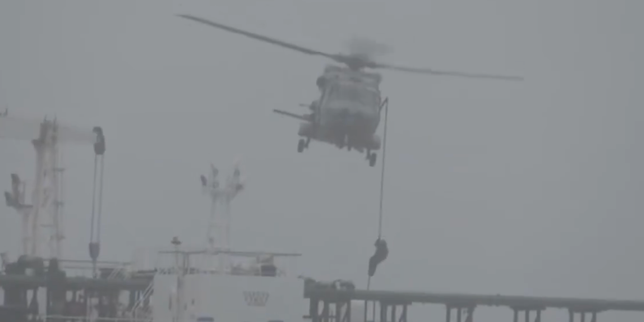
The interception was not a cinematic explosion of gunfire and boarding parties scaling the hull under the cover of darkness. Real geopolitical enforcement rarely looks like Hollywood. Instead, it began as a tightening noose of radar tracks, radio transmissions, and the sudden, imposing silhouette of a French warship cutting through the mist. The command was given. The Tagor stopped.
Now, the tanker is no longer moving toward its destination. It is being escorted under armed guard toward a designated anchorage point off the French coast. It is a captive of the Atlantic maritime prefecture.
To understand why a single rusty tanker in the middle of the ocean matters, we have to look past the official press releases and delve into the human reality of those on board, and those watching from dry land.
The Men on the Bridge
Consider the crew of the Tagor.
Let us imagine a sailor named Andrei. He is not a policymaker. He is not a general. He is a merchant mariner from a small port town, working a grueling contract to send money back to his family. For weeks, his reality has been the rhythmic thrum of a massive diesel engine, the smell of heavy fuel oil, and the endless expanse of gray water.
Andrei knows the risks. Every sailor in the modern merchant fleet understands that carrying Russian cargo in the current geopolitical climate is like walking through a minefield. The international community has drawn a line in the sand—or rather, a line in the water. Sanctions are designed to choke off the funding for the war in Ukraine. But for the men on the bridge of the Tagor, those macro-economic strategies translate into a sudden, terrifying shift in reality.
When the French naval vessel appeared on the horizon, the atmosphere on the Tagor must have shifted instantly from monotony to pure tension.
The radio crackles. A French officer, speaking with quiet, absolute authority, demands the ship's manifest, its origin, its destination. The captain prepares his papers, knowing they may not hold up to scrutiny. The crew watches from the wings of the bridge. They are caught in the gears of history. If the ship is seized, what happens to them? Are they stranded? Will they be paid?
This is the hidden human cost of economic warfare. The people who operate the machinery of global trade are rarely the ones who profit from the conflict, yet they are the ones who face the immediate consequences when the trap snaps shut.
The Invisible Web of the Shadow Fleet
The Tagor is not an isolated actor. It is part of what maritime intelligence experts call the "shadow fleet"—a shifting, elusive armada of hundreds of aging tankers that have been bought up by mysterious shell companies over the past few years.
To understand how this system works, think of it as a global game of three-card monte played on the high seas. A ship changes its name. It changes its registration from one small island nation to another overnight. It turns off its automatic identification system (AIS) transponder, vanishing from public tracking maps for days at a time. When it reappears, its cargo has been transferred to another ship in the dead of night, deep in international waters.
The goal is simple: keep the oil flowing, keep the cash coming in, and evade the strict price caps and bans imposed by the European Union and its allies.
But the Atlantic Ocean is not a lawless vacuum. The French maritime prefecture keeps a vigilant watch over its approaches. The interception of the Tagor sends a deafening message to the operators of these shadow ships. It proves that the camouflage of shell companies and false flags is wearing thin. The eyes of Western intelligence are sharp, and the navies of Europe are willing to step in and physically halt the flow of restricted goods.
The Tension at the Anchorage
As you read this, the Tagor is being guided toward a secure anchorage point.
Picture the scene. The massive tanker, its engines now idling, drops its heavy iron anchor into the seabed. The chain rattles out with a deafening roar, disturbing the quiet coastal waters. Nearby, a French naval vessel sits riding the swells, its crew keeping a watchful eye on the captive ship.
For the French authorities, the real work is just beginning. Inspectors will board the vessel. They will pore over logbooks, inspect the cargo holds, and interview the captain. Every scrap of paper will be scrutinized to trace the exact financial trail of the oil on board. It is a painstaking, unglamorous process, but it is the true frontline of modern warfare.
For the people of Ukraine, the interception of the Tagor is a small but vital victory. Every barrel of oil that is stopped, delayed, or confiscated is a barrel that cannot be converted into funding for missiles, drones, and artillery shells. It is a tangible sign that the world has not forgotten, that the economic pressure is real, and that the ocean is not a safe harbor for those trying to bypass the global consensus.
The Tagor sits silent in the gray Atlantic light, a massive steel monument to a global conflict that reaches far beyond the muddy trenches of Eastern Europe. The ship is stationary, but the currents around it are moving faster than ever.
The sea keeps its secrets for a long time. But eventually, everything comes to the surface.