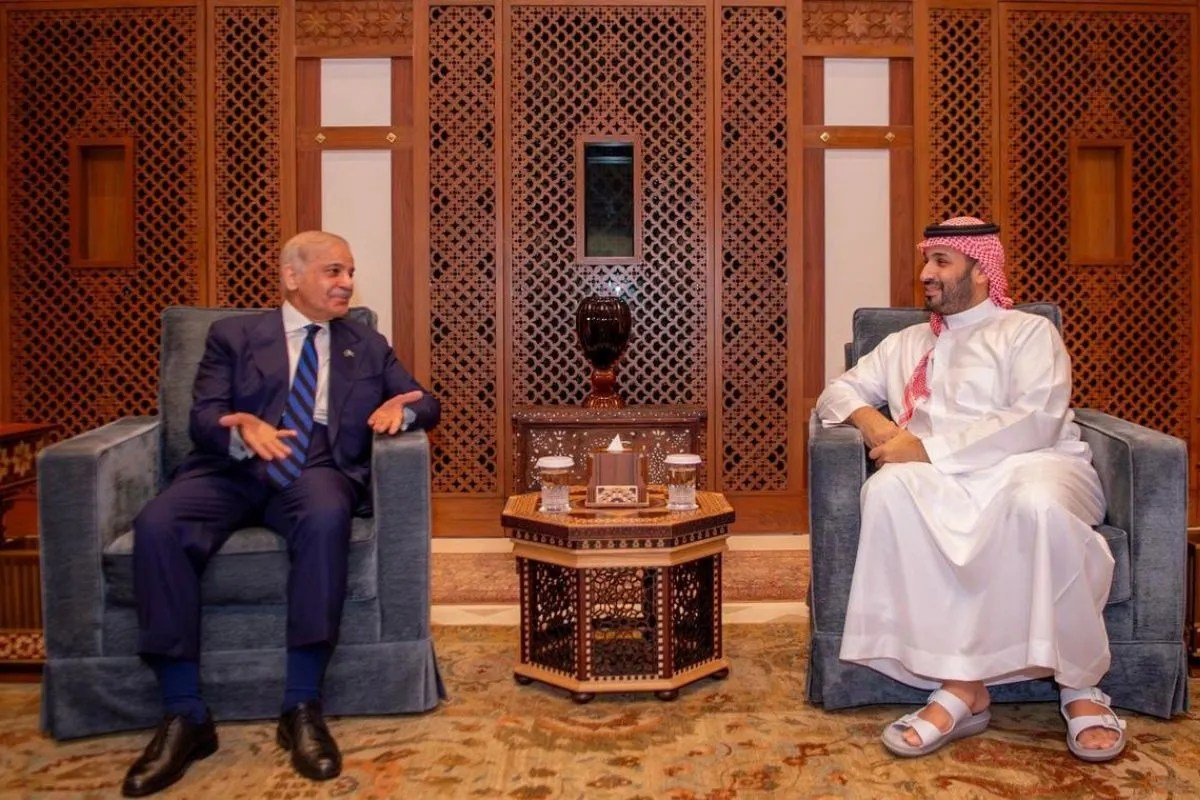
Geopolitics rarely moves in a straight line, but energy corridors remain the rigid spine of modern global stability. When unmanned aerial systems target vital energy infrastructure in the Middle East, the tremors do not stay local. They ripple outward, testing old alliances and forcing dependent states into immediate diplomatic alignment. The recent drone strikes targeting Saudi oil infrastructure exposed a raw nerve in Gulf security, sparking an urgent round of high-level telephone diplomacy from Islamabad. Prime Minister Shehbaz Sharif’s direct outreach to Saudi Crown Prince Mohammed bin Salman was not merely a diplomatic courtesy; it was a calculated maneuver by a nation heavily reliant on Gulf financial lifebuoys and energy imports.
To understand why a strike thousands of miles away from Pakistan commands such immediate attention in Islamabad, one must examine the fragile architecture of Pakistan's balance of payments. For decades, the Saudi kingdom has acted as an informal lender of last resort, parking billions in the State Bank of Pakistan and rolling over deferred oil facility agreements whenever the South Asian nation teeters on the edge of a sovereign default. When the arteries of Saudi crude face hostile kinetic threats, the financial and energy security of Islamabad is directly called into question. Recently making news in this space: Why Sydney Corruption Hearings Miss the Real Threat to Local Government.
The Anatomy of Vulnerability in Strategic Energy Corridors
Energy infrastructure has evolved into the primary soft underbelly of the global economy. Traditional warfare relies on massed armies, but asymmetric threats have democratized long-range disruption. Low-cost loitering munitions can bypass advanced radar sweeps by hugging terrain contours, striking pumping stations, separation facilities, and export terminals with devastating precision.
When these facilities absorb kinetic impacts, the immediate physical damage is matched by immediate market psychology. Brent crude futures tick upward, refining margins compress, and import-dependent economies with weak currencies absorb an immediate inflationary shock. Pakistan falls squarely into this category. Having spent years grappling with staggering trade deficits, foreign exchange reserves that barely cover weeks of necessary imports, and soaring domestic utility tariffs, any threat to the stability of Saudi crude supply represents an existential fiscal hazard. Further details regarding the matter are explored by NPR.
Sharif’s conversation with the Crown Prince was rooted in this raw economic reality. By reaffirming absolute solidarity with Riyadh, Islamabad sought to secure its standing within the broader security perimeter of the Gulf Cooperation Council. Pakistan maintains historic defense cooperation agreements with the kingdom, deploying training missions and maintaining a security posture designed to deter regional aggressors. Yet, as modern drone warfare redefines the battlefield, the nature of that mutual defense paradigm is undergoing a quiet, anxious stress test.
The Diplomatic Calculus Behind Islamabad's Immediate Response
Critics often dismiss these high-level phone calls as empty diplomatic theater. They argue that a cash-strapped government offering verbal backing to an absolute monarchy carries little material weight in a theater dominated by high-end Patriot missile batteries, electronic warfare jamming systems, and multi-billion-dollar defense acquisitions.
That view misses the subtler currents of regional statecraft. For Riyadh, maintaining a broad coalition of Islamic and regional partners who denounce infrastructure attacks helps insulate Saudi foreign policy in international forums. It projects an image of diplomatic cohesion even when regional tensions simmer with Iran or proxy networks operating across Yemen and Iraq.
For Pakistan, the calculus is intensely transactional wrapped in the warm rhetoric of brotherly ties. The Pakistani military establishment remains deeply intertwined with Gulf security architectures. Pakistani troops have historically been stationed along the kingdom's southern borders for advisory and defensive security operations. Reassuring Riyadh at the highest executive level ensures that deferred payment mechanisms for oil imports remain active and that future financial bailouts stay on the table when the next International Monetary Fund review approaches.
Asymmetric Threats and the Limits of Conventional Defense
The broader takeaway from these attacks extends far beyond bilateral diplomacy between Riyadh and Islamabad. We are witnessing a fundamental shift in how regional hegemony is contested. You do not need a blue-water navy or a supersonic air force to paralyze an economy when you possess cheap, long-range autonomous drones capable of striking critical nodes in oil processing networks.
Saudi Aramco’s rapid recovery capabilities following past kinetic incidents proved that industrial resilience is high, but the frequency of these disruptions imposes a cumulative psychological and financial toll. Insurance premiums for tankers traversing the Persian Gulf and the Red Sea spike. Project financing costs for regional energy infrastructure creep upward.
As Islamabad watches these developments unfold, the leadership is acutely aware that its own domestic stability is tied to foreign stability it cannot control. A prolonged disruption in the Gulf would instantly translate into higher fuel pump prices at home, triggering street-level protests, compounding industrial slowdowns, and pushing an already fragile political administration into deeper turmoil.
The geopolitical chessboard is shifting toward resilience over raw size. Nations that export energy and nations that depend on those exports are finding that traditional deterrents offer shrinking margins of safety against low-cost, high-impact aerial incursions.
The conversation between Islamabad and Riyadh was framed around solidarity, but it was fundamentally about survival. As long as critical energy nodes remain vulnerable to asymmetric aerial assaults, capitals from Islamabad to Washington will remain on high alert, waiting for the next tremor along the global oil pipeline.