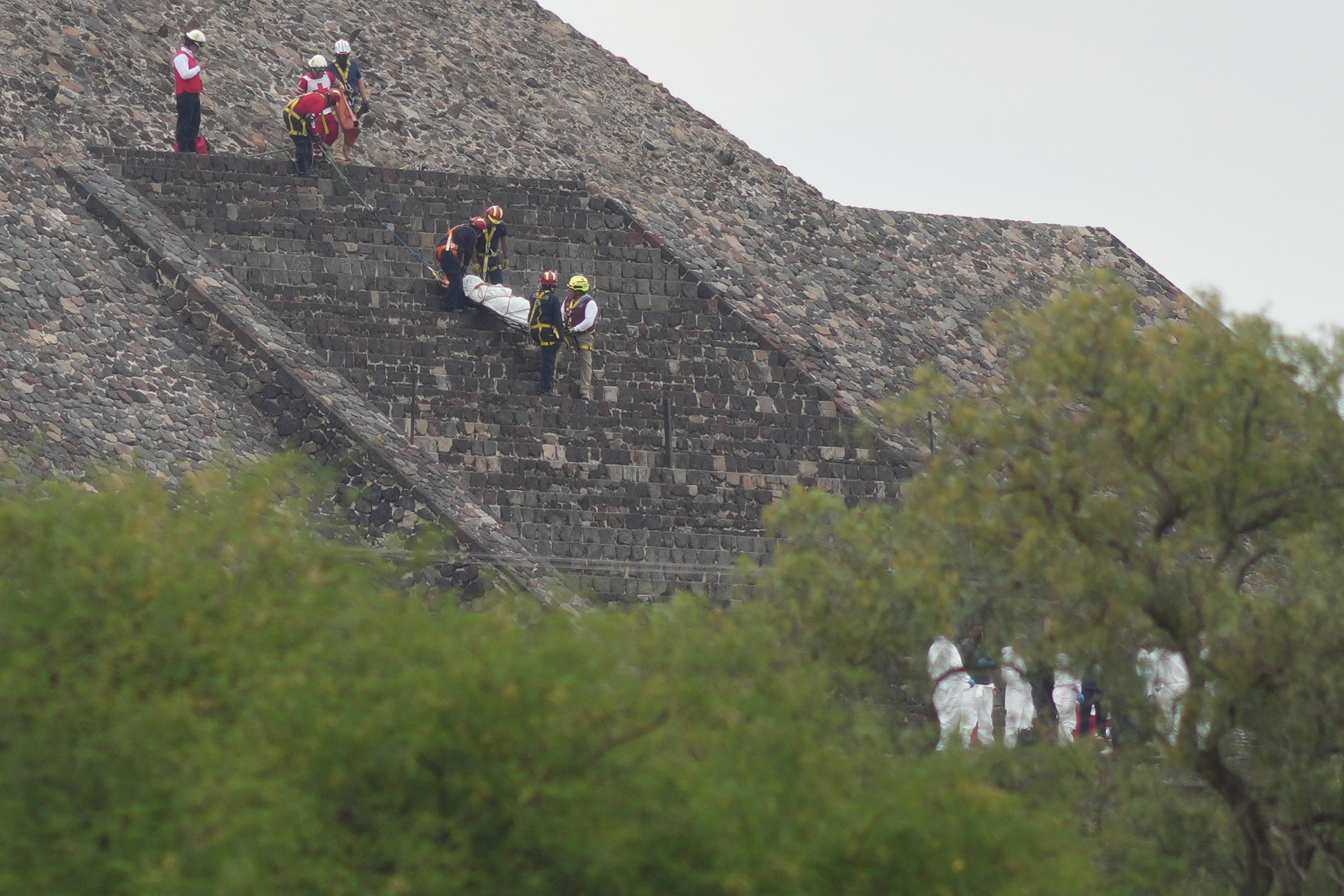
The dust of the Giza plateau does not settle easily. It hangs in the air, a fine, golden veil that coats the throat and blurs the edges of the horizon. Tourists often describe it as the smell of time itself—ancient, dry, and heavy. But yesterday, that familiar, arid scent was replaced by something sharp. Something metallic.
The silence that usually blankets the limestone monuments was shattered by the frantic rhythm of violence.
A single, jagged burst of gunfire echoed against the smooth casing stones of the pyramid, a sound so discordant it felt like a physical blow. One visitor did not return to the bus. Others are now marking their recovery in hospital beds, their holiday snapshots forever tainted by the memory of how quickly a sanctuary can become a trap.
We go to these places seeking a connection to the eternal. We want to stand before the colossal geometry of the past and feel small, hoping that our own modern anxieties will shrink in comparison to the scale of human achievement. We seek permanence. We seek beauty.
We rarely consider that history is not just carved in stone. It is written in blood.
Consider the reality of the traveler. You are in a foreign country, navigating a labyrinth of language barriers, unfamiliar transit schedules, and the sheer sensory overload of a world that is not your own. You are vulnerable by design. Your armor is a passport, a camera, and a misplaced sense of safety granted by the brochures that promised you an untarnished experience.
When a localized tragedy strikes a site of such global significance, it creates a fracture in the collective consciousness. For those on the ground, the immediate aftermath is a frantic, disorienting haze. The screams, the stampede of feet, the desperate search for cover behind jagged blocks that have withstood five thousand years of wind but were never intended to stop a bullet.
This is not a political analysis. I will not weigh the geopolitical chess moves that led to this specific moment. I will not offer platitudes about resilience.
I know the weight of that fear. I have walked those paths. I have felt the sun beating down on the Giza plateau and watched the silhouettes of camels crawl against the sky. I have felt the strange, intoxicating cocktail of awe and displacement that hits you when you realize you are standing in the shadow of a pharaoh’s ambition. To be there, in that specific space, is to feel that you have slipped through the cracks of the mundane.
When that bubble bursts, the trauma is profound.
The victims are not merely statistics on a local report. They are mothers, sons, teachers, and dreamers who thought they were walking into a museum. They did not sign up for a confrontation with the volatility of the present. They wanted to touch the stone. They wanted to see the impossible.
And now, their lives have been irrevocably tethered to a tragedy that has left the world asking a question we hate to confront: Is anywhere truly safe?
We treat monuments like relics, frozen in time. In reality, they are living, breathing entities that absorb the chaos of the eras surrounding them. The pyramids have seen revolutions, wars, and the slow, grinding decay of empires. They are impartial witnesses to our recurring failures. They stand, unmoved, while we continue to break our own hearts beneath them.
The authorities speak of investigations. They speak of security perimeters and heightened patrols. These are necessary, logical steps. They provide a veneer of control. But they cannot mend the psychic toll of a day where the sun set differently.
When you strip away the administrative updates and the official statements, you are left with the raw, terrifying human cost. A family dinner that will never happen. A vacation scrapbook that will never be filled. A sudden, violent reminder that we are all just passing through, often blissfully unaware of the thin line separating a lifetime of wonder from a single moment of ruin.
We continue to travel because we are wired to seek the unknown. We are explorers at our core. Yet, every time we step off a plane, we are making a bargain with uncertainty. We trade the comfort of our living rooms for the unpredictability of the wider world. We hope for the best. We prepare for the worst. And occasionally, the worst finds us in the most unexpected of places.
Perhaps we need to stop viewing these sites as static, safe backdrops for our photos. Perhaps we should look at them with the gravity they deserve. They are not merely tourist destinations. They are sites of human endurance, built by people who knew that their lives were fleeting.
The irony is cruel. We travel to the pyramids to confront the concept of eternity, only to be reminded of how quickly everything can end.
The wind is still blowing across the Giza plateau. The stone is still cold. The horizon remains wide, indifferent to the chaos of men. But the story of that site, and the story of those who were there, has shifted. It has deepened.
The shadow of the pyramid is long. Yesterday, it grew a little longer, stretching out over the lives of those who were simply looking for a glimpse of the past, only to be forced to reckon with the fragility of their own future.
The silence is returning now. It will settle into the crevices of the stones. It will wait for the next chapter. And we, in our fragile, fleeting urgency, will continue to look toward the horizon, hoping to see something that lasts.

:strip_icc()/pic2513216.jpg)