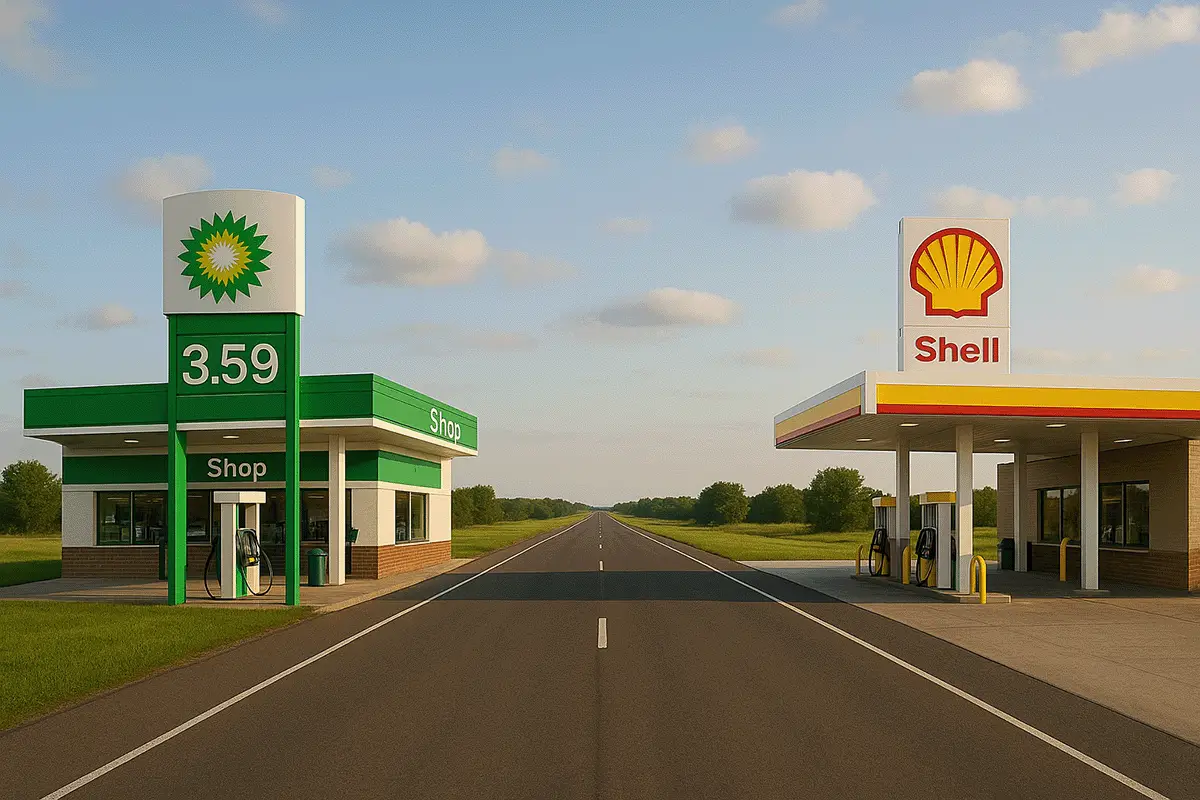
Shell and BP don't just compete for market share. They fight for the very soul of the London Stock Exchange. Right now, the geopolitical chaos in the Middle East is handing Shell a massive opportunity to pull away from its oldest rival. When Iran and Israel trade blows, oil markets react instantly. Prices spike. Cash flows. But while both companies see their bank accounts swell, Shell is positioned to turn this windfall into a permanent lead.
Investors aren't just looking at today’s profit. They’re looking at who can sustain it. For months, the gap between these two energy giants has narrowed and widened like an accordion. Now, Shell’s leaner structure and aggressive focus on natural gas give it the upper hand as the world braces for a prolonged period of high energy costs. BP is struggling to find its footing after several pivots in strategy. Shell just keeps moving forward.
The math of a geopolitical price spike
Oil prices don't care about corporate feelings. When Brent crude climbs toward $90 or $100 a barrel due to fears of a wider Iran conflict, every extra dollar is pure margin for a supermajor. But not all barrels are created equal. Shell produces a staggering amount of liquefied natural gas (LNG). In a world where Iranian influence over the Strait of Hormuz can choke global supply, LNG becomes the ultimate insurance policy.
Shell’s integrated gas division is a cash machine. Last year, it provided a massive chunk of their overall earnings. If the Middle East situation worsens, the global dash for non-Middle Eastern energy sources will intensify. Shell owns the infrastructure to capitalize on that fear. BP has a solid portfolio, sure, but it lacks the sheer scale of Shell’s gas trading arm. That’s the difference between a good quarter and a transformative one.
The numbers tell a clear story. Shell’s market cap has consistently stayed ahead, but the valuation gap—how much investors are willing to pay for every dollar of profit—is where the real war is won. Shell is currently trading at a premium compared to BP. That’s because the market trusts Shell’s CEO, Wael Sawan, to prioritize returns over experimental green projects. BP’s leadership has been more erratic. They’ve gone from "reimagining energy" to "performing while transforming," and the market hates a muddled message.
Why Shell’s strategy is winning the locker room
Investors are tired of being told that oil companies are going to become tech startups. They want dividends. They want buybacks. They want the company to act like an oil company. Shell got the memo. Since Sawan took over, he’s been ruthless. He’s cut jobs in divisions that weren't making money. He’s simplified the organization. He’s basically told the world that Shell is an oil and gas company first, and everything else second.
BP tried to be the "good guy" of the energy transition. It backfired. By committing to deep production cuts early on, they scared off the big institutional money that relies on oil flows. They’ve since walked back some of those targets, but the damage to their reputation among hardcore value investors remains.
- Shell’s focus: High-margin oil, dominant LNG position, disciplined capital spending.
- BP’s struggle: Rebuilding investor trust, balancing a messy transition, managing smaller scale.
You can see the results in the share price. Every time a new headline drops about regional instability, Shell’s stock tends to jump higher and stay there longer than BP’s. It’s seen as the safer, more "pure-play" bet on energy prices.
The Iran factor changes the risk profile
If the conflict involving Iran escalates, we aren't just talking about a temporary price bump. We’re talking about a fundamental shift in how energy is routed across the globe. Iran has the power to make life very difficult for tankers.
Shell’s global footprint is slightly more diversified in terms of transit risk. They’ve invested heavily in projects that don't rely on the same chokepoints that haunt the industry. BP is deeply entangled in various regional partnerships that could become liabilities if the political map gets redrawn by a hot war.
Think about the "windfall." Governments love to tax oil companies when prices get high. It’s an easy political win. But Shell has become very good at navigating these fiscal hurdles. By reinvesting their "war profits" into buybacks, they’re shrinking their share count and making each remaining share more valuable. It’s a defensive move that makes them harder to catch. BP is doing buybacks too, but they’re doing them from a position of trying to keep up, rather than trying to pull ahead.
Dividends are the ultimate tiebreaker
At the end of the day, you’re holding these stocks for the income. Shell’s dividend growth has been more consistent lately. They’ve signaled to the market that even if oil prices settle back down, their floor is higher than it used to be.
BP has had to be more cautious. They have a higher debt load relative to their size than Shell does. When you have more debt, you have less freedom. When oil prices are high, BP has to use a big chunk of that "windfall" to clean up its balance sheet. Shell, with its cleaner books, can send more of that cash straight to you.
It's a classic tortoise and hare race, except in this version, the tortoise (Shell) has a jet engine strapped to its back. By staying boring and focused on its core business, Shell has outmaneuvered BP’s attempt to be "innovative."
Stop waiting for a shift that isn't coming
Many analysts keep waiting for BP to catch up. They point to BP’s lower valuation as a "buying opportunity." Honestly, it’s often a value trap. A company is cheap for a reason. BP is cheap because the market doesn't know what it wants to be when it grows up. Shell knows exactly what it is. It’s a giant, efficient, cash-generating machine that thrives on volatility.
If you’re looking at how to play the current energy cycle, you have to look at the operational efficiency. Shell’s cost of production is lower in several key basins. That means when oil is at $80, they make a profit. When it’s at $100, they make a fortune. BP’s margins are just a bit tighter. That slight difference becomes massive when you multiply it by millions of barrels a day.
The Middle East crisis isn't going away. Even if the current tensions cool, the underlying instability is the new normal. In that environment, the company with the best logistics and the most gas wins. Right now, that’s Shell. They aren't just edging ahead; they’re building a moat that BP might not be able to cross for years.
Watch the next set of earnings reports closely. Don't just look at the top-line profit. Look at the "cash flow from operations." That’s where you’ll see the windfall truly hitting the books. Shell is expected to post numbers that reflect its superior trading capabilities. If you’re holding BP, you’re hoping for a catch-up trade. If you’re holding Shell, you’re already winning.
Check the debt-to-equity ratios. Look at the capital expenditure plans for 2026. If BP continues to funnel cash into low-return renewables while Shell doubles down on high-margin gas, the gap will only get wider. Move your focus to the companies that embrace the current reality of the energy market rather than those trying to wish a new one into existence.