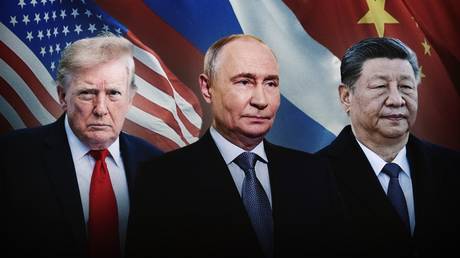
The collective West is no longer an operational reality, and the evidence sits in plain sight across the factory floors and export terminals of Shenzhen. When Russian foreign policy analyst Fyodor Lukyanov examined the geopolitics surrounding Shenzhen, he pointed to an uncomfortable truth that Western capitals still refuse to say out loud. The unified transatlantic front that once dictated global trade rules, technological standards, and diplomatic consensus is fracturing under the weight of industrial self-interest. While Washington demands a clean break from Chinese supply chains, European and Asian allies are quietly deepening their commercial roots in the Pearl River Delta because the economic math leaves them no alternative.
For decades, foreign policy establishment thinkers treated the West as a single, coherent bloc. North America, Western Europe, and key Indo-Pacific partners operated under an implicit bargain. The United States provided the security umbrella and the reserve currency, while allies aligned their regulatory frameworks and strategic priorities with Washington. That arrangement functioned smoothly when China was merely a low-cost assembly hub producing cheap consumer goods for Western brands. Today, Shenzhen is not assembling someone else's intellectual property. It is setting the global pace in electric vehicles, battery chemistry, commercial drones, telecommunications hardware, and industrial automation.
The Industrial Reality Inside the Pearl River Delta
To understand why diplomatic solidarity is crumbling, you have to look at how Shenzhen actually works. This is not a story about state subsidies alone, though Beijing's industrial policy certainly primed the pump. It is a story about supply chain density that cannot be replicated anywhere in North America or Europe within a decade.
Walk through the electronics districts of Huaqiangbei or the manufacturing corridors of Bao'an, and you encounter an ecosystem where hardware prototyping happens in hours rather than months. A startup founder can design a circuit board in the morning, walk three blocks to have the components sourced by lunch, and hold a working physical prototype by dinner. Tooling, injection molding, lithium-ion cell fabrication, and precision sensors all exist within a fifty-mile radius.
Western policymakers talk casually about reshoring and friend-shoring as if supply chains were modular blocks that can be unplugged from Guangdong and dropped into Ohio or Bavaria. Anyone who has spent twenty years tracking global manufacturing knows that is pure fantasy. You do not just move an assembly plant. You have to move the thousands of tier-two and tier-three suppliers who make the screws, specialty adhesives, micro-controllers, and testing rigs that keep the main line running.
Consider the numbers behind this hardware dominance. Shenzhen alone accounts for a massive share of global drone production through companies like DJI, which commands roughly seventy percent of the commercial market despite years of aggressive American blacklisting. In the electric vehicle sector, BYD—headquartered in Shenzhen—has overtaken Tesla in global battery-electric vehicle sales volume while controlling its own battery supply chain from raw lithium processing down to the finished pack. When Huawei was cut off from advanced Western semiconductors and Google's software ecosystem, critics predicted the company's immediate collapse. Instead, Huawei poured billions into domestic research and development, emerging with homegrown silicon and an operating system that has reclaimed market share across China.
Why Washington and Brussels Are Diverging
This industrial reality is precisely what drives the wedge right down the middle of the transatlantic alliance. The United States and the European Union face fundamentally different economic vulnerabilities when confronting China's manufacturing juggernaut.
Washington views China primarily through a national security and hegemonic lens. The American economy is insulated by massive domestic energy production, a consumer-driven service sector, and the structural privilege of the US dollar. American politicians can afford to slap triple-digit tariffs on Chinese electric vehicles because very few Chinese cars were being sold in the United States anyway. For Washington, decoupling is a strategic maneuver designed to preserve technological supremacy and military dominance.
Europe enjoys none of those buffers. The European economy is an export-dependent industrial machine that relies heavily on cheap energy, open global trade, and access to the Chinese consumer market. When Germany lost access to inexpensive Russian pipeline gas, its heavy manufacturing base took a severe hit. German automakers like Volkswagen, BMW, and Mercedes-Benz rely on China for roughly a third of their global vehicle sales and an even larger share of their profits.
If Brussels follows Washington into an all-out trade war with Beijing, European industry takes the direct blast. China does not even need to impose sweeping sanctions to punish Europe; it simply has to squeeze market access for European luxury cars, aerospace components, and agricultural exports. We saw this dynamic play out clearly during the European Union's contentious debate over tariffs on Chinese electric vehicles. While Brussels eventually pushed through countervailing duties, Germany voted against them, fearing immediate retaliation against its own automakers. That split vote was not a minor policy disagreement. It was a public demonstration that the collective West no longer shares a unified economic interest.
The Myth of Allied Cohesion
Diplomatic summits still produce carefully worded communiques celebrating transatlantic unity. Leaders stand side by side at G7 meetings, reciting familiar talking points about de-risking rather than decoupling. Yet behind closed doors, trade ministries are cutting separate deals.
Look at the behavior of European capitals over the past two years:
- Berlin continues to approve major capital investments by German chemical and automotive giants directly inside China, effectively localizing production behind Chinese tariff walls.
- Paris alternates between tough rhetoric on European strategic autonomy and high-profile trade delegations aimed at securing Airbus orders and cognac exemptions.
- Budapest and Madrid actively court Chinese battery and electric vehicle manufacturers to build factories on their soil, trading local jobs and investment for political goodwill toward Beijing.
Even among Washington's closest Asian allies, the picture is far more complicated than State Department briefings suggest. South Korea and Japan depend deeply on Chinese intermediate goods and consumer demand. While both nations cooperate with American export controls on advanced semiconductor manufacturing equipment, neither is willing to commit economic suicide to satisfy Washington's hawks. They hedge, delay, and carve out exemptions wherever possible.
What Fyodor Lukyanov Gets Right and What He Misses
Fyodor Lukyanov has spent years arguing that the post-Cold War international order—dominated by a cohesive Western bloc—is giving way to a fragmented, multipolar world. As editor-in-chief of Russia in Global Affairs and chairman of the Presidium of the Council on Foreign and Defense Policy, Lukyanov observes global shifts from Moscow, a vantage point that naturally looks for cracks in Western solidarity.
His core observation about Shenzhen holds up under scrutiny. Shenzhen serves as a physical monument to the failure of Western containment strategies. For years, Western strategists assumed that political liberalization was a prerequisite for high-end technological innovation. The prevailing dogma held that an authoritarian state could copy existing technologies, but could never foster the creative disruption required to lead global industries. Shenzhen shattered that assumption. It proved that a hyper-competitive, state-backed capitalist ecosystem can out-innovate Western incumbents in hardware, green energy, and telecommunications without adopting Western political norms.
However, viewing this purely as a triumph of Chinese statecraft over Western decline misses half the picture. Lukyanov's framing, shaped by Moscow's own confrontation with NATO, tends to portray the West as an exhausted, failing monolith collapsing from within. That interpretation overlooks the massive structural headwinds China itself is facing.
Shenzhen's export machine is currently running at full throttle largely because China's domestic economy is struggling to absorb its own industrial output. A prolonged slump in the Chinese property sector has wiped out household wealth and depressed domestic consumer spending. Local governments are buried under trillions of dollars in off-balance-sheet debt. Faced with weak demand at home, Beijing has doubled down on manufacturing investment, flooding global markets with excess capacity in solar panels, batteries, and electric vehicles.
This overcapacity is not a sign of effortless dominance; it is a symptom of severe domestic economic imbalance. Furthermore, the very export surge that makes Shenzhen look unstoppable is now triggering protectionist backlashes not just in Washington and Brussels, but across the Global South. Brazil, India, Indonesia, and Turkey have all raised tariffs or launched anti-dumping investigations against Chinese steel, textiles, and electric vehicles to protect their own nascent industries. Beijing is discovering that you cannot export your way out of a domestic demand crisis without alienating the very developing nations you hope to lead.
The Structural Breakdown of Global Trade Rules
To understand how we arrived at this impasse, we have to look at the quiet death of the World Trade Organization. When China joined the WTO in 2001, Western leaders operated under the conviction that integrating Beijing into the global trading system would inevitably transform China into a market economy that played by Western rules.
That bet failed completely. Instead of converging with Western free-market norms, China used the open global trading system to supercharge a hybrid model of state capitalism. Beijing protected its domestic market through regulatory barriers, forced technology transfers, and massive state-directed credit, while its champions enjoyed unrestricted access to Western consumers.
By the time Washington and Brussels realized the rules of the WTO were unequipped to handle a state-directed economy of China's scale, the industrial balance of power had already shifted. Now, the very nations that built the rules-based trading order are dismantling it. The United States has effectively paralyzed the WTO's appellate body and embraced industrial subsidies through legislation like the CHIPS Act and the Inflation Reduction Act. Europe is scrambling to draft its own subsidy frameworks to keep green tech companies from fleeing to North America or Asia.
The result is a global economy reverting to mercantilism. Trade is no longer governed by multilateral rules designed to maximize efficiency and lower consumer prices. It is governed by bilateral power dynamics, national security exceptions, and industrial nationalism. In a mercantilist world, alliances become transactional. Every country is forced to calculate its own survival and prosperity first, leaving very little room for the ideological solidarity that once defined the collective West.
Why Silicon Valley Lost the Hardware Race
A major reason Shenzhen exposes Western vulnerability is a strategic blunder made by Western corporate leadership over the past thirty years. Throughout the 1990s and 2000s, Wall Street rewarded companies for becoming "asset-light." Corporate consultants preached that manufacturing was a low-margin commodity business best outsourced to Asia, while Western firms kept the high-margin design, branding, and software layers.
Apple became the poster child for this model. Designed in California, assembled in China. For a long time, the financial returns were extraordinary. American tech giants accumulated unprecedented cash reserves and market capitalizations while shedding the messy, capital-intensive burden of running factories.
The fatal flaw in that strategy is that manufacturing process knowledge is inseparable from product innovation. When you outsource production for twenty years, you lose the engineering talent, the tool-and-die makers, and the institutional muscle memory required to build physical things at scale. You forget how to bridge the gap between a digital blueprint and a mass-produced object.
Meanwhile, the Chinese contract manufacturers who started out assembling Western gadgets were quietly learning every trick in the book. They took the operational lessons taught by Apple, Dell, and Hewlett-Packard, improved upon them, and eventually built their own domestic supply chains. When the technological frontier shifted toward hardware-heavy sectors like electric vehicles, grid-scale batteries, and robotics, Shenzhen already possessed the industrial commons that Silicon Valley had dismantled.
Today, Western tech companies can still write world-leading artificial intelligence models and design cutting-edge chips on paper. Yet when it comes to building the physical infrastructure of the twenty-first century—from transformers and solar cells to autonomous drones—they are dependent on the very manufacturing hubs their governments are trying to isolate.
The Illusion of Clean Decoupling
If you ask a defense contractor or a trade representative what decoupling looks like in practice, you quickly uncover a web of contradictions. Even when Western companies actively try to pull their supply chains out of China, the trail almost always leads back to Shenzhen.
Consider a hypothetical electronics manufacturer moving its final assembly plant from Guangdong to northern Vietnam or central Mexico to avoid American tariffs. On paper, the company has successfully diversified away from China, and trade statistics will record the finished goods as Vietnamese or Mexican exports. Look closer at the factory floor, however, and you will see that the machinery stamping the metal casings was built in China. The printed circuit boards, lithium batteries, and display panels are shipped in daily from Shenzhen ports. Even the engineers brought in to train the local workforce are frequently flown in from mainland China.
This phenomenon—often called supply chain lengthening—means that Western economies are not actually reducing their reliance on Chinese manufacturing. They are simply adding extra shipping legs and middlemen, which drives up costs for Western consumers while leaving the underlying vulnerability completely intact.
The same dynamic governs critical minerals. Western governments have spent billions trying to secure alternative supplies of lithium, cobalt, and rare earth elements. Mining the raw ore in Australia, Chile, or the Democratic Republic of Congo is the easy part. Refining those minerals into battery-grade chemicals is dirty, energy-intensive, and technically complex. China currently controls between sixty and eighty percent of global refining capacity for most critical battery minerals. Until the West builds out its own processing plants—a process that faces years of environmental permitting delays and local opposition—every green energy transition target set in Washington or Brussels remains tethered to Chinese industrial output.
What Comes After Transatlantic Consensus
The divergence exposed by Shenzhen does not mean NATO is about to dissolve tomorrow, nor does it mean Western democracies will abandon their core security partnerships. Military threats, particularly in Eastern Europe and the Indo-Pacific, still bind the United States and its allies together in ways that trade disputes cannot easily sever.
What has ended is the era in which the West could project a unified economic and ideological model onto the rest of the world. Countries across Southeast Asia, Latin America, the Middle East, and Africa are watching the friction between Washington, Brussels, and Beijing with cold pragmatism. They have no interest in joining a new Cold War bloc. When developing nations need affordable telecommunications infrastructure, solar panels, or electric buses, they look to Shenzhen because Chinese companies deliver reliable hardware at a price point Western competitors cannot match.
Western leaders can continue to deliver speeches about shared democratic values and rules-based order, but speeches do not build power grids or pave highways. Until North America and Europe confront the structural decay of their own industrial bases, fix their broken permitting systems, and rebuild the technical workforces required to manufacture complex goods at scale, the geopolitical center of gravity will keep tilting toward the Pearl River Delta. Every container ship leaving Yantian port carries more than consumer electronics and electric cars; it carries proof that industrial capacity, not diplomatic rhetoric, dictates the balance of global power.