The United States has run its massive scientific research engine the exact same way since the end of World War II. The government drops roughly $200 billion a year into the system, funneling it through massive university bureaucracies and elite peer-review panels.
The Trump administration just announced it is blowing up that entire playbook.
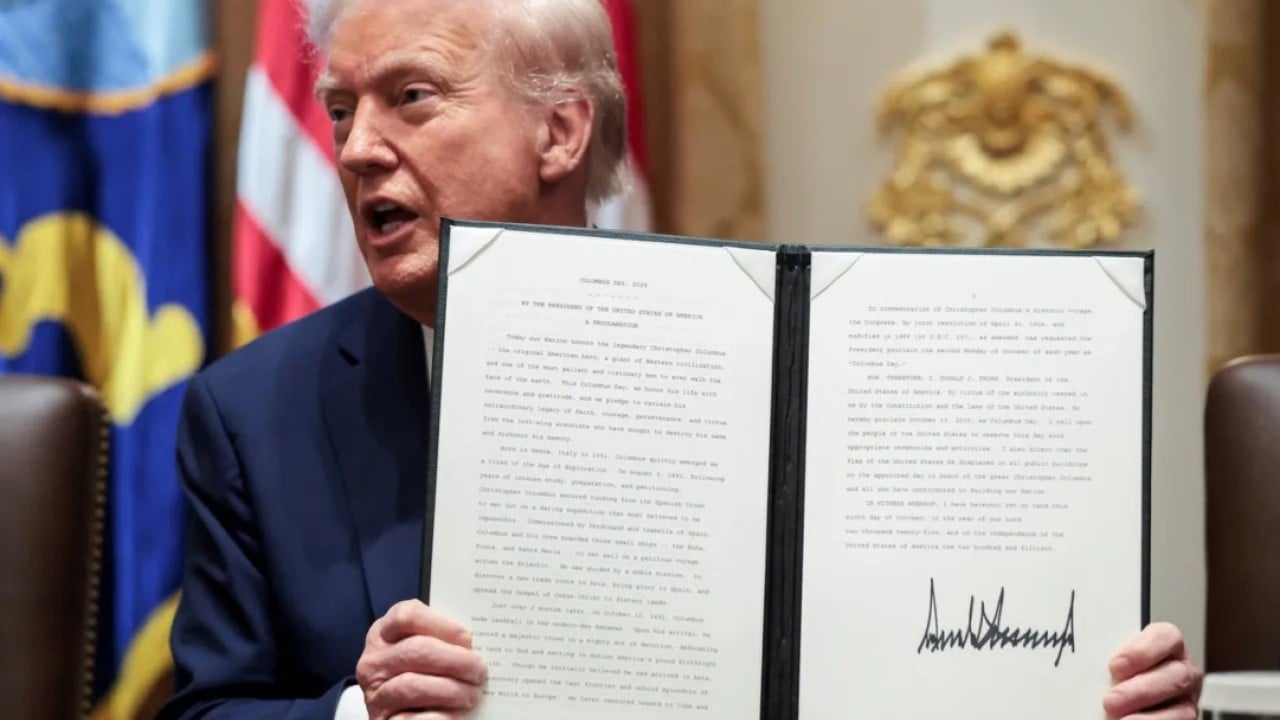
A White House Office of Science and Technology Policy (OSTP) blueprint, titled Science: A New Golden Age, outlines an aggressive shift in how the country funds innovation. The administration wants to bypass traditional university systems entirely, steering billions of dollars away from institutional overhead and putting it directly into the hands of individual scientists and autonomous AI systems. The explicit enemy here is two-fold: academic bureaucracy and the rapid rise of China's artificial intelligence capabilities.
But while cutting red tape sounds great on paper, this radical pivot risks breaking the very foundation that made American science dominant in the first place.
The Trillion Dollar Bet on Portable Funding and Pure Compute
For decades, getting a federal research grant meant your university took a massive cut for "indirect costs" like building maintenance and administrative staff. The White House wants to kill that model.
OSTP Director Michael Kratsios argues that the U.S. has become stagnant, funding the same elite institutions in the same predictable ways for thirty years. The new strategy forces federal agencies to prioritize "portable" awards. These are grants modeled after the National Science Foundation’s graduate fellowships, which belong to the individual researcher, not the school. If a scientist decides to leave Harvard or MIT to work at an agile, private-sector lab or a smaller startup, the money packs up and goes with them.
Simultaneously, the administration is pumping immediate capital into the Genesis Mission—a massive $5 billion "AI for science" push involving 15 federal agencies. The goal isn't just to help scientists write papers faster. The government wants autonomous laboratories where AI models propose hypotheses, run automated experiments using robotics, and process vast federal datasets without needing constant human intervention.
The logic is simple. The administration believes human-driven academic research is too slow to beat a hyper-focused adversary.
The Reality of the China Threat
The panic driving this policy isn't baseless. For years, the U.S. comforted itself with the idea that while China spent heavily on research, American models and institutions possessed superior quality.
That comforting narrative is dead. Data from Stanford’s 2026 AI Index reveals that the performance gap between the top American and Chinese AI models has shrunk to less than three percent. What makes that terrifying for Washington policymakers is the efficiency math: the U.S. spent 23 times more on private AI investment to achieve that razor-thin lead.
Furthermore, Chinese open-source LLMs from outfits like DeepSeek and Tencent are dominating global developer charts, with token usage exploding exponentially. While American labs built massive, expensive proprietary walls around their models, China built highly efficient, lean infrastructure that global developers are adopting rapidly.
By shifting money to raw compute power and individual stars, the White House thinks it can match China’s speed. They want to bypass the endless committee meetings and ideological battles currently consuming elite American universities.
Why Starving Higher Education Could Starve Innovation
You can't build a massive AI revolution without a steady supply of brilliant minds to program the machines. That is where this plan hits a dangerous wall.
The Association of American Universities (AAU) has already sounded alarms over early funding shifts. Leading research universities saw a massive 15% drop in doctoral program applicants for the fall of 2026 compared to the previous year. When federal research funding cuts hit graduate science programs, universities don't just trim fat—they slice their incoming classes. Some graduate science programs have already downsized their admissions by an astonishing 60% to 75% due to federal funding uncertainties.
If you decimate the PhD pipeline to fund immediate commercial AI projects, you might win the next twelve months while guaranteeing you lose the next decade. Algorithms cannot entirely replace the foundational training that occurs inside a university research lab.
There is also a transparency issue that critics are rightly shouting about. Part of this funding overhaul involves giving political appointees more authority to dictate which research projects align with administration goals. Replacing rigid academic peer review with political benchmarks could easily lead to an environment where scientists only hunt for discoveries that please the White House.
How Researchers and Labs Must Adapt
The White House only controls how directives are issued; Congress still holds the ultimate power of the purse. However, the institutional momentum has shifted permanently. If you run a research lab or work within the tech sector, waiting for things to go back to normal is a losing strategy.
First, stop relying on institutional safety nets. If you are a principal investigator, structure your future grant proposals around the "portable award" framework. Focus on building a personal, agile research team whose value isn't tied to the university brand on the letterhead.
Second, pivot your methodology toward AI integration. The Office of Management and Budget has made it clear that agencies will reject proposals where AI is merely used as a glorified calculator. To win federal backing now, your research must treat AI as a core partner in discovery—utilizing automated workflows, synthetic datasets, and public-private computing partnerships.
The era of slow, consensus-driven academic science is being forced out by geopolitical panic. Whether this new, hyper-fragmented model can actually outpace China remains unproven, but the old way of doing business is officially gone.