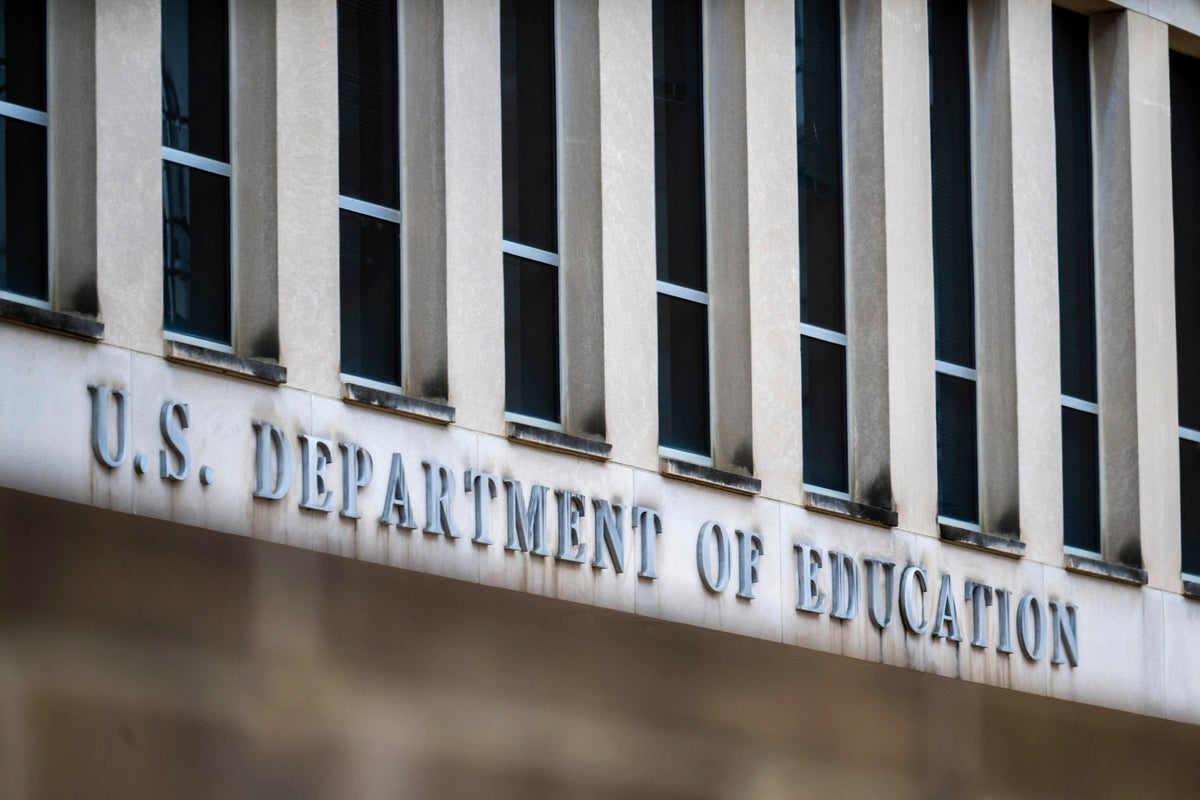
The federal government is pulling off a massive structural magic trick, and hardly anyone is noticing the actual mechanics of it.
On June 16, 2026, the Trump administration announced that two massive pieces of the U.S. Department of Education—the Office of Special Education and Rehabilitative Services (OSERS) and the Office for Civil Rights (OCR)—are being packed up and shipped off to other federal agencies. OSERS is heading to the Department of Health and Human Services (HHS). OCR's enforcement arm is moving to the Department of Justice (DOJ).
If you listen to the official press releases, this is just a routine "interagency partnership" designed to streamline operations and cut down on Washington micromanagement. Education Secretary Linda McMahon claims it aligns services with the agencies best positioned to handle them.
But let's be real. This isn't about clearing up paperwork. It's a calculated, back-door strategy to fulfill a campaign promise without needing permission from a divided Congress.
The Anatomy of a Bureaucratic Evacuation
You don't need a congressional vote to change the nameplate on an office door. That's the loophole the administration is exploiting here.
Legally, completely dissolving a cabinet-level agency requires an act of Congress. Because the administration lacks the legislative votes to explicitly delete the Department of Education from the organizational chart, they're using things called Interagency Agreements (IAAs) to hollow it out from the inside.
With Tuesday's announcement, McMahon has signed 14 of these agreements. The department's K-12 workforce was already quietly shunted off to the Department of Labor. Now, by moving special education and civil rights, the administration has offloaded the vast majority of the agency's core functions.
The strategy is simple: if you transfer all the employees, hand over the responsibilities, and empty the building, the department stops existing in everything but name.
Where the Pieces Are Landing
- Special Education (OSERS): Shifting to the Department of Health and Human Services (HHS). This office oversees the Individuals with Disabilities Education Act (IDEA), ensuring states provide equal public education to disabled students.
- Civil Rights (OCR): Shifting to the Department of Justice (DOJ). This team of attorneys handles discrimination complaints based on race, sex, disability, and religion in schools receiving federal cash.
- Student Privacy: Also moving under the DOJ umbrella, along with various school training and advisory programs.
Why the Special Education Move is Raising Alarms
Moving civil rights to the DOJ has a certain logical ring to it—after all, the Justice Department is full of lawyers who sue people for breaking laws. But moving special education to HHS is a completely different story, and it has parents and advocates deeply worried.
For decades, the philosophy behind the Individuals with Disabilities Education Act (IDEA) was integration. The goal was to keep disabled kids in general education classrooms alongside their peers as much as possible. Education professionals look at a child through the lens of learning, academic growth, and classroom integration.
HHS looks at the world through a medical and social services lens.
Advocacy groups like the Council for Exceptional Children argue that HHS simply doesn't have the institutional perspective to manage school-house equity. Critics point out that this specific shift mirrors a blueprint laid out in Project 2025, a conservative policy framework that advocates for moving special education to HHS and eventually converting that funding into small vouchers for individual families.
The administration pushes back by saying that HHS is better equipped to handle the full lifecycle of care—connecting services for infants and toddlers seamlessly with school-age kids and adult rehabilitation. They've also floated a promised $500 million increase in special education funding to sweeten the deal, though Congress still controls the purse strings on that money.
The Structural Shift in Civil Rights Enforcement
When a parent feels a local school district is discriminating against their child, the Office for Civil Rights has traditionally been the venue of last resort.
Historically, OCR operated differently than a traditional law enforcement agency. While the DOJ specializes in penalizing violations and filing lawsuits, OCR's historical focus was on institutional reform. They investigated complaints—ranging from lopsided sports funding for girls to biased disciplinary tracks for minority students—and worked with districts to change their actual day-to-day practices under the threat of losing federal funds.
We've already seen signs of friction here. The administration has closed seven of its 12 regional civil rights offices, reassigning massive caseloads to the remaining five. According to a U.S. Government Accountability Office report covering March 2024 to September 2025, the office received over 9,000 complaints. While they resolved 7,000 of them, roughly 90% were resolved through outright dismissal.
By pushing the remaining enforcement to the DOJ, the administration is fundamentally shifting how school discrimination complaints are handled. It turns an educational compliance issue into a strict legal fight.
What This Means for Local Schools and Parents
If you're a parent or a local school board member, you might think this federal musical chairs routine won't affect your daily life. Local property taxes and state funds pay for the vast majority of public schooling anyway.
But federal rules dictate the baseline of what schools must provide. Here's what you need to watch right now:
Watch the Funding Streams
Congress just authorized the Education Department's budget at roughly $79 billion. Because recent budget laws explicitly state that IDEA funds belong to the Education Department, the administration can't easily slide that money over to HHS accounts without legislative pushback. Expect a mess of bureaucratic red tape as officials try to administer Education Department funds using HHS personnel.
Expect Legal Whiplash
School districts are caught in the middle of an administrative civil war. Several advocacy groups have already filed lawsuits, arguing that McMahon cannot unilaterally offload structural department responsibilities without explicit congressional approval. While the Supreme Court handed the administration a temporary win last August by letting the transfers continue while lower court battles play out, the legal ground is incredibly shaky.
Frederick Hess, the director of education policy studies at the American Enterprise Institute, noted that these interagency agreements create a massive administrative hurdle for future presidents. A different administration down the road will have to expend massive amounts of political capital and bureaucratic energy just to unwind these transfers and rebuild the old department structure.
If you're managing a school district or trying to secure an Individualized Education Program (IEP) for your kid, don't look to Washington for clear guidance anytime soon. The rules are staying the same on paper, but the people enforcing them are packing their desks into boxes. Watch your state education agency closely. With the federal oversight apparatus fractured across multiple agencies, state capitals are about to become the ultimate decision-makers on how civil rights and special education laws are actually applied on the ground.