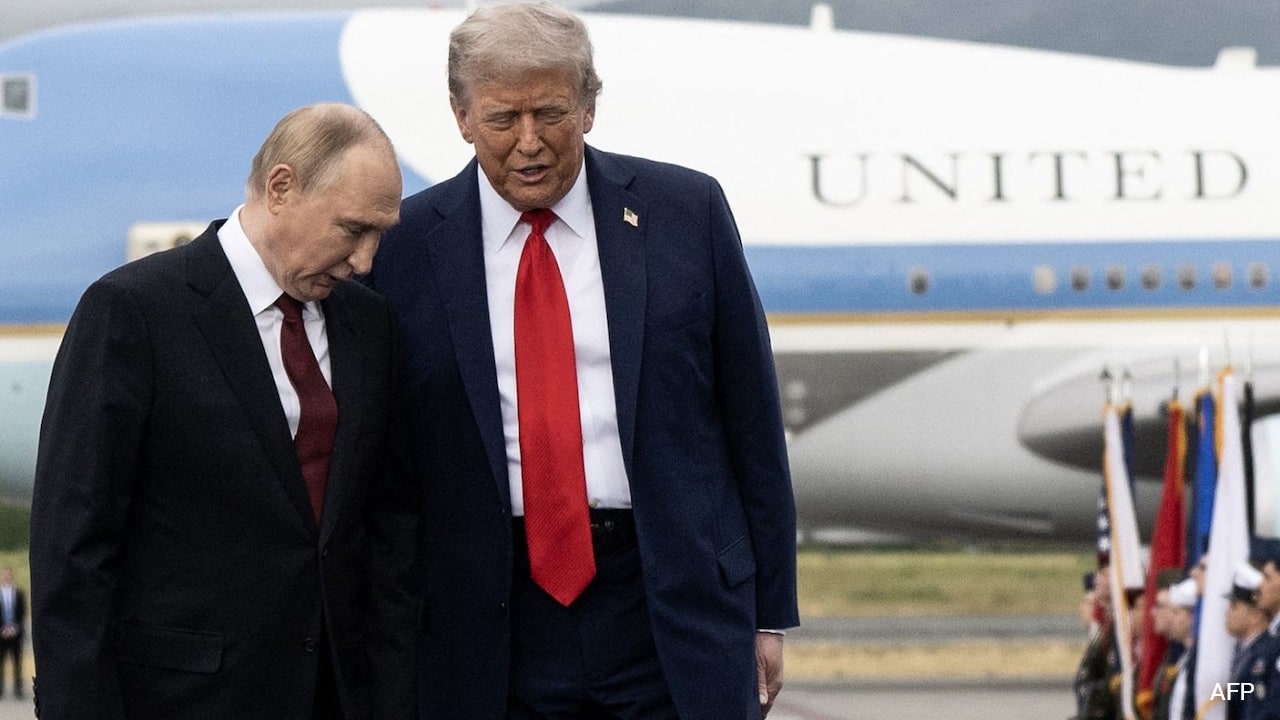
When President Donald Trump announced he would speak directly with Vladimir Putin regarding a suspected pneumonic plague fatality in Siberia, the headline looked like an abrupt pivot toward Cold War crisis management. In reality, the diplomatic escalation was triggered by a quiet, formal warning from the U.S. State Department—a demarche—demanding that Moscow stop withholding clinical data regarding the death of a 28-year-old researcher at the Irkutsk Anti-Plague Research Institute.
The confrontation highlights a recurring fault line in global biosecurity. While Russian federal agencies publicly dismissed the incident as an isolated case of "pneumonia of unknown origin," local officials in neighboring Buryatia initially stated the woman had died of the plague, and regional authorities quarantined roughly 200 contacts in the town of Shelekhov. Washington’s pressure campaign was never merely about a single laboratory accident in eastern Siberia; it was a test of whether international reporting rules still function when a nuclear-armed state decides transparency is a political liability. For a more detailed analysis into similar topics, we recommend: this related article.
The Anatomy of an Information Blackout
Standard wire coverage treated the October 2026 incident as a routine diplomatic back-and-forth, quoting Trump’s offer of American assistance alongside Kremlin assurances that the situation was contained. That framing misses the operational reality of how biological incidents become geopolitical flashpoints.
The deceased technician, Darya Shipilova, worked at a specialized state facility tasked with monitoring natural plague reservoirs across Siberia and the Russian Far East. According to regional media accounts, she reported breaking a glass vial containing live bacteria before developing severe respiratory symptoms, ending up on a ventilator in Shelekhov, and dying within days. To get more context on this topic, in-depth reporting can be read at The New York Times.
Under the International Health Regulations (IHR)—a legally binding framework overseen by the World Health Organization—member states are required to notify the WHO within 24 hours of assessing any public health event that could constitute an international concern.
Moscow’s messaging fractured almost immediately after the death became public:
- Regional admission: Buryatia’s governor, Alexei Tsydenov, posted on Telegram that a woman in adjacent Irkutsk had died "maybe of the plague," triggering immediate alarm across Siberian transit hubs.
- Federal pivot: Russia’s consumer health watchdog, Rospotrebnadzor, alongside Irkutsk Governor Igor Kobzev, avoided confirming plague, insisting no security breach occurred at the institute and labeling the fatality unexplained pneumonia.
- Containment actions: Despite downplaying the threat, authorities sealed off wards at the Shelekhov district hospital and placed nearly 200 people—over half of them in inpatient isolation—under medical surveillance.
To veteran biosecurity analysts, the contradiction between Moscow's calm rhetoric and its aggressive quarantine posture was a classic red flag. You do not lock down hospital wings and isolate two hundred contacts for routine community-acquired pneumonia.
Why Pneumonic Plague Triggers Immediate Diplomatic Alarm
To understand why the White House, the State Department, and the U.S. Centers for Disease Control and Prevention intervened so rapidly, you have to separate medieval folklore from modern microbiology.
The bacterium Yersinia pestis manifests in three primary clinical forms, and the distinction between them dictates whether an incident stays a local medical footnote or becomes an international emergency:
| Plague Form | Primary Transmission Route | Untreated Mortality Window | Person-to-Person Spread |
|---|---|---|---|
| Bubonic | Flea bites from infected rodents | Days to weeks (40%–60% fatality) | Rare without secondary progression |
| Septicemic | Direct bloodstream entry or untreated bubonic | Rapid onset; high fatality | Negligible |
| Pneumonic | Airborne respiratory droplets | 24 to 72 hours (nearly 100% fatal) | High via coughing |
Pneumonic plague is the only form capable of direct human-to-human transmission via aerosolized droplets. While common antibiotics like streptomycin, gentamicin, or doxycycline can cure the infection if administered within the first 24 hours of symptom onset, the diagnostic window is razor-thin. Early symptoms mimic severe influenza or viral pneumonia. By the time a patient coughs up bloody sputum, their survival odds plummet and everyone in the immediate room has already been exposed.
Furthermore, Yersinia pestis sits permanently on Tier 1 select agent lists worldwide due to its history in state bioweapons programs. During the Cold War, the Soviet Union’s Biopreparat network weaponized plague strains on an industrial scale, engineering antibiotic-resistant variants designed for aerosol dispersion. Even when a modern incident stems from an accidental dropped test tube at a civilian surveillance institute, Western intelligence agencies cannot afford to take Moscow's word at face value without independent verification.
Washington’s Dual-Track Strategy
The U.S. response combined public presidential diplomacy with sharp bureaucratic pressure—a pairing designed to corner the Kremlin without handing Putin an easy propaganda victory.
First came the carrot. Trump publicly characterized the situation as a "big problem" and announced the United States was prepared to send medical support. Offering humanitarian and technical aid frames Washington as the responsible global actor while placing the burden of refusal on Moscow. If the Kremlin accepts, American specialists gain visibility on the ground. If it declines, Russia looks secretive and defensive.
Second came the stick. Secretary of State Marco Rubio and State Department officials delivered a formal demarche in Moscow, explicitly accusing Russian authorities of falling short of their international disclosure duties. Simultaneously, the U.S. Embassy in Moscow issued a targeted health alert for the Irkutsk region, reminding American citizens to depart Russia and warning travelers to monitor their health for 14 days.
WHO Director-General Tedros Adhanom Ghebreyesus reinforced the American position, publicly stressing that complete, timely data sharing under the International Health Regulations was mandatory to resolve conflicting official narratives.
The Kremlin’s Counter-Narrative and Diplomatic Deflection
Moscow reacted not with transparency, but with practiced deflection. Rather than releasing raw sequencing data or clinical pathology reports from the Shelekhov hospital, Rospotrebnadzor issued a statement offering Russian assistance to the United States to combat domestic measles outbreaks and noting a fatal plague case recorded in New Mexico months earlier.
The comparison was disingenuous, yet politically effective for domestic audiences. Rural plague cases occur every year in the American Southwest—typically in New Mexico, Arizona, and Colorado—when hikers, hunters, or pets encounter wild prairie dogs and rock squirrels carrying infected fleas. Those cases are reported openly by county health departments, sequenced, and logged in public CDC databases within days.
In Irkutsk, by contrast, a young technician died inside a closed state research apparatus, hundreds of residents were quarantined, and federal ministries initially denied that any pathogen linked to her work was present in her samples. By equating transparent rural public health reporting in the United States with aopaque laboratory fatality in Siberia, Russian officials sought to neutralize Western criticism as routine geopolitical harassment.
The Erosion of Post-Pandemic Verification
The deeper problem exposed by the Irkutsk standoff is structural. Global health governance still relies almost entirely on an honor system.
Neither the WHO nor the U.S. State Department possesses unilateral inspection authority inside sovereign biological laboratories. When an outbreak or laboratory accident occurs in an adversarial state, international monitors are reduced to piecing together fragmented clues:
- Social media leaks from regional politicians or hospital staff before central censorship takes hold.
- Embassy health alerts triggered by consular intelligence and local press monitoring.
- Indirect epidemiological signals, such as sudden hospital lockdowns, antibiotic procurement spikes, or canceled regional events.
Noticeably, even as Western governments demanded answers, Irkutsk officials pressed ahead with plans to host an international conference on plague and infectious diseases later that month, insisting the gathering had no connection to Shipilova's death. Trump later softened his tone after speaking with Russian counterparts, stating he did not believe the fatality pointed to bioweapons development and relaying Moscow’s claim that the risk was under control.
What the Standoff Leaves Unresolved
Close contacts in Shelekhov eventually cleared their quarantine periods without secondary infections emerging, preventing a localized laboratory tragedy from spiraling into an epidemic. On a purely epidemiological level, containment worked.
Yet the diplomatic record remains troubling. Russian authorities never provided independent international observers with verifiable proof explaining how a healthy 28-year-old worker at an anti-plague institute contracted a fatal, rapid-onset lung infection that required isolating 200 people, while simultaneously maintaining that no lab-linked pathogen was involved. Until global health treaties carry enforceable verification mechanisms rather than polite diplomatic warnings, the world’s early warning system for high-consequence pathogens will remain dependent on whatever a government chooses to admit after the doors are already locked.