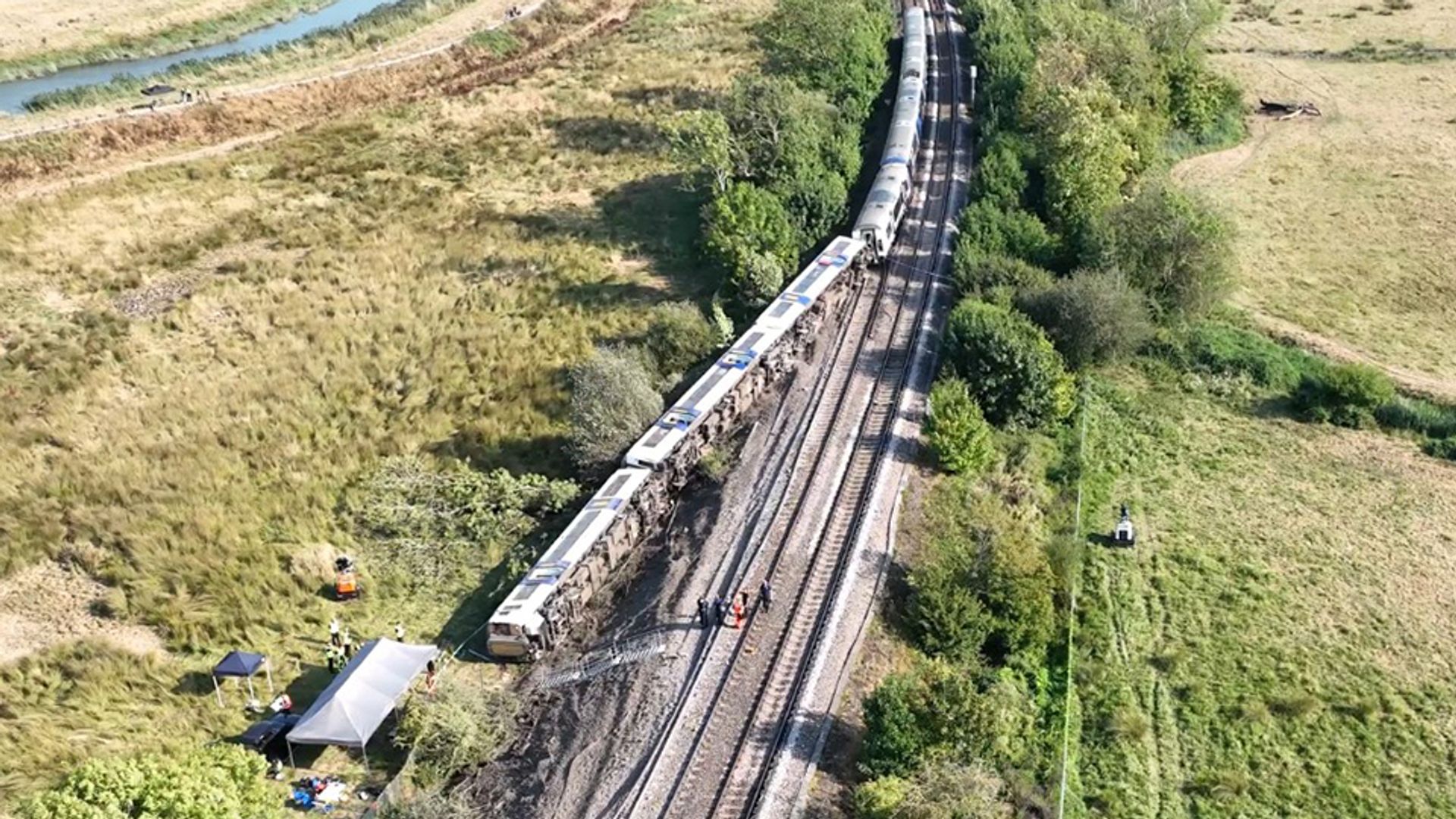
Track irregularities are the quiet killers of the modern rail network. When a train leaves the rails, official reports routinely point toward a single mechanical failure or a localized anomaly, but seasoned investigators know the truth is far more systemic. A track irregularity is rarely an isolated event born of sudden bad luck. It is the physical manifestation of deferred maintenance, overworked steel, and a regulatory framework that prioritizes line speed over structural integrity.
Every time a freight or passenger carrier reports a geometry fault, standard operating procedure dictates a temporary slow order or immediate spot repair. Yet patching a warped rail or tamping down loose ballast addresses the symptom while the disease spreads unchecked across thousands of miles of aging infrastructure. The real story behind these track anomalies involves a dangerous math problem where rising axle loads collide with shrinking inspection windows.
The Anatomy of a Geometry Fault
Steel is not static. Under the relentless pounding of heavy locomotives, rail stretches, twists, and creeps. Track geometry cars roll over major mainlines constantly, measuring gauge, crosslevel, curvature, and alignment with laser precision. When these sensors flag a departure from safety tolerances, crews are dispatched.
However, measuring a defect and understanding its root cause require two entirely different skill sets. A dip in the rail joint or a widening gauge often signals subgrade failure beneath the ties. If the ballast—the crushed stone foundation supporting the track structure—becomes fouled with mud and loses its drainage capabilities, the entire assembly floats on a slurry whenever it rains. Tamping the top of the rail offers only temporary relief. Within weeks, heavy tonnage forces the unstable foundation right back out of alignment.
Carriers frequently gamble on these marginal sections. Operating margins are tight, and taking a major mainline out of service for twenty-four hours to completely excavate and rebuild a bad subgrade costs millions in lost velocity. So, maintenance chiefs settle for band-aids. They apply speed restrictions or perform spot tamping, hoping the rail holds together until the next fiscal quarter.
Deferred Maintenance and the Pressure for Velocity
Railroading changed fundamentally with the widespread adoption of Precision Scheduled Railroading. This operational philosophy prioritized asset utilization above all else. Locomotives run longer loops, trains grow longer and heavier, and crew rosters shrink to absolute minimums.
The strategy squeezed incredible short-term profits out of legacy networks. It also starved maintenance departments of the time windows required to properly inspect and rehabilitate heavy-wear corridors. When you run two-mile-long freight trains carrying ten thousand tons of cargo over track that was laid down during the mid-twentieth century, the margin for error evaporates.
An irregularity that might have been safely tolerated by lighter, slower consists fifty years ago will aggressively stress modern wheel profiles. Wheel-rail interface dynamics are brutal. As a heavy wheelset drops into a slight dip or encounters a misaligned joint, dynamic vertical forces spike to double or triple the static load. That hammer blow lands on the exact same spot thousands of times a day. Eventually, the fastener fails, the tie splits, or the rail snaps.
Regulatory Blind Spots and Self-Policing
Federal oversight in rail transport relies heavily on self-reporting and minimum compliance standards. Railroads inspect their own tracks using company-owned geometry equipment and internal engineering standards. While federal inspectors audit these records, they cannot be everywhere at once.
When a derailment occurs due to a track irregularity, the subsequent investigation often reveals that the defect was known. It may have even been logged in the carrier's internal maintenance database weeks prior. Because the track measurement fell just short of the absolute federal threshold for mandatory immediate closure, or because a repair order was technically pending, the carrier remains within legal compliance right up until the moment the train hits the floor.
This bureaucratic loophole creates a perverse incentive structure. Maintenance managers are judged by how quickly they clear defect tickets, not necessarily by whether the underlying geological stability of the corridor has improved. A supervisor juggling fifty miles of troubled track will naturally prioritize the worst individual spikes on their computer screen, ignoring the creeping degradation of the surrounding ballast matrix.
The Human Cost of Structural Fatigue
Behind the telemetry data and the engineering jargon lie the train crews who bear the brunt of corporate risk management. Locomotive engineers and conductors operate heavy machinery across terrain they know is sub-standard, relying on verbal warnings and faded mileage posts to navigate zones of concern.
When a train hits an unrecorded or rapidly deteriorating track twist, the crew has fractions of a second to realize something is catastrophically wrong. The violent lateral shake of a modern cab during a low-speed rock-and-roll or a high-speed stringline derailment leaves lasting physical and psychological scars. They are the ones who pay the price when a balance sheet optimization strategy meets the laws of physics.
Fixing this vulnerability requires a fundamental shift in how networks value infrastructure. It means accepting lower train density and slower speeds in exchange for genuine structural renewal. Until the industry stops treating track geometry anomalies as routine paperwork items to be managed and starts treating them as urgent warnings of systemic collapse, the next major derailment is simply a matter of time.