The room where the world tries to hold its breath is surprisingly beige. It is a boardroom in Vienna, stripped of drama, filled with the soft rustle of briefing papers and the muted click of expensive pens. Outside, the Danube flows past, indifferent to the fact that inside, thirty-five nations are staring into a black box.
When the International Atomic Energy Agency (IAEA) Board of Governors passes a resolution demanding that Iran account for its hidden uranium stocks, the news alerts read like a math problem. They speak of percentages, cascades, and kilograms. But numbers do not keep people awake at night. Uncertainty does. You might also find this similar coverage insightful: Inside the Iran Crisis Nobody is Talking About.
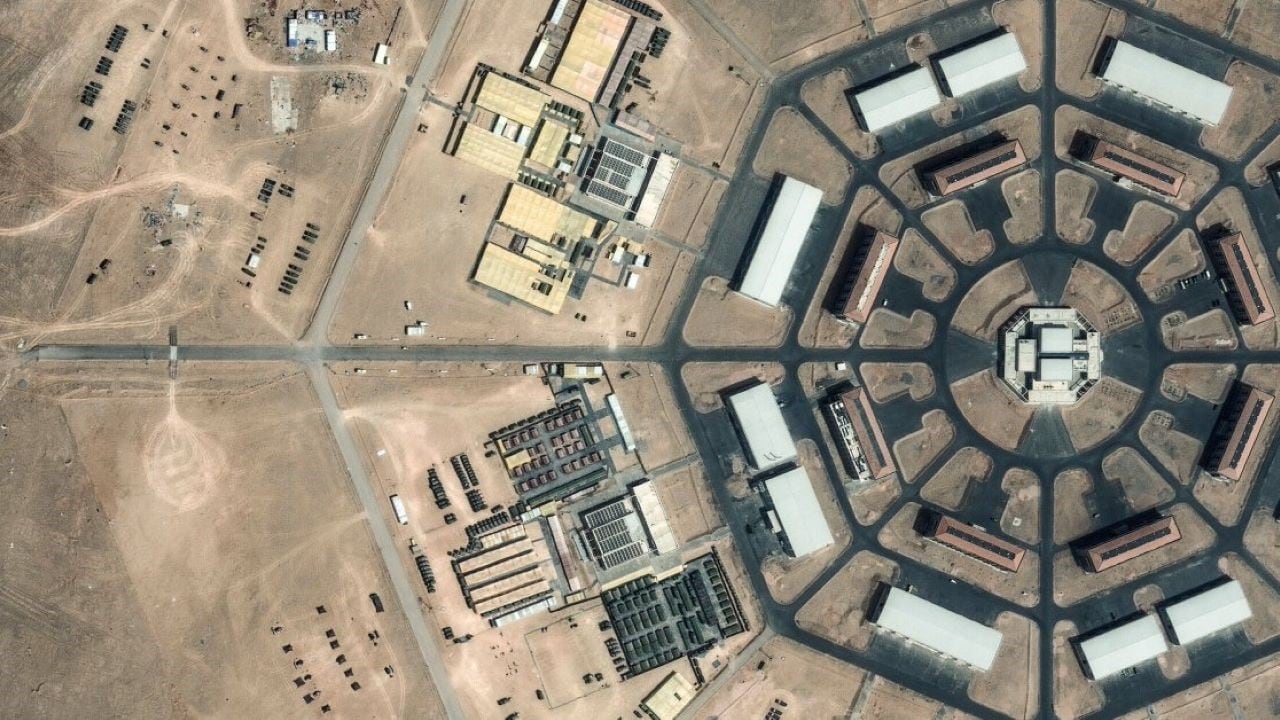
To understand what happened in Vienna, you have to leave the diplomatic quarter and travel to a place like Natanz or Fordow. Picture a concrete facility buried so deep beneath a mountain that the earth above it acts as a shield against the sky. Down there, thousands of tall, silver cylinders are spinning. They turn faster than the speed of sound, screaming in a pitch that humans cannot hear, separating the invisible from the impossible.
This is the uranium enrichment process. It is a triumph of human engineering, and it is the most volatile equation on the planet. As reported in detailed articles by Reuters, the effects are notable.
The Invisible Ledger
Every nuclear inspector carries a notebook, a digital sealer, and a heavy burden of skepticism. Their job is not to trust; it is to verify. For years, the global agreement on nuclear non-proliferation worked like a bank audit. The inspectors knew exactly how many centrifuges were spinning, how much gas was fed into them, and precisely how much enriched material came out the other side.
Lately, however, the lights have been turning off.
Imagine trying to manage a household budget where someone keeps painting over the numbers on the bank statement. You know money is being spent. You can hear the ATM clicking from the other room. But when you ask to see the balance, you are met with a closed door and a polite reminder that your presence is an intrusion.
That is the reality facing the IAEA. The resolution passed in Vienna is not just a piece of paper; it is a formal, collective demand for the ledger to be opened. The diplomats who pushed for it—led by Britain, France, and Germany—did not do so out of a love for bureaucracy. They did it because the gap between what we know and what we guess is growing too wide to ignore.
The core of the dispute rests on a few specific geographic points. These are places where inspectors found traces of uranium where no uranium was ever supposed to be. When asked how those particles got there, the official responses from Tehran have resembled a shifting maze of technical explanations that do not quite align with the physical laws of nature. Particles of processed uranium do not simply materialize by accident. They leave fingerprints. They tell a story of where they were mined, how they were treated, and what they were meant to become.
The Chemistry of Escalation
To truly grasp the anxiety in that Viennese boardroom, we have to look at the material itself. Natural uranium is mostly harmless, a heavy metal sleeping in the dirt. To make it useful, whether for keeping the lights on in a city or for something far darker, it must be refined.
Consider a staircase. At the bottom step is raw ore. To run a standard nuclear power plant, to generate clean electricity that powers hospitals and refrigerators, you need to climb to about three or four percent purity. It is a modest climb.
If you want to produce medical isotopes to treat cancer patients, you climb a bit higher, up to twenty percent.
But the physics of enrichment contains a terrifying paradox. The higher you go, the easier the next step becomes. The effort required to get from zero to twenty percent is massive; it takes time, immense energy, and thousands of centrifuges working in perfect harmony. But the jump from twenty percent to ninety percent—the threshold for a weapon—is a short, swift leap. It requires very little additional work.
Right now, the IAEA reports that Iran possesses stocks of uranium enriched up to sixty percent.
That is not a point on the staircase where anyone builds a commercial power plant. It is a ledge. It is a position of immediate readiness, a political and technical statement that says, We can cross the remaining distance whenever we choose. When diplomats look at those sixty-percent stockpiles, they do not see a peaceful energy program. They see a clock that has been wound tightly, waiting for someone to release the spring.
The Human Cost of High Stakes
It is easy to view this entire conflict through the lens of geopolitics, to see it as a giant chessboard where flags are moved and statements are issued. But the consequences of what happens in these facilities eventually filter down to people who have never heard of Vienna.
Think of a young engineer working inside one of Iran’s nuclear facilities. They are highly educated, perhaps a top graduate from a university in Tehran. They spend their days monitoring pressure gauges and adjusting flow valves, fully aware that their work is the focal point of global intelligence agencies. They know that a single software glitch, a sudden power surge, or an unannounced inspection can alter the course of their country’s history. They live with the knowledge that the facility they walk into every morning is a prime target on maps kept in folders thousands of miles away.
Then think of the inspectors. These are men and women who spend their lives in hotels, carrying radiation detectors in their luggage. They fly into tense environments, knowing they are tolerated but rarely welcome. They walk through corridors where cameras have been unplugged, taping seals onto valves, recording serial numbers, trying to piece together a jigsaw puzzle while the pieces are being actively hidden from view. They are the eyes of the world, operating in a twilight of bureaucratic resistance.
When the board in Vienna votes, these are the people who feel the immediate shift in temperature. A passed resolution means tighter security at the gates, longer delays at checkpoints, and a palpable thickening of the suspicion that fills the air between the people asking the questions and the people hiding the answers.
The Breakdown of the Language
The real tragedy of the current nuclear standoff is not just the accumulation of material; it is the total collapse of a shared vocabulary.
A decade ago, there was a framework. It was complicated, flawed, and fiercely debated, but it provided a language that both sides spoke. There were specific limits on kilograms, specific timelines for inspections, and a clear path toward lifting economic sanctions in exchange for verified restraint. It was a contract written in the cold prose of engineering and law.
When that framework was torn apart, the language went with it.
Now, the two sides are shouting across a canyon. The West views Iran's advancing enrichment as an existential threat to the stability of the Middle East, a provocation that could trigger a regional arms race where every neighboring nation feels compelled to seek its own deterrent. Iran, conversely, views the demands of the IAEA as a weaponized form of political pressure, an infringement on its sovereignty driven by adversaries who have historically failed to keep their own diplomatic promises.
But the laws of physics do not care about political grievances. A centrifuge does not know if it is spinning for defense or defiance. It simply spins.
The resolution passed by the IAEA board is an attempt to force a return to technical reality. It is a declaration that political arguments cannot override the physical necessity of verification. You cannot build international trust on a foundation of unmonitored material. You cannot have a stable world when the ingredients for its destruction are being moved around in the dark.
The Choice in the Concrete
As the diplomats pack their briefcases and leave the Vienna headquarters, the spotlight shifts away from the boardroom and back to the concrete tunnels beneath the Iranian mountains.
The resolution sets a implicit deadline, an unspoken ultimatum before the matter is pushed to a higher, more dangerous arena like the United Nations Security Council. The options available are narrowing by the day. One path leads toward a painful, grudging return to diplomacy—a process that requires both sides to accept compromises that will leave them deeply uncomfortable. The other path leads toward a quiet, steady accumulation of percentages, a gradual drift toward a point of no return where the word "intent" matters far less than the word "capability."
Deep underground, the high-pitched scream of the rotors continues. The cylinders turn, separating isotopes molecule by molecule, hour by hour. They do not pause for resolutions. They do not wait for treaties. They simply create a new reality, one gram at a time, while the world outside tries to figure out how to live with the secret things growing in the dark.