The stadium hums with a specific kind of violence. It is not the noise of anger, but the crushing, collective weight of forty thousand people holding a single breath.
One second, there is motion—a blur of crimson and blue, the thunder of studs on turf, the pure, unadulterated geometry of a professional football match played at the absolute edge of human capability. The next second, there is only the silence.
Football is a sport built on velocity. We watch it for the speed, for the kinetic poetry of a twenty-yard pass dropped onto a teammate's chest, for the sudden explosion of a striker finding half a yard of space inside a crowded box. We celebrate the collisions as signs of passion, the fierce, uncompromising commitment of athletes willing to sacrifice their bodies for three points and a league position. Yet we rarely look past the violence of the impact to witness what comes after. We rarely stand in the sterile white glare of the hospital room where the noise of the crowd fades into the steady, rhythmic beep of a heart monitor.
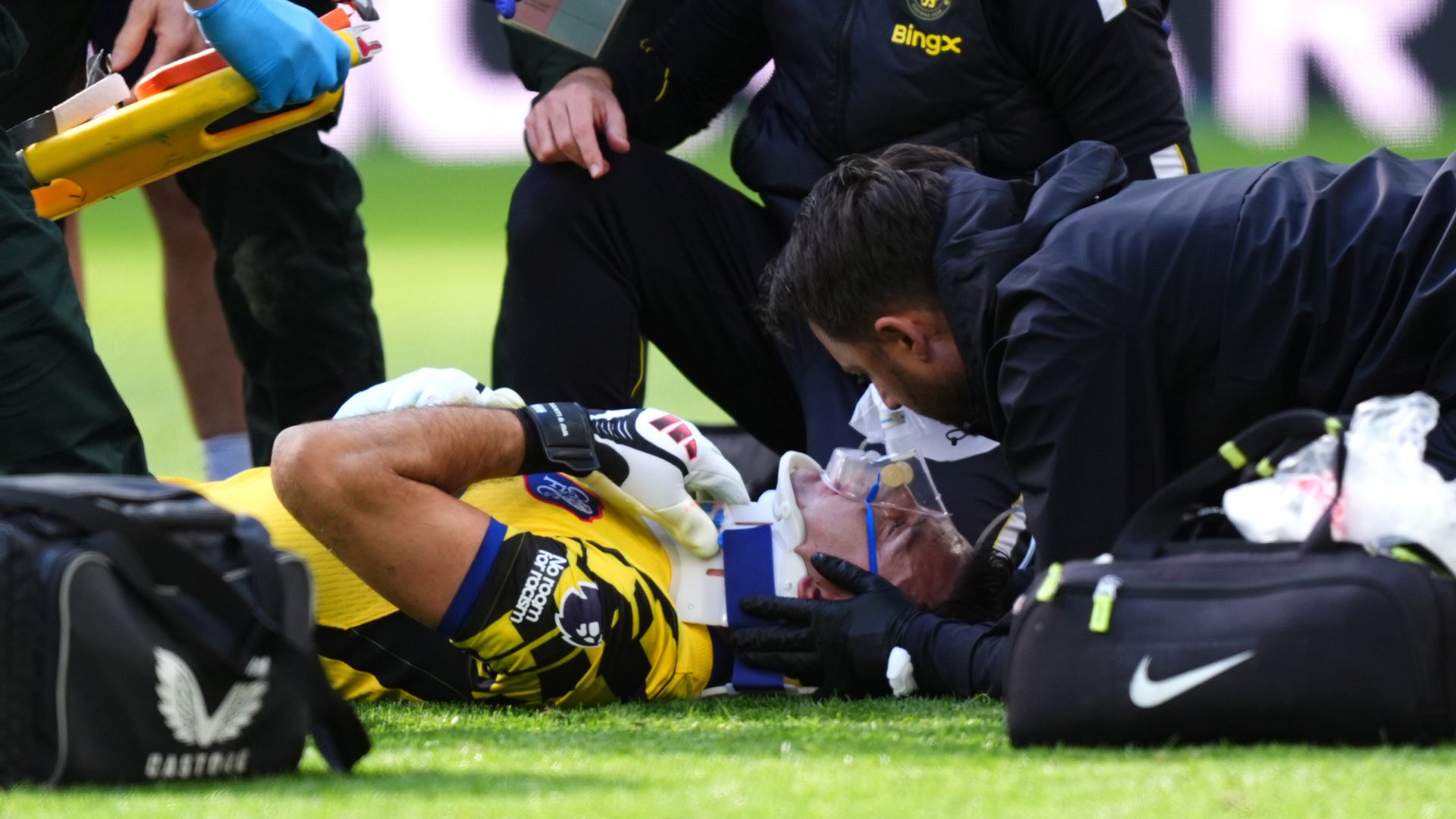
Consider what happens in the immediate aftermath of a horror clash. The cameras turn away out of respect or perhaps because television producers know that horror is best consumed in slow-motion replays, stripped of its raw, ugly reality. The player is loaded onto a stretcher, a neck brace locking the head into an unnatural stillness, oxygen mask obscuring a face that moments before was contorted in competitive fury. On the pitch, the game resumes. The referee blows his whistle. The substitute warms up on the sidelines. The machinery of the Premier League grinds relentlessly forward, indifferent to the human casualty left in its wake.
Meanwhile, a few miles away in an antiseptic room smelling of iodine and bleach, the reality of the sport settles in.
I know that smell. I know the peculiar disorientation of waking up under fluorescent lights that never seem to dim, surrounded by machines whose purpose you are too groggy to understand. There is an absolute isolation that comes with a severe injury. The stadium is gone. The chants have dissolved into the night air. The thousands of fans who screamed your name have gone home to their families, turning on the television highlights to dissect the very tackle that broke you. You are left with the ceiling tiles, the IV drip in the back of your hand, and the heavy, narcotic fog of pain medication.
For a Chelsea star lying in a hospital bed following a terrifying mid-air collision, the update delivered to the world via social media—a thumbs-up emoji, a smiling photograph, a brief caption thanking the medical staff—is a carefully managed illusion. It is designed to reassure. It is meant to soothe the anxieties of fantasy league managers, nervous supporters, and club directors watching their multi-million-pound investment tick away on a medical chart.
Behind that filtered image lies a much more vulnerable truth.
Physical trauma is only half the battle. The human body is remarkably resilient; bones knit back together with stubborn determination, torn ligaments can be spliced and re-engineered by modern orthopedic wizardry, and bruises fade into a bruised palette of yellow and purple before disappearing entirely. But the mind remembers the sound. The mind remembers the exact microsecond when control was lost, when the laws of physics took over and two bodies moving at full sprint intersected with devastating force.
When an athlete updates their followers from a hospital bed, they are performing a ritual of reassurance. They are telling the world that they are strong, that the machine is intact, that the setback is merely a temporary glitch in an otherwise unstoppable career trajectory. But ask any professional who has stared at a hospital ceiling after major trauma, and they will tell you that the hardest part of the journey does not begin until the discharge papers are signed.
The real fight happens in the dark.
It happens during the lonely mornings when the swelling refuses to go down, when the knee feels stiff and foreign, like a piece of poorly fitted hardware bolted onto a body that no longer recognizes it. It happens in the quiet moments of doubt when the player wonders if the explosive pace, the instinctive bravery, and the unthinking commitment that made them a star will still be there when they finally cross the white line again. Courage in football is rarely about the initial collision. True courage is the quiet, agonizing process of rebuilding trust in your own physical vessel after it has betrayed you.
We demand so much from these modern gladiators. We ask them to run faster, jump higher, and absorb impacts that would shatter an ordinary person, all while maintaining the emotional poise of corporate executives. We consume their triumphs with ravenous enthusiasm, and we consume their tragedies with morbid fascination. When a horror clash occurs, we treat it as breaking news, a dramatic plot twist in the long, serialized drama of the season.
We forget that underneath the branded kit and the astronomical wage packet is a human being with a family, with fears, with a body that can break just as easily as yours or mine.
So when the hospital updates arrive, let us look past the polished PR statements. Let us recognize the genuine courage it takes to look into a camera lens from a hospital bed and offer a reassuring smile when your body is screaming in pain. Football is a brutal, beautiful masterpiece, but its true cost is measured not in league tables or transfer fees, but in the quiet, unfilmed hours of recovery, where the roar of the crowd is replaced by the silent determination to stand back up.