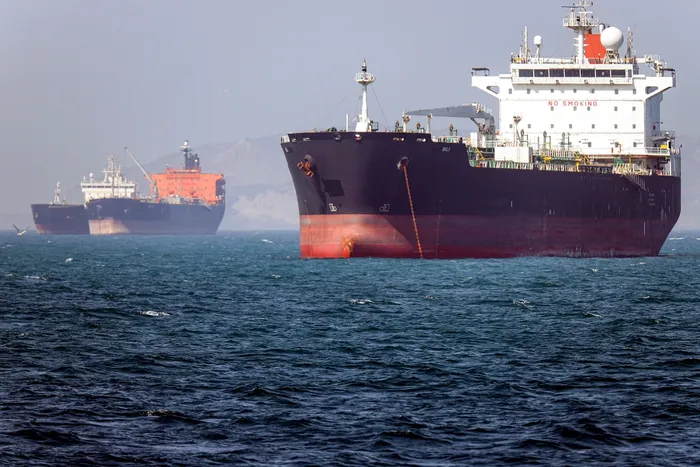
Rain slicked the flight deck of the BRP Davao del Sur as it bobbed in the unpredictable swells of the South China Sea. On the horizon, the silhouettes of grey hulls cut through the mist. For decades, this view was predictable. You saw the Stars and Stripes. You saw the Philippine sun. But this time, something felt different. The rising sun of the Japanese flag was fluttering alongside them, marking a shift that felt less like a routine exercise and more like a tectonic plate finally snapping into a new position.
Japan’s Ground Self-Defense Force didn’t just show up to the Balikatan exercises—the largest military drills the Philippines has ever hosted. They arrived with a weight of history that everyone in the room felt but few wanted to name. To understand why a few hundred Japanese soldiers standing on Philippine soil matters, you have to look past the hardware. You have to look at the ghosts.
Eighty years ago, the idea of Japanese boots on these islands meant something very different. Today, they are invited guests, part of a high-stakes rehearsal for a script no one wants to see performed. This isn't about dry diplomacy. It is about the frantic, whispered realization among neighbors that the old neighborhood watch isn't enough anymore.
The Ghost at the Table
Imagine a fisherman named Elias. He doesn't care about the "re-militarization of the Indo-Pacific." He cares about the fact that his wooden outrigger looks like a toy next to the massive white hulls of the Chinese Coast Guard. He cares that the "traditional fishing grounds" his grandfather described are now guarded by steel and radar.
Elias represents the ground truth. When the big powers talk about "freedom of navigation," they are talking about the right of guys like Elias to earn a living without being sprayed by water cannons. But lately, the math has changed. The United States has always been the big brother in this equation, but the United States is far away, distracted by a dozen different fires.
This is where Japan enters the frame.
For years, Tokyo stayed behind its pacifist shield, a constitutional promise to never again be the aggressor. But you can only watch so many missiles fly over your northern islands or so many ships swarm your southern ones before the shield starts to feel like a cage. Japan’s participation in these drills—operating alongside Australian, American, and Filipino troops—is the loudest "quiet" move in modern history.
It is the birth of something the diplomats call an "Asian NATO."
The Collective Flinch
The term "Asian NATO" is a bit of a misnomer, and if you ask a politician in Manila or Tokyo about it, they will likely give you a polite, rehearsed "no." NATO is a rigid structure. An attack on one is an attack on all. Asia doesn't work that way. The ties here are more like a web of overlapping interests—a "minilateral" approach.
But call it what you want; the scent is the same. It is the scent of fear turned into preparation.
The drills in the Philippines weren't just about shooting targets. They were about "interoperability." That’s a fancy word for making sure that when the radio crackles in the middle of a storm, a Japanese officer and a Filipino commander can actually understand each other. It’s about making sure the parts fit.
Think of it like a neighborhood that has lived through a series of increasingly violent break-ins. For a long time, everyone just locked their own doors and hoped for the best. Now, they are finally building a shared fence. They are sharing the cost of the security cameras. They are finally talking to each other through the gaps in the wood.
The Weight of the Hardware
During these exercises, the Philippine military showcased its new capabilities, including the C-03 sea-to-shore communication systems. But the real star was the message sent by the Japanese presence. Japan is moving its defense posture southward. They are no longer just defending their own shores; they are realizing that if the Philippines falls under a different sphere of influence, Japan’s own supply lines—the veins through which its oil and food flow—become a chokehold.
The stakes are invisible until they aren't.
If you look at a map, the "First Island Chain" looks like a string of pearls draped along the coast of Asia. From Japan through Taiwan and down to the Philippines, it forms a natural barrier. If that barrier breaks, the entire Pacific changes. For the first time since 1945, Japan is acting like a country that understands its survival is tied to a beach in Palawan or a strait in Luzon.
This isn't a game for the people living there. It’s a series of hard choices. The Philippines, under the current administration, has pivoted hard back toward the West and its regional allies. It was a gamble. The previous strategy was to play both sides, to take the investment from Beijing and the security from Washington. But you can't play both sides when one side starts building artificial islands in your backyard and claiming your porch belongs to them.
The Architecture of Anxiety
Why now? Why is the debate about an Asian NATO "reigniting" as the headlines say?
Because the silence from the other side has become too loud. Every time a Philippine resupply ship is harassed at Second Thomas Shoal, the argument for a collective defense gets stronger. Beijing calls these drills "provocations." They claim that bringing in "outside powers" like Japan only destabilizes the region.
But there is a fundamental human logic at play here: nobody goes looking for a fight when they are already winning. The Philippines isn't inviting Japan and the U.S. into its waters because it wants a war. It’s inviting them because it’s tired of being bullied in the dark.
The struggle is between two different visions of the future. One vision is a return to a "tributary" system, where the biggest player in the room dictates the rules and everyone else bows. The other vision—the one being rehearsed on those rain-swept decks—is a world where the rules apply to everyone, regardless of the size of their navy.
It is messy. It is expensive. And for Japan, it is deeply uncomfortable.
The Japanese public is still torn. There are grandmothers in Okinawa who remember the horror of war and want no part of this. There are young professionals in Tokyo who wonder why their tax yen is being spent on maneuvers in the South China Sea. But the leadership sees the writing on the wall. They see a world where neutrality is a luxury they can no longer afford.
The Point of No Return
The drills ended with the usual handshakes and photo ops. The ships sailed back to their respective ports. But the atmosphere has shifted. You can't un-ring this bell.
When Japan participated in these exercises, it crossed a psychological Rubicon. It signaled to the world—and specifically to Beijing—that the days of Japan sitting on the sidelines of regional security are over. The "Asian NATO" might not have a headquarters in Brussels or a fancy logo yet, but the muscle memory is being built.
Every time a Japanese sailor shares a meal with a Filipino marine, that web gets a little tighter. Every time they coordinate a radar sweep, the "gap" that an aggressor might exploit gets a little smaller.
We often talk about geopolitics as if it’s a game of chess played by cold-blooded grandmasters. It’s not. It’s a series of nervous reactions by human beings who are trying to protect what they have. It’s Elias the fisherman hoping that the presence of a Japanese destroyer means he can go out and cast his nets tomorrow without looking over his shoulder.
The real story isn't the missiles or the ships. It’s the quiet, desperate realization that the only way to keep the peace is to show that you are absolutely, terrifyingly ready for the alternative. The grey ships in the mist aren't just tools of war; they are the physical manifestation of a neighborhood that has finally decided it’s done living in fear.
The water remains choppy. The clouds haven't cleared. But for the first time in a long time, the people on the shore aren't looking at the horizon alone. They are looking together, waiting to see who blinks first in the long, cold silence of the sea.