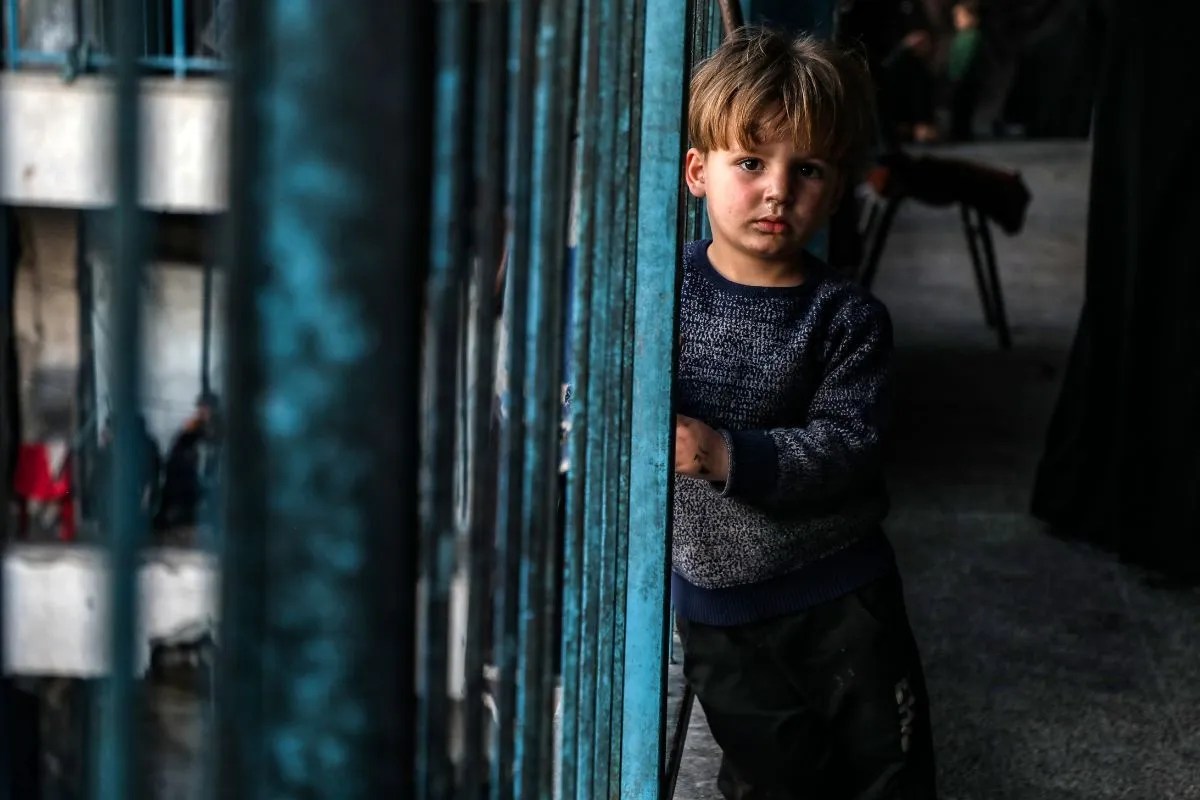
The catastrophic bombardment of Gaza has inflicted a psychological toll on children that extends far beyond immediate physical trauma. Over one million minors are now trapped in a state of chronic, unremitting panic, presenting severe manifestations of trauma including selective mutism, regression, and uncontrollable tremors. This is not merely the byproduct of conflict. It is a systematic erosion of human cognitive development caused by the deliberate, sustained destruction of safe spaces, schools, and parental support structures. Without immediate, sustained intervention, an entire generation faces permanent cognitive and emotional impairment.
The Mechanized Destruction of Childhood
Military strategies that rely on sustained urban bombardment do more than flatten concrete. They shatter the psychological scaffolding required for human development. In Gaza, the sheer frequency of aerial strikes has eliminated the concept of a "safe zone." When a child realizes that neither their home, their school, nor their parents can protect them, the brain enters a permanent state of high alert.
Neurological research shows that prolonged exposure to high-stress environments floods the developing brain with cortisol and adrenaline. Under normal circumstances, these hormones help a person survive a brief threat. When they never turn off, they begin to damage the architecture of the brain, specifically targeting areas responsible for learning, memory, and emotional regulation.
We are seeing the results of this chemical overload in real-time. Field doctors report that children are losing the ability to speak. This is not a choice. It is a profound neurological shutdown known as selective mutism, a defense mechanism where the mind simply refuses to engage with a reality too horrific to process.
The Myth of the Resilient Child
For decades, international aid organizations have leaned on the concept of "resilience" to justify short-term psychological interventions in war zones. They hand out coloring books, set up temporary play tents, and assume children will naturally bounce back once the bombs stop. This approach is fundamentally flawed.
Resilience requires a baseline of stability that no longer exists in Gaza. You cannot recover from trauma when the traumatic event is ongoing. Every time a drone buzzes overhead, the wound reopens.
Consider the destruction of the family unit. In traditional crisis scenarios, parents act as emotional shock absorbers for their children. If a parent remains calm, the child feels a sense of security. But in this conflict, parents are struggling with their own severe trauma, starvation, and displacement. When children see their primary protectors weeping, panicking, or rendered catatonic by grief, the final layer of psychological defense vanishes. The child is left entirely exposed to the horrors of industrial warfare.
The Long-Term Economic and Social Cost
The international community views the Gaza crisis through a purely humanitarian lens, focusing on immediate needs like food, water, and medical supplies. This narrow perspective ignores the long-term societal collapse that follows the mass traumatization of youth.
A generation unable to process emotion or focus on basic tasks cannot be easily integrated into a future workforce. The destruction of hundreds of schools means that even if peace were declared tomorrow, there are no classrooms to return to. The lack of structured education combined with severe psychological trauma creates a vacuum.
Expected Developmental Deficits in Traumatized Minors
| Age Group | Observed Symptoms | Long-term Cognitive Impact |
|---|---|---|
| Infants & Toddlers | Extreme separation anxiety, loss of motor skills, incessant crying | Delayed speech development, attachment disorders |
| School-age Children | Selective mutism, aggressive outbursts, nocturnal enuresis | Inability to focus, severe learning disabilities, memory gaps |
| Adolescents | Complete emotional detachment, severe depression, hopelessness | Chronic depression, high risk of self-harm, inability to form social bonds |
The data points to a bleak future. Society cannot rebuild when its foundational block—its youth—has been systematically broken. The cost of treating this level of collective trauma will dwarf the current cost of physical reconstruction, requiring specialized psychiatric care that the region's completely decimated healthcare infrastructure cannot provide.
Beyond Aid Distribution Plans
Sending trucks of flour and boxes of bandages will not fix a broken mind. The current international response is a band-aid on a severed limb. To prevent the complete psychological erasure of Gaza's children, the framework of humanitarian intervention must change.
Psychological first aid must be elevated to the same level of priority as physical medical care. This requires establishing permanent, secure mental health sanctuaries within displaced person camps, staffed by professionals trained in severe war-zone trauma. These spaces must be shielded from military activity, offering a predictable routine to help reset shattered nervous systems.
The weaponization of the environment through constant surveillance drones and unpredictable shelling must be recognized as a distinct form of psychological torture aimed at civilians. Until the skies are quiet, no amount of therapy will be effective. The international community must force a cessation of hostilities not just to save lives today, but to salvage the sanity of those who will live tomorrow. The clock is ticking on a million minds, and silence is running out.