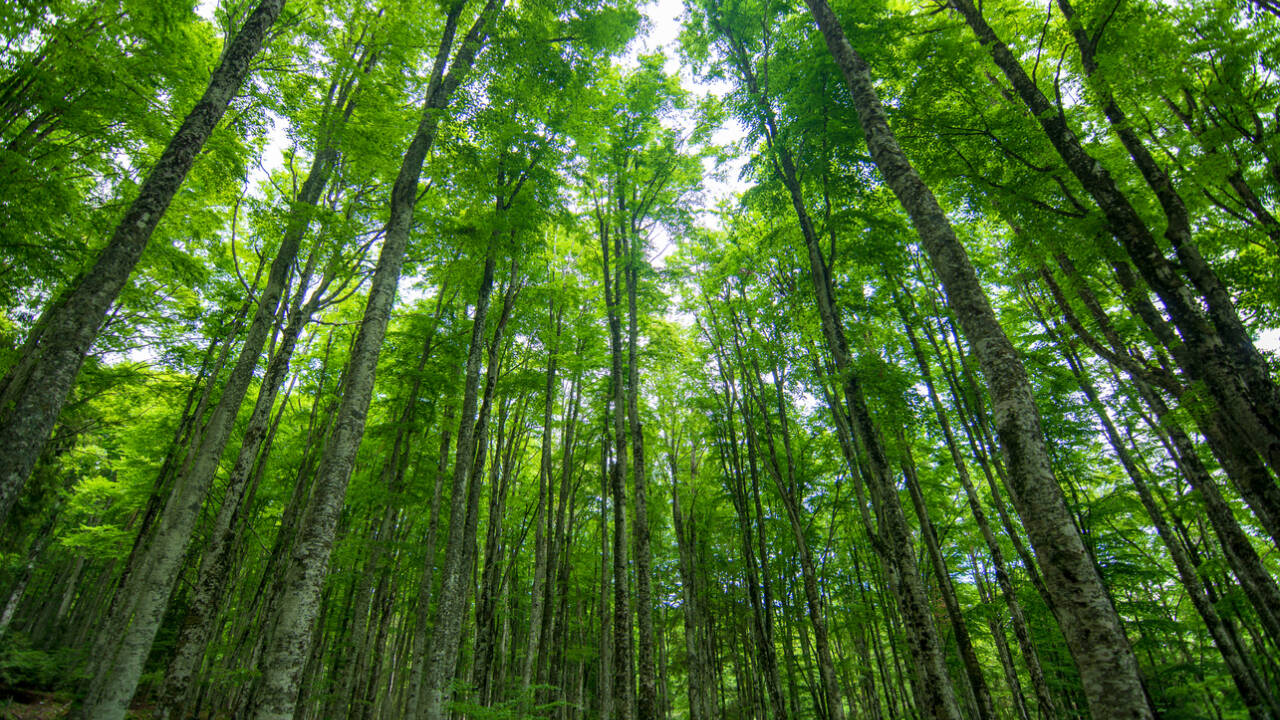
Walk into a northern forest on a late autumn afternoon, and you will hear a specific kind of silence. It is not the empty quiet of a desert or the sterile hush of a dead zone. It is a heavy, breathing silence, thick with the scent of decaying needles and damp earth. For generations, we have walked beneath these canopies with a quiet, creeping dread. We have looked at the towering white pines, the stubborn paper birches, and the sprawling spruce groves as casualties of an inevitable war. We told ourselves they were fragile. We wrote their eulogies in annual reports and climate models, measuring the exact temperature at which their roots would wither and their leaves would curl into ash.
We were wrong. Or, at the very least, we underestimated the stubbornness of living things. For another look, consider: this related article.
Deep in the heart of Minnesota, a quiet rebellion has been taking root beneath the soil. It is a biological plot twist that researchers are only now beginning to fully map, and it changes the entire arithmetic of our atmospheric future.
The Heat They Never Asked For
To understand the scale of what is happening, you have to look at the numbers, but more importantly, you have to feel the weight of them. For decades, climatologists have fed supercomputers endless streams of data regarding carbon emissions, thermal retention, and the sluggish pace of evolutionary adaptation. The standard assumption has always been straightforward: trees move slowly. If the climate shifts by a few degrees over a century, a forest cannot simply pack its bags and march north. It stays. It suffers. It dies. Related analysis on this trend has been provided by Al Jazeera.
And yet, nature rarely follows the neat spreadsheets we draw up for her.
Researchers at the University of Minnesota decided to stop guessing what trees would do under stress and instead built an artificial future to watch them break. In a sprawling open-air experiment known as BioCON and related warming plots, scientists strung up underground heating cables and infrared lamps above patches of native forest. They engineered a simulated world, baking the soil and the air to match the severe temperature projections scientists fear for the middle of this century.
They pumped the system with an additional 3.4 degrees Celsius of warming.
If you stood inside those heated plots, you could feel the difference on your skin. The air felt heavier, artificially parched, humming with the low, constant whine of heating coils and monitoring equipment. It looked like a preview of a ruined world. The expectation—the terrifying, logical expectation—was that these trees would choke. Stressed plants typically shut down their stomata to conserve water, halting photosynthesis, gasping for breath, and releasing stored carbon back into the atmosphere in a frantic, dying sigh.
Instead, something entirely unexpected happened.
The Cellular Shift
Dr. Peter Reich and his colleagues spent years monitoring the invisible machinery inside those leaves. They expected flatlines. They found roaring engines.
(Note: When scientists talk about "acclimation," they are referring to a plant's ability to adjust its internal chemistry to a new normal without changing its genetic code. Think of it like a human body adjusting to high altitude, producing more red blood cells not because your DNA changed overnight, but because your biology responded to the thin air.)
The Minnesota trees did not curl up and die. They adapted. Faced with a persistent 3.4-degree thermal increase, the trees re-engineered their cellular respiration. They learned to consume less energy just to stay alive, balancing their internal metabolic budgets so efficiently that they could continue pulling carbon dioxide out of the air at astonishing rates.
The numbers are staggering. When scientists crunched the long-term data, they discovered that this biological adjustment slashed the expected rise in atmospheric carbon dioxide by an incredible eighty percent compared to what standard models predicted.
Eighty percent.
Let that number sink in. While headlines scream about tipping points and irreversible planetary collapse, the silent giants rooted in the upper Midwest have been quietly pulling off an industrial-scale rescue mission, filtering out the poison we keep pumping into the sky.
The Invisible Stakes
It is easy to treat a forest as a backdrop. We use trees for lumber, for weekend hikes, for postcard aesthetics, for the vague, romantic notion of "nature." We forget that they are living, breathing chemical processors fighting a desperate, localized war for survival.
Consider what happens next if these findings hold true on a global scale. For years, climate economists have calculated the cost of carbon capture technology in the trillions of dollars. We dream up massive mechanical fans, underground injection wells, and complex chemical scrubbers to suck carbon out of the air. Yet, right now, ordinary northern ecosystems are performing that exact labor for free, driven by a primal, evolutionary urge to simply keep living.
Does this mean we are saved? Absolutely not.
To suggest that trees will solve our emissions crisis on their own is a dangerous fairy tale. The warming observed in those Minnesota test plots has limits. Biology has a breaking point. Push a system three degrees past its comfort zone, and it adapts. Push it six, seven, or ten degrees, and the cellular machinery shatters entirely. The trees can bend, but they cannot perform miracles.
Furthermore, the cascading effects of a warming climate—severe droughts, invasive pests like the emerald ash borer, and catastrophic wildfires—do not care how well a single leaf can adjust its respiration. A scorched forest captures zero carbon. A dead tree releases everything it stored over a century back into the atmosphere in a matter of hours.
Listening to the Wood
Stand back up in that northern woods. Look at the rough, furrowed bark of a mature red pine. Trace the jagged edge of a green leaf catching the afternoon light.
There is a profound humility in realizing that the natural world is far more resilient than our gloomiest forecasts, yet infinitely more fragile than our industrial arrogance. These trees are buying us time. They are absorbing the collateral damage of our modern economy, quietly buffering the blows of a changing atmosphere while we argue about policy targets and carbon credits.
They are not passive victims waiting for a rescue party. They are the rescue party.
The real question is whether we are paying close enough attention to the lesson they are teaching us in real-time. The woods are showing us that adaptation is not just about enduring the heat; it is about finding a way to work harder, smarter, and deeper when the world gets uncomfortably warm.
The silence under the canopy is no longer just a quiet space to think. It is the sound of a living machine working overtime to save the very creatures who built the machines threatening to burn it down.