A single steel hull separates a twenty-four-year-old sailor from the crushing weight of the Arabian Sea. In the belly of an Indian Navy destroyer, the air smells of ozone, floor wax, and the faint, metallic tang of recycled oxygen. There is no sunlight here. There are only the rhythmic pulses of radar screens and the low hum of turbines that never sleep. This sailor is not thinking about the abstract theories of geopolitical hegemony or the fluctuating price of Brent Crude. He is thinking about a grainy silhouette on a monitor.
That silhouette represents the modern face of chaos. It might be a commercial tanker carrying enough oil to light a city, or it might be a suicide drone no larger than a dinner table. Discover more on a connected issue: this related article.
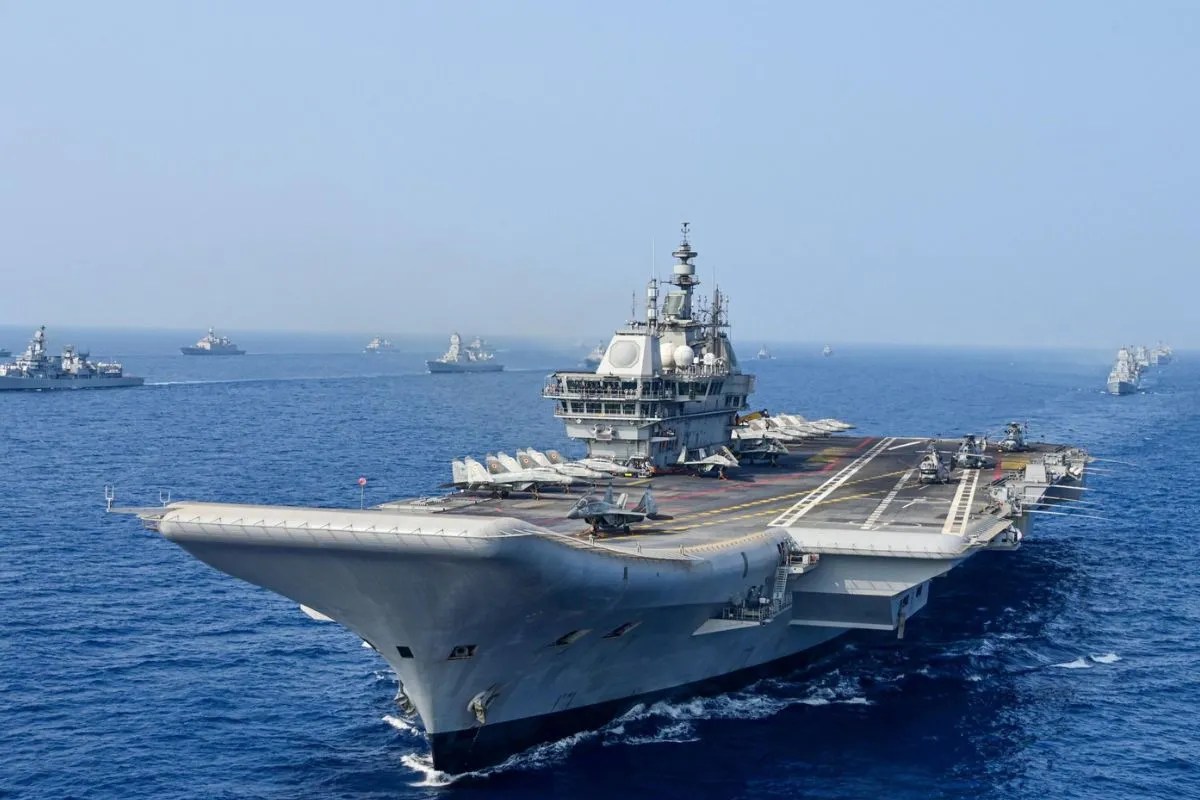
The Persian Gulf and the surrounding waters of the Gulf of Oman have become the world’s most dangerous chessboard. While the headlines scream about the looming shadow of a US-Israel-Iran escalation, the reality on the water is much more intimate. It is a game of nerves played in the dark. India has quietly moved its pieces. The deployment of frontline warships near the Persian Gulf isn't just a military maneuver; it is a desperate, necessary shield for the invisible threads that keep a nation of 1.4 billion people from grinding to a halt.
Consider the journey of a single liter of petrol. Before it reaches a dusty pump in Noida or a sleek station in Bengaluru, it must survive a gauntlet. It sits in the hold of a ship navigating the Strait of Hormuz, a narrow throat of water where the world’s energy supply is constantly at risk of being choked. One well-placed mine or one rogue missile could send ripples through the global economy that would make the 1970s look like a minor inconvenience. More analysis by USA Today highlights comparable perspectives on this issue.
India’s decision to station the INS Kochi or the INS Kolkata in these volatile corridors is a departure from the old ways. For decades, the philosophy was one of cautious observation. We watched from the sidelines, hoping the giants wouldn't step on us. Those days are gone. When the "shadow war" between regional powers spills into the shipping lanes, the collateral damage is often wearing an Indian uniform or carrying an Indian passport.
The stakes are personal. Thousands of Indian seafarers are currently manning the merchant vessels that crisscross these waters. They are the invisible workforce of the sea. When a drone strikes a hull in the middle of the night, it isn't a "strategic asset" that bleeds. It is a father from Kerala or a brother from Punjab. By deploying the Navy, the Indian government is sending a message that transcends diplomacy: our people are not pawns in your regional fire.
Navigation in the modern era has become a surreal blend of ancient geography and sci-fi warfare. On the bridge of an Indian warship, the officers aren't just looking for other ships. They are scanning for "ghost" signals. Electronic warfare has turned the sea into a hall of mirrors. GPS spoofing can make a ship believe it is ten miles away from its actual position, leading it blindly into hostile territorial waters.
This is the "invisible war." It happens in the frequencies between radio stations and the lines of code in a navigation suite. Indian naval electronic warfare suites are now working overtime to peel back these digital masks. It is a grueling, mental marathon. Sailors spend hours squinting at data, looking for the one anomaly that suggests a threat is hiding in plain sight.
Why does this matter to someone sitting in an office in Mumbai?
Because the world is a circle. If the Persian Gulf closes, the cost of shipping a container from Shanghai to Rotterdam triples. If the Strait of Hormuz is blocked, the Indian rupee doesn't just dip; it dives. We are tethered to these waters by an umbilical cord of oil, gas, and trade. The Navy is there to ensure that cord isn't severed by a stray spark from a conflict we didn't start but cannot ignore.
The tension is a physical thing you can feel in the lungs. It is the silence that follows a "Condition Red" drill. It is the weight of the helmet and the sweat stinging the eyes. These warships are floating cities, self-contained ecosystems of discipline and technology, designed to project calm in a region defined by volatility. They serve as a buffer. By being present, they prevent the vacuum that usually leads to disaster.
But the presence of steel and fire is only half the story. There is a psychological dance at play. Every time an Indian destroyer intercepts a distress call or escorts a merchant vessel, it builds a layer of "maritime trust." In a world where alliances are shifting like sand dunes, trust is the only currency that holds its value. The Indian Navy isn't just protecting cargo; it is asserting India's role as a net security provider. This is the quiet transition from a regional player to a global stabilizer.
It is easy to get lost in the jargon of "anti-piracy operations" and "maritime domain awareness." These are sterile terms for a messy reality. The reality is a boarding party climbing a rope ladder in swells that could toss a jeep like a toy. The reality is a sonar technician hearing the rhythmic ping of a submarine that shouldn't be there. It is the constant, nagging knowledge that a single misunderstanding could escalate into a localized skirmish, which could then spiral into the very war everyone is trying to avoid.
The geopolitical friction between the US, Israel, and Iran creates a heat that radiates outward. India is positioned in the direct path of that heat. We cannot move our subcontinent. We cannot change our neighbors. All we can do is harden our defenses and sharpen our gaze.
There is a specific kind of loneliness that comes with being on watch at 3:00 AM in the Gulf of Oman. The stars are incredibly bright, unaffected by the smog of the cities. Below them, the water is a deep, unforgiving black. Somewhere out there, there are others watching back. There are eyes behind high-tech sensors in Tehran, in Tel Aviv, and in Washington.
Everyone is waiting for someone else to blink.
In this high-stakes staring contest, the Indian Navy’s deployment serves as a steadying hand. It says that the commons—the shared highways of the ocean—belong to everyone. They are not the private property of those who wish to settle old scores with new missiles.
As the sun rises over the jagged coastline of the Middle East, the light hits the grey paint of an Indian destroyer. It looks cold and formidable. But inside, there is the warmth of a galley serving tea. There are photos of families tucked into lockers. There is the quiet, fierce pride of men and women who know that their presence is the only thing standing between the global economy and a very dark night.
They are the guardians of the flow. They are the sentinels of the strait.
The ship moves forward, cutting a white scar across the indigo water, a temporary mark on a sea that remembers nothing, yet holds the fate of everything.