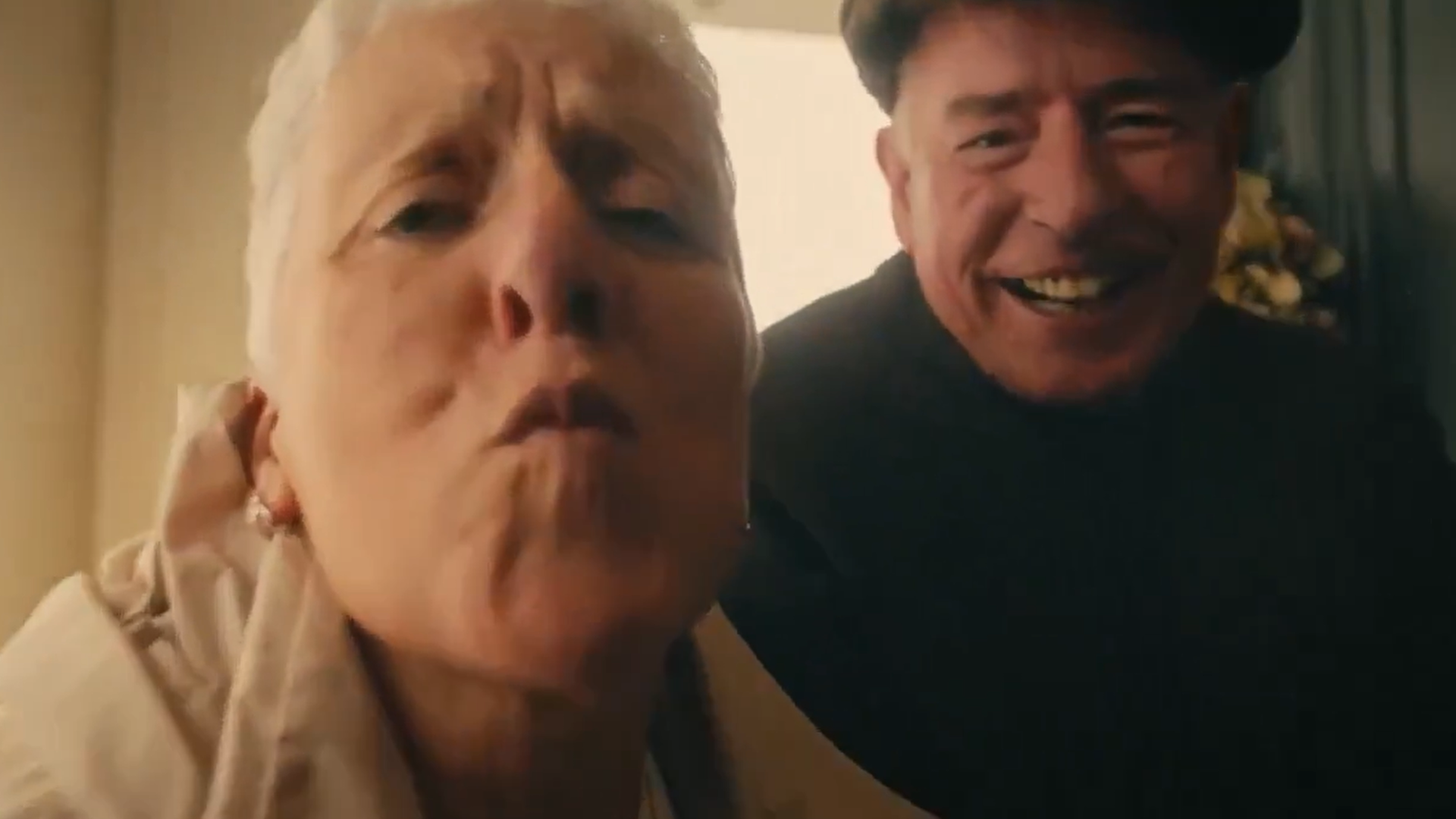
The front door opens. The familiar smell of peppermint and old wool coats fills the hallway. Two elderly people step across the threshold, arms wide, faces lit with the particular, desperate joy that only grandchildren can summon.
For generations, this was the script. You dropped your bags, you absorbed the crushing, slightly scratchy embrace of an elder, and you smiled. It was an unwritten social contract, sealed in affection.
Then, a twenty-five-second video changed the entire grammar of the family greeting.
Released by the Dublin Rape Crisis Centre as part of an awareness campaign, the short clip seemed innocent enough in its abstract design, yet it detonated a cultural landmine. It featured grandparents arriving at a home, enthusiastically hugging a young boy, and then moving toward a teenage girl standing nearby. Her shoulders tighten. Her face betrays a quiet, visceral discomfort. A voiceover cuts through the silence with a jarring modern reality check: "Not everyone wants a hug. Even from the people who love them. Awkward? Maybe. Important? Absolutely."
Within hours, the internet erupted.
The backlash was swift, furious, and global. Critics across social media platforms and international news outlets called the advertisement heavy-handed, bizarre, and profoundly insulting to the elderly. To many, it felt like an aggressive intrusion into the sacred, messy warmth of family life, painting innocent affection with the brush of suspicion. The phrase "consent culture" had officially collided with Sunday dinner.
Yet beneath the immediate waves of online outrage lies a much deeper, quieter collision of values. Why did a campaign intended to teach bodily autonomy provoke such an allergic reaction?
Consider the mechanics of how we teach children about their own bodies. For decades, children—particularly little girls—were socialized to override their own physical discomfort for the sake of politeness. Aunt Mary wants a kiss? Give her a kiss. Uncle Joe wants a hug? Don't be rude. Generations grew up learning that their physical boundaries were secondary to adult feelings of social convention.
Advocates for teaching children about consent argue that breaking this cycle is vital. If a child cannot say no to a harmless hug from a grandparent, how can they be expected to recognize or enforce boundaries when faced with dangerous situations later in life? The logic is clinical, precise, and rooted in modern psychological frameworks designed to protect the vulnerable.
But culture is rarely driven by clinical logic alone.
Family dynamics are built on layers of unspoken emotional currency. To grandparents, an embrace is not a tactical maneuver or a power play; it is a physical manifestation of time slipping away. When an institution explicitly warns children to guard themselves against that embrace, it feels to many like a direct accusation. It reframes a gesture of love as a potential violation.
The public pressure cooker intensified rapidly. Justice Minister Jim O'Callaghan publicly intervened, stating that his department viewed the video as inappropriate and demeaning to grandparents. Officials engaged with the organization, and the video was quietly pulled down.
Instantly, a new battle line was drawn. Was the removal a necessary correction of a clumsy, tone-deaf misfire? Or was it a dangerous capitulation to online outrage, a sign that society is too fragile to confront uncomfortable truths about personal space? Civil rights groups criticized the government's direct intervention, warning that state pressure on non-profit advocacy groups creates a chilling effect on public discourse.
Meanwhile, psychologists pointed out a quiet truth that got lost in the crossfire. Both sides were actually trying to protect something sacred. One side fought to preserve the unconditional warmth of familial love; the other fought to ensure a child's right to dominion over their own skin.
The advertisement is gone, scrubbed from timelines and replaced by institutional apologies. But the question it exposed lingers in every hallway where coats are dropped and doors open.
How do we teach children that they own their bodies without teaching them to fear the people who love them most? There is no easy script for that. It requires a delicate, exhausting navigation of nuance—one awkward conversation at a time.