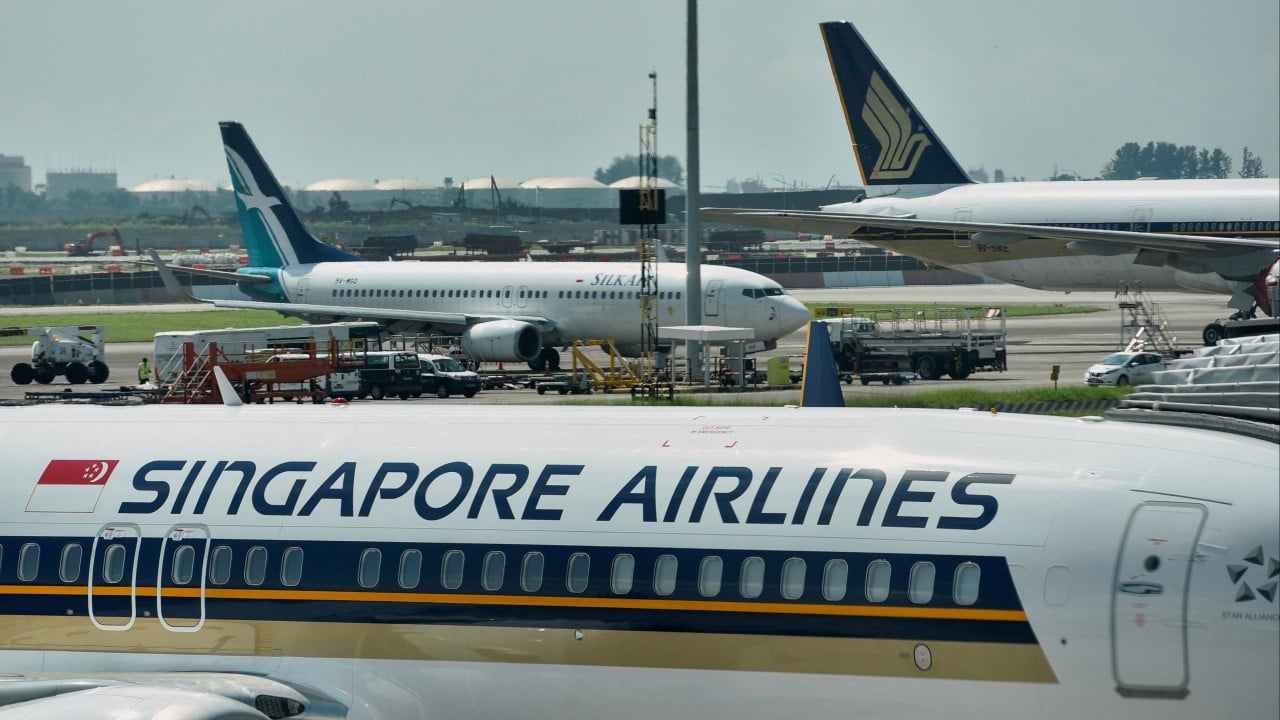
The financial press is currently congratulating Singapore Airlines on a masterclass in opportunistic expansion. The narrative is comforting: as the Middle East conflict disrupts Gulf airspace and forces standard intercontinental flights into chaotic detours, Singapore Airlines is swooping in. Commentators point to a surge in Europe-bound load factors to 93.5% and a headline passenger volume hitting 42.4 million as proof that the carrier is seizing a rare window to permanently wrest market share from Emirates, Qatar Airways, and Etihad.
It is a comforting narrative. It is also entirely wrong.
What the consensus views as a strategic offensive is actually a temporary, structural fluke disguised as growth. Singapore Airlines is not fundamentally out-competing the Gulf lines; it is merely absorbing the spillover of a localized geopolitical crisis. I have seen airlines mistake temporary capacity constraints for permanent market conquest before, and it always ends the same way: with bloated cost structures when the market inevitably normalizes. The window to steal real, lasting market share is not narrow—it does not exist.
The Illusion of Geopolitical Substitution
The argument for Singapore Airlines’ current supremacy rests on a simple premise: affluent passengers are avoiding transit hubs like Dubai, Doha, and Abu Dhabi, choosing instead to route through Singapore Changi.
This assumes that international aviation hubs are interchangeable. They are not.
The Gulf super-connectors built their empires on geographical inevitability. A single stop in Dubai connects almost any two points on the globe within an eight-hour radius of the hub. Singapore, situated at the southeastern tip of Asia, cannot replicate this geometry.
Imagine a passenger traveling from Frankfurt to Mumbai, or London to Nairobi. Routing through Singapore adds thousands of miles and close to half a day of travel time. Singapore Airlines can absorb traffic on specific trunk lines—namely the Europe-to-Australia kangaroo route and Southeast Asian point-to-point flows—but it cannot structurally replace the network density of a Gulf carrier.
The moment the airspace restrictions ease, the structural efficiency of the Gulf hubs will reassert itself. Passengers do not choose Emirates because they love the terminal architecture; they choose it because the flight math works. Singapore is winning on a temporary safety premium, not an enduring competitive edge.
The Fatal Flaw in the Multi-Hub Shield
To counter its geographic limitations, Singapore Airlines has wagered its future on a multi-hub strategy, most notably through its 25.1% stake in the newly merged Air India and Vistara entity. Management calls this a "long game" with "no shortcuts."
Let us call it what it really is: a massive capital drain that dilutes the premium brand identity Singapore Airlines spent decades building.
While the carrier points to its strong balance sheet and S$7.9 billion in cash, its full-year net profit just tumbled 57.4% to S$1.18 billion. Strip away the accounting noise of previous years, and the reality is stark: integration losses from Air India are actively dragging down the group's performance.
The theory behind the Indian investment makes sense on a whiteboard. India is the fastest-growing aviation market in the world. By capturing traffic at the source, Singapore Airlines hopes to bypass the limitations of its tiny domestic market.
But execution in the Indian aviation ecosystem is notoriously brutal. Jet Airways collapsed. Kingfisher vanished. Air India itself spent decades as a state-run cautionary tale. Managing a premium global airline out of Changi requires an entirely different operational playbook than turning around a legacy carrier burdened with complex labor dynamics, infrastructure bottlenecks, and fierce domestic low-cost competition. Singapore Airlines is funding a massive turnaround project in a highly volatile market at the exact moment its core operation faces unprecedented fuel volatility.
The Fuel Hedging Trap
The current praise for Singapore Airlines often highlights its aggressive fuel hedging strategy, which has insulated the carrier from the sudden spikes caused by the blockade of the Strait of Hormuz. Analysts claim this gives the airline the financial runway to add flights to Munich, Milan, Barcelona, and London Gatwick while competitors are forced to scale back.
This is a misunderstanding of how corporate risk management works. Hedging is not a discount coupon; it is a smoothing mechanism.
The carrier's fuel bills are priced on a lagged basis. The protection enjoyed today merely delays the financial hit of tomorrow. Chief Commercial Officer Lee Lik Hsin admitted that current airfare hikes have not been enough to fully offset the underlying rise in jet fuel costs.
When you expand capacity into a high-cost environment using temporary hedges as a shield, you are locking yourself into a higher cost base. When those hedges expire, you are left with expanded schedules, increased aircraft utilization costs, and a market where consumers are already experiencing fare fatigue.
Contrast this with the Gulf carriers. While they face immediate operational headaches and rerouting costs, their fundamental cost structures are structurally optimized for high-volume, long-haul operations. They do not rely on hedges to survive a crisis; they rely on state-backed infrastructure alignment and structural geographic advantages.
The Premium Class Delusion
The consensus argues that because affluent consumers account for three-quarters of new spending in Asia-Pacific, Singapore Airlines’ premium product will keep revenues high even if fares rise.
This overlooks the aggressive product renewal occurring in the Middle East. Emirates, Qatar, and Etihad are not standing still. They are rolling out new cabins, expanding their Airbus A380 networks to key European destinations, and securing additional passenger capacities at crucial uncurfewed airports like Western Sydney International.
Singapore Airlines’ reputation for flawless service is undeniable, but the product gap between Changi’s premium cabins and the Gulf’s top tiers has shrunk to near-zero. When the product is comparable, network flexibility and price win.
The Wrong Focus for Changi
The industry is asking the wrong question. The question is not how Singapore Airlines can capture market share from the Gulf during a crisis. The real question is how the carrier will defend its core turf when the crisis ends and the Gulf carriers return with restored capacity and unmatchable scale.
By aggressively expanding into Europe to capture diverted traffic, Singapore Airlines is stretching its fleet resources precisely when regional dynamics are shifting. It is playing a volume game against competitors designed from the ground up for raw volume.
The actionable move for Singapore Airlines is not to chase temporary market share on long-haul routes to Europe. Instead, it must double down on its regional fortress. It needs to secure its dominance within Southeast Asia via its low-cost arm Scoot, and ruthlessly optimize the yields on its existing premium routes rather than adding capital-intensive frequencies that will become liabilities the moment Gulf airspace clears.
Chasing a competitor's temporary misfortune is a tactical reaction, not a strategy. The market share Singapore Airlines is winning right now isn't earned; it is borrowed. And the interest rates on borrowed traffic are notoriously unforgiving.