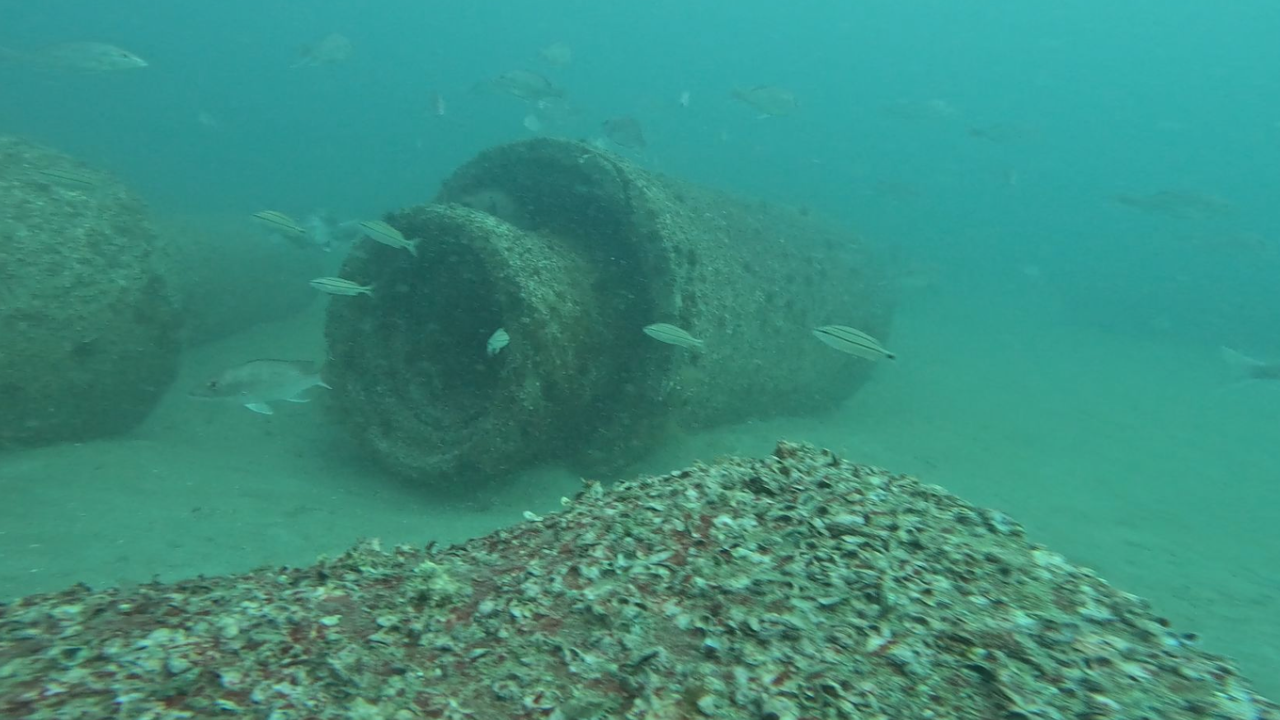
Florida authorities routinely dump hundreds of tons of stripped concrete, decommissioned vessels, and heavy industrial debris onto the ocean floor to build artificial reefs. The immediate goal is straightforward: turn landfill-bound waste into underwater habitats that attract marine life, boost local charter fishing economies, and draw recreational divers away from fragile natural coral systems. While a single 150-ton deployment generates easy headlines about coastal conservation and economic windfalls for anglers, the long-term ecological math is far messier. Beneath the surface, coastal engineers and marine biologists are grappling with storm-driven debris migration, altered predator-prey dynamics, and the uncomfortable reality that dumping heavy rubble does not actually rebuild a dying coral ecosystem.
Coastal counties across the Sunshine State face a dual crisis. On land, municipal landfills are running out of space, and tipping fees for heavy construction debris continue to climb. Underwater, Florida’s natural reef tract—the only living coral barrier reef in the continental United States—has suffered catastrophic losses from warming ocean temperatures, stony coral tissue loss disease, and agricultural runoff.
Sinking concrete culverts, bridge pilings, and steel barges looks like an elegant two-for-one solution. Counties offload heavy waste without paying inland disposal fees, and local tourism boards get a fresh set of GPS coordinates to hand out to charter captains and dive shops.
The mechanics of these deployments are strictly regulated, at least on paper. Before a single ton of material hits the water, state and federal agencies require extensive remediation. Hydrocarbons, hydraulic fluids, asbestos, floatable plastics, and loose wiring must be stripped from vessels. Concrete must be clean, free of exposed rebar that could snag marine life or divers, and heavy enough to resist typical ocean currents.
Once approved, the material is loaded onto flat-deck barges, towed offshore to permitted sandy-bottom zones, and pushed overboard by excavators or scuttled with precision charges. Within weeks, algae and barnacles colonize the bare surfaces. Baitfish follow shortly after, drawing larger pelagic predators like snapper, grouper, amberjack, and barracuda.
For anglers and divers, the payoff is almost instantaneous. For marine ecosystems, the ledger takes decades to balance.
The Illusion of Habitat Creation
A fundamental debate divides fisheries managers and marine ecologists over what an artificial reef actually accomplishes. They call it the attraction versus production dilemma, and it sits at the core of every permit issued by the Florida Fish and Wildlife Conservation Commission and the U.S. Army Corps of Engineers.
Does a pile of concrete rubble genuinely increase the total biomass of fish in the ocean, or does it simply act as a giant underwater magnet, pulling fish away from natural reefs and concentrating them in one easy-to-find spot?
If an artificial reef merely aggregates existing fish populations, it does not solve overfishing. It accelerates it. Charter boats and recreational anglers equipped with modern side-scan sonar and spot-lock trolling motors can locate a 150-ton reef deployment with pinpoint accuracy. When red snapper or gag grouper gather around a newly sunk concrete pile, fishing pressure intensifies dramatically. Without strict catch limits and seasonal closures, an artificial reef can function less like a nursery and more like an efficient harvesting machine.
True biological production requires more than a place for adult fish to hide. It requires structural complexity that supports juvenile survival, spawning grounds, and a self-sustaining food web. A flat concrete slab or a hollow steel hull offers shelter, yet it lacks the intricate micro-habitats—the tiny crevices, branching structures, and symbiotic algal networks—that natural limestone reefs provide.
Engineering for a Warming and Violent Ocean
Dropping 150 tons of material onto a flat sandy seabed seems permanent. It rarely is.
Florida’s coastline sits directly in the path of increasingly intense tropical cyclones. During a major hurricane, underwater surge currents at depths of 60 to 100 feet generate immense lateral force. Objects that appear immovable on a calm summer afternoon can be lifted, rolled, or buried completely in shifting sand.
History offers plenty of cautionary tales. In the 1970s, Broward County permitted the Osborne Reef project, dumping roughly two million used vehicle tires off Fort Lauderdale in an attempt to create marine habitat. The steel clips and nylon straps binding the tires corroded within years. Tropical storms scattered the loose tires across the seabed, smashing them directly into adjacent living coral reefs and turning a well-intentioned recycling effort into a multi-million-dollar environmental cleanup nightmare that dragged on for decades.
Modern programs ban tires and light scrap, relying instead on high-density concrete and heavy steel. Even so, the ocean eventually reclaims poorly engineered sites.
Scouring and Burial
When a heavy concrete structure lands on a sandy bottom, water currents accelerate as they flow around the obstruction. This phenomenon, known as hydrodynamic scouring, erodes the sand directly beneath the edges of the material. Over several storm cycles, a 10-ton concrete culvert can slowly sink into the seabed until only a fraction of its original profile remains exposed.
Structural Fatigue and Corrosion
Steel vessels, a favorite among recreational wreck divers, have a finite lifespan underwater. Saltwater corrosion eats through hull plating at predictable rates, exacerbated by galvanic currents when dissimilar metals remain attached. Within twenty to thirty years, decks collapse, bulkheads buckle, and a towering shipwreck flattens into a low-relief debris field. While low-relief rubble still holds marine life, it loses the vertical profile that attracts mid-water schooling fish and keeps divers engaged.
The Economics of Coastal Dumping
Follow the money behind an artificial reef deployment, and the incentives become crystal clear. Municipal governments rarely view these projects strictly through an ecological lens; they are infrastructure and tourism investments.
Consider a hypothetical coastal county facing a major bridge demolition. Hauling 150 tons of broken concrete to an inland crushing facility or landfill incurs substantial trucking and tipping fees. By diverting that clean concrete to an offshore reef staging area, the county eliminates disposal costs. State grants frequently cover a portion of the barge transport and deployment expenses, effectively subsidizing waste management under the banner of environmental enhancement.
Once the material is underwater, the economic returns compound through local spending:
- Charter and Headboat Operations gain reliable fishing grounds closer to inlets, cutting fuel burn and increasing trip turnover.
- Dive Charters and Retail Shops market fresh wrecks and reef structures to tourists looking for new underwater topography.
- Hospitality and Marine Services capture secondary revenue from fuel sales, bait shops, boat maintenance, and waterfront lodging.
Economists studying Florida’s artificial reef network consistently find high benefit-to-cost ratios for local coastal economies. Counties spend hundreds of thousands of dollars on deployments and see millions returned in regional economic activity over the following decade. That financial reality explains why county commissioners enthusiastically approve reef budgets even when marine biologists urge caution.
What Concrete Cannot Replace
Calling a pile of industrial waste a "reef" stretches the biological definition of the word. Natural coral reefs are living, calcium-carbonate structures built over millennia by tiny colonial animals called polyps. They grow, self-repair after storms, absorb wave energy to protect shorelines from erosion, and support roughly a quarter of all marine species.
Artificial reefs made from limestone boulders or pH-neutral marine concrete can serve as a substrate for hard corals, sponges, and gorgonians to attach and grow. Researchers at institutions like Mote Marine Laboratory and the University of Miami actively outplant nursery-raised corals onto artificial structures to test survival rates.
Yet substrate alone cannot overcome thermal stress. When ocean temperatures spike above 88 degrees Fahrenheit for weeks at a time, corals expel the symbiotic algae living in their tissues, turn stark white, and starve. A newly deployed concrete module sitting in superheated water faces the exact same bleaching crisis as the degraded natural reef three miles away.
Furthermore, artificial structures alter the local ecology of the sandy seafloor they cover. Benthic organisms—worms, clams, rays, flounder, and crustaceans adapted to open sand plains—lose territory every time a barge unloads rubble. While these soft-bottom communities rarely command the public affection reserved for colorful reef fish, they form a vital component of coastal nutrient cycling.
The Regulatory Tightrope
Managing hundreds of artificial reef sites across dozens of coastal counties requires constant oversight that state agencies struggle to fund. Permitting a site is one thing; monitoring it five, ten, or twenty years later is another.
Once a deployment passes its initial post-drop inspection—verifying that the material landed inside the permitted coordinates and meets clearance depths so ships do not run aground—ongoing ecological monitoring often falls to volunteer dive teams or underfunded university grants. Without consistent baseline data, officials cannot accurately measure whether a specific 150-ton reef is producing new fish populations, harboring invasive species like lionfish, or slowly disintegrating during hurricane season.
Invasive Indo-Pacific lionfish present a particularly stubborn challenge on artificial structures. Lacking natural predators in the Atlantic and Caribbean, lionfish thrive in the complex, sheltered interiors of sunken barges and stacked concrete pipes. Their venomous spines deter native groupers and sharks, allowing them to decimate juvenile native fish populations right inside the habitats designed to protect them.
Shifting From Waste Disposal to Purpose-Built Ecology
The era of treating the continental shelf as a convenient storage locker for surplus construction debris is slowly giving way to more deliberate marine engineering. Leading coastal programs are moving away from random piles of demolition rubble toward engineered reef modules—hollow, perforated concrete domes and textured matrices cast specifically to mimic natural reef geometry.
These purpose-built structures feature rough surfaces that encourage larval coral settlement, varied hole sizes to shelter different age classes of fish, and wide, heavy bases engineered to resist hydrodynamic scouring during Category 4 storms. Some designs incorporate recycled oyster shells or specialized low-alkalinity cement mixtures to match the chemical signature of natural marine limestone, speeding up biological colonization.
This approach costs significantly more than pushing old bridge pilings off a barge. It requires upfront manufacturing, specialized molds, and careful placement rather than mass dumping. Counties can no longer treat the project purely as a waste-disposal discount.
Until coastal municipalities consistently prioritize biological design over landfill diversion, every 150-ton reef deployment will remain a compromise—a boon for weekend anglers and charter captains, a temporary windfall for county budgets, and a blunt, imperfect instrument for healing a strained ocean.