Twelve.
That is the number that flashed across local news tickers, push notifications, and police blotters after gunfire shattered an ordinary evening near a Florida university. Twelve injured. Six of them children.
If you read the standard wire reports, the story fits neatly into three sterile paragraphs. Police responded to reports of shots fired near the perimeter of campus. Emergency medical technicians transported a dozen victims to regional trauma centers. Investigators taped off the asphalt, collected shell casings under the harsh glare of portable floodlights, and asked the public for tips. By the next morning, the headline had already begun its slow descent down the digital feed, replaced by traffic updates, weather forecasts, and the relentless churn of the news cycle.
But numbers do not bleed. Headlines do not wake up screaming at three in the morning.
To understand what actually happened on that stretch of Florida pavement, we have to step past the yellow police tape and look at the invisible wreckage left behind when the ambulances pull away. Because a shooting near a college campus does not stay contained within a crime scene perimeter; it ripples outward through classrooms, living rooms, and pediatric hospital wards, rewriting the rules of safety for an entire community in less than ten seconds.
The Arithmetic of an Ordinary Night
Consider a hypothetical scenario that mirrors the exact reality of that evening. Picture a mother—let’s call her Elena—standing near the edge of a community gathering just blocks from the university library. She is holding the hand of her eight-year-old son, Mateo, while her eleven-year-old daughter, Sofia, laughs with a friend a few paces ahead. The air smells like humid Florida asphalt, exhaust, and fried food from a nearby vendor. Across the street, college students in hoodies are walking back from late study sessions, earbuds in, completely absorbed in tomorrow’s midterms.
It is the most mundane, unremarkable Tuesday imaginable.
Then comes the sound. Not the deep, cinematic boom people expect from movies, but a sharp, metallic crack-crack-crack—the unmistakable percussive snap of gunfire in an open space.
Panic does not move like a wave; it moves like electricity. In a fraction of a second, the crowd fractures. People drop to the concrete, shove behind parked cars, or sprint blindly toward the nearest brick wall. Elena tackles Mateo to the ground, covering his small frame with her own body, screaming for Sofia through a throat suddenly paralyzed by adrenaline. Beside them, a college sophomore who was worrying about an organic chemistry exam thirty seconds ago is now pressing his sweatshirt against a stranger’s bleeding leg, his hands shaking so violently he can barely hold pressure.
This is the anatomy of modern gun violence in America’s public spaces. When bullets fly near a university, they do not discriminate between town and gown, between an undergraduate walking home from the lab and a first-grader waiting for an ice cream cone. Half of the twelve people struck in this Florida shooting were children. Think about that ratio. Six kids—bodies still growing, bones still soft, minds still measuring time in school semesters and summer vacations—caught in the crossfire of adult violence.
Why Campus Perimeters Are Uniquely Vulnerable
When news breaks of a shooting "near" a university rather than "on" it, officials often rush to clarify the geography. The distinction matters for jurisdictional boundaries, Clery Act federal reporting requirements, and campus security protocols. Police will carefully note that the incident occurred off-campus, on a municipal street, involving individuals who may have had no affiliation with the institution at all.
Legally, that boundary is a sharp line drawn on a city map. Experientially, that line does not exist.
Modern American universities are not walled medieval fortresses. They are porous, sprawling ecosystems woven directly into the fabric of their surrounding neighborhoods. Students rent apartments three blocks off campus. Local families walk their dogs through university quads on Sunday mornings. High schoolers and elementary school kids attend youth sports clinics, community festivals, and tutoring programs right on the border where campus property meets city streets.
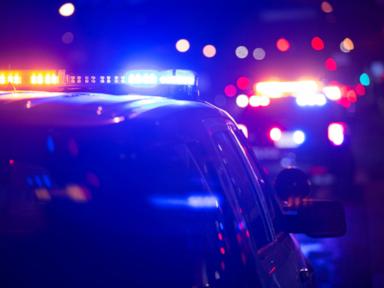
I have spent years covering and living alongside communities shattered by public shootings, and if there is one thing I know with bone-deep certainty, it is that bullets do not respect jurisdictional maps. When violence erupts on the edge of a campus, the psychological fallout engulfs everyone within earshot. A freshman sitting in a dorm room four hundred yards away hears the sirens, sees the flashing red and blue lights reflecting off her ceiling, and receives an automated campus alert warning her to shelter in place. Down the block, a local resident locks his deadbolt and pulls his kids away from the living room window.
For the next several hours, neither of them knows if the threat is over. Information trickles out in fragments—rumors on social media outpacing official police statements by twenty minutes, creating a fog of terror where every slamming door sounds like another gunshot.
What Happens Inside the Trauma Bay
While the public refreshes news feeds waiting for a suspect description, a very different battle is unfolding miles away under fluorescent hospital lights.
Emergency medicine physicians have a grim, clinical term for what high-velocity projectiles do to the human body: cavitation. Unlike a knife, which damages only the tissue it directly touches, a bullet transfers massive kinetic energy into surrounding organs, creating a temporary shockwave cavity inside the body many times wider than the slug itself.
Now apply that physics to a child.
Adult bodies have reserves—more blood volume, larger organs, greater physiological resilience to shock. A child’s body is compact, delicate, and unforgiving. A single wound that might be survivable in a two-hundred-pound man can rapidly become life-threatening in a sixty-pound eight-year-old. Pediatric trauma teams have to work with microscopic precision while racing against plummeting blood pressure, calculating medication dosages by the kilogram in rooms echoing with the cries of terrified parents.
And survival is only the first mile of a marathon nobody trained for.
When the press conference ends and the police chief announces that all twelve victims are expected to survive, the public breathes a collective sigh of relief. "Thank God nobody died," people say, closing the browser tab.
Yet survival in a trauma report is merely the absence of a fatality. It does not account for the third reconstructive surgery six months later. It does not capture the physical therapy required to relearn how to walk, or the colostomy bags, the nerve damage, the chronic pain that flares up every time the barometric pressure drops before a Florida rainstorm.
Nor does it measure what happens to a child’s nervous system after their sense of safety is detonated.
The Architecture of Invisible Scars
To understand psychological trauma, imagine your brain’s threat-detection system as a smoke alarm in your kitchen. Under normal circumstances, it stays silent while you cook dinner, ringing only when there is an actual fire. Severe trauma rewires that alarm so it goes off every time you make toast.
For the six children injured near that Florida campus—and the dozens of other kids who witnessed the chaos—the world has been permanently altered. A backfiring car on the highway. A balloon popping at a birthday party. Fireworks on the Fourth of July. The sudden slam of a locker door in an elementary school hallway. Any of these mundane sounds can instantly trigger a full-body physiological ambush: racing heart, shallow breathing, cold sweat, tunnel vision, and an overwhelming urge to hide.
Parents find themselves navigating a minefield they never asked to enter. How do you explain to a nine-year-old why someone shot at them while they were just standing on a sidewalk? How do you tell them they are safe when both of you know, with undeniable proof, that bad things can happen in broad daylight for no reason at all?
And the trauma doesn't stop with the victims. It radiates outward in concentric circles—a phenomenon psychologists call secondary traumatic stress. The older sister who watched her brother bleed on the concrete. The college students who turned their dorm hallways into impromptu triage centers. The paramedics who loaded children into the backs of ambulances and then had to go home and tuck their own kids into bed at midnight. Every single one of them carries a piece of that night inside them.
The Ritual of Collective Amnesia
There is a predictable choreography to how we process these events in America, and honestly, it is exhausting to watch.
First comes the shock. Local officials step up to a bank of microphones outside police headquarters, their faces grim, offering thoughts, prayers, and assurances that "this does not define our community." University administrators send out carefully worded emails emphasizing that the shooting occurred off-campus while listing phone numbers for student counseling services.
Next comes the search for a tidy explanation. Was it a targeted dispute? Gang-related? An argument that escalated because someone had easy access to a firearm? We crave a motive because a motive creates distance. If we can convince ourselves that the shooter was targeting a specific person for a specific reason, we can tell ourselves a comforting lie: I don't know those people, so I am safe.
But stray bullets have no loyalty to motives. The six children caught in that Florida gunfire were not part of an argument. They were simply occupying space in a country where lethal weapons are routinely brought into crowded public corridors.
By day four, the satellite trucks pack up their cables and drive away to the next breaking story. The yellow crime scene tape is cut down, stuffed into a trash bag, and tossed into the back of a cruiser. Street sweepers wash the blood and chalk marks off the asphalt. Students walk back across that exact intersection on their way to morning lectures, stepping over the faded stains without even realizing what happened beneath their sneakers.
We move on because moving on is the only way we know how to function. Yet every time we treat a mass shooting—especially one that tears through children and students—as an isolated weather event rather than a systemic failure, we normalize the unthinkable. We quietly accept a reality where going to a community event near a college campus carries a non-zero risk of dodging gunfire.
Reclaiming the Ground Beneath Our Feet
So what do we do with the weight of a headline like 12 injured, including 6 children?
We refuse to let those twelve human beings collapse into a statistic. We recognize that behind every police briefing is a family sitting in a hospital waiting room, watching a monitor beep, praying for a fever to break or a surgery to succeed. We hold space for the uncomfortable truth that proximity to a university does not create a force field, and that community safety cannot be outsourced entirely to campus police patrols or reactive emergency alerts.
Real safety requires looking upstream—investing in community violence intervention programs that defuse conflicts before a trigger is ever pulled, funding long-term mental health care for survivors long after the news cameras leave, and demanding accountability for how easily high-powered weapons flow into neighborhoods where children play.
It also requires refusing to look away when the story stops trending.
Three months from now, when the Florida sun is baking that stretch of pavement outside the university, no television cameras will be filming there. There will be no breaking news banners, no urgent push notifications, no press conferences.
There will just be a child walking down that sidewalk, gripping a parent’s hand a little tighter than they used to, flinching slightly every time a car door slams across the street.