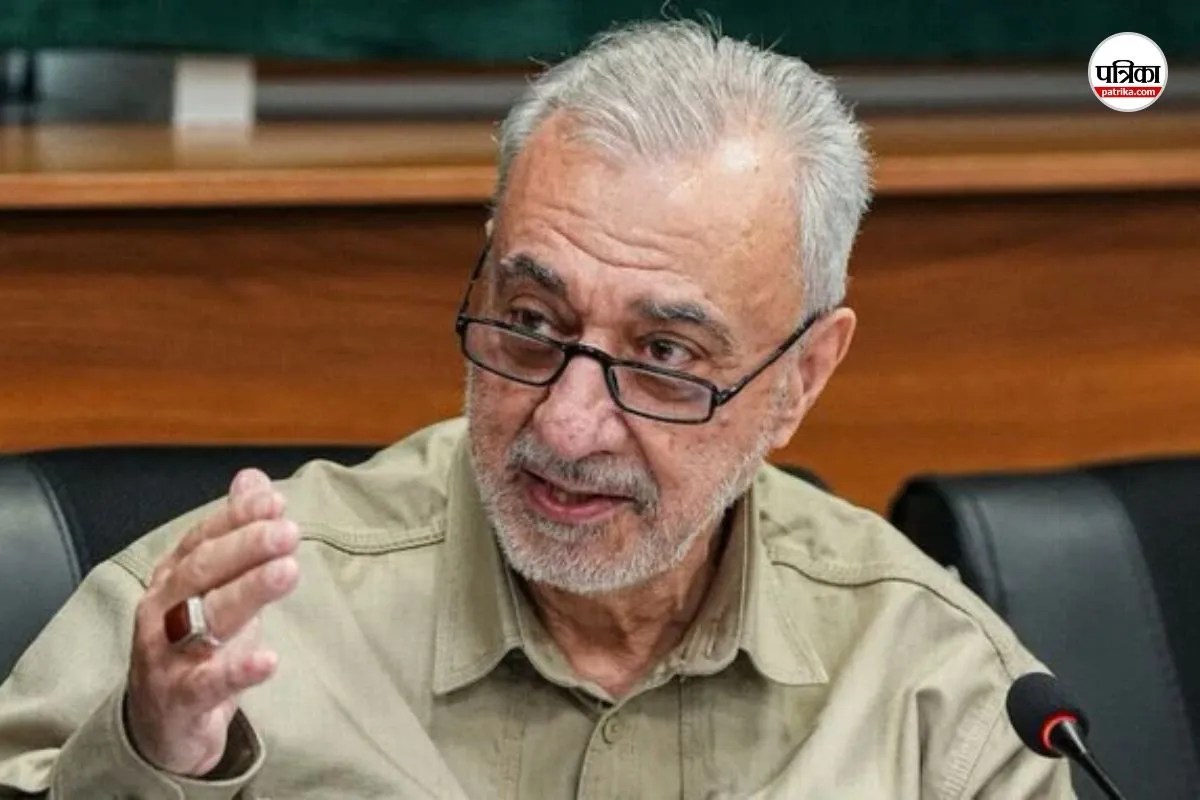
Abdel Fattah el-Sisi says he won’t run again in 2030, and he wants Egypt’s Military Academy to train the people who take his place.
Read that sentence twice. In a country where military officers have run the show almost uninterrupted since 1953, Sisi isn’t proposing a civilian handover or even naming a single heir. Instead, he’s pitching a 30-month training track sponsored by the armed forces—aimed at PhD holders—to shape the next generation of top state and government leaders before his third term wraps up in 2030. For a different look, consider: this related article.
Honestly, it’s one of the most revealing political moves in Cairo in years. Autocrats hate succession crises. Name a clear successor too early, and they become a rival pole of power. Leave the throne empty, and rival factions start sharpening knives behind closed doors. By routing future top officials—and potentially future presidents—through a military-backed academy pipeline, Sisi is trying to lock in institutional continuity without handing a single rival a crown right now.
Whether that 2030 exit holds up is another story altogether. Related insight on the subject has been shared by The Washington Post.
Why Sisi’s Military Academy Plan Changes the Succession Game
For decades, Egypt’s succession playbook looked familiar on paper even when it got messy in practice. Under Hosni Mubarak, appointing a vice president—or keeping everyone guessing about whether his son Gamal would inherit the presidency—created constant tension inside the ruling elite. The 2019 constitutional amendments actually gave Sisi the option to appoint a vice president, yet he has left that seat empty.
When Sisi spoke on October 17, 2026, he paired two big claims: his current six-year term will end in 2030 with no constitutional amendments to extend it, and the armed forces will sponsor a leadership course at the Military Academy to prepare future leaders. Reports indicate the idea envisions PhD holders from reputable universities completing 30 months of full-time training, with a committee—including the speaker of parliament, ministers, and public figures—working out admission criteria and legislative details.
Wait. Think about what that filter does.
A doctorate plus two and a half years inside a military-run academy isn’t a neutral civic school. It’s a tight ideological and class screen. Independent opposition figures, grassroots organizers, labor leaders, or provincial politicians who haven’t cleared state and security vetting aren’t walking into that pipeline. And even before this October announcement, the Military Academy (established in 2022 as an umbrella over military service colleges and technological institutes) was already serving as a state grooming ground. Look at Lt. Gen. Ashraf Zaher, who led the academy from 2022 until February 2026, when he became defense minister.
If you’ve followed Egyptian politics for a while, that connection jumps right off the page. The academy isn’t just teaching spreadsheets and public administration. It’s socializing candidates into a shared worldview of state security, hierarchy, and national order.
The Big Gaps Nobody Has Answered Yet
Sisi gave the headline pitch, not the rulebook. Several glaring questions sit right in the middle of this proposal, and glossing over them makes the plan look much neater than it is.
First, how does an academy training course connect to an election? Sisi stated that Egypt can produce a leader far better than him and asked for public backing, while media coverage has noted discussions around voters choosing among graduates or unresolved links between the training track and electoral rules. If candidates have to pass a state-vetted, military-sponsored program before even reaching voters, critics will call that a managed selection dressed up as choice. Supporters will argue it prevents unprepared populists or chaotic outsiders from taking the wheel of a 100-million-plus-person state. Both arguments are predictable, and neither settles the constitutional mechanics.
Second, why take a 2030 pledge at face value without looking at past turns? Sisi famously said he wouldn’t run for president in 2013 before running and winning in 2014. Later, the 2019 referendum changed presidential terms from four years to six and added a transitional clause allowing him to run for a third term ending in 2030. That history doesn’t prove he’s lying in 2026, and it doesn’t mean he’s telling the whole truth—it just means serious analysts treat any leader’s exit timeline with hard-earned skepticism until the calendar actually runs out.
Third, what happens if economic strain or regional shocks hit harder between now and 2030? Egypt’s next president—whoever they are—won’t inherit a blank slate. As Alhurra and Middle East Eye have noted, whoever follows Sisi will still have to manage domestic discontent, keep ties steady with Washington, and navigate heavy regional pressures. Right now, Cairo is juggling plenty: Parliament voted in late October 2026 to authorize measures supporting Saudi Arabia if requested, while domestic pressures around energy, food supply chains, and governance keep testing the government.
Military Continuity Versus Civilian Politics in Egypt
Let’s be real about Egypt’s political history. Since the 1952 revolution and the declaration of the republic in 1953, nearly every Egyptian president—Nasser, Sadat, Mubarak, and Sisi—came out of the armed forces. Mohamed Morsi was the lone exception after the 2011 uprising, and the military removed him in July 2013 when Sisi was defense minister.
Because that baseline is so strong, a military-backed leadership track feels less like a radical rupture and more like an institutional upgrade to an old system. Think about the difference between personal rule and institutional rule:
- Personalist succession revolves around one strongman’s personal loyalty network, family ties, or last-minute handpicked favorite. It’s brittle if the leader leaves unexpectedly.
- Institutionalized military-state succession tries to standardize who gets groomed, tested, and trusted across the bureaucracy and security establishment before a transition happens.
From the perspective of Cairo’s ruling establishment, training a cohort of credentialed technocrats and insiders inside a military framework looks like orderly risk management. From the perspective of opposition figures and democratic reformers, it looks like building a velvet rope around the presidency. Neither side is confused about what’s at stake. They just read the exact same mechanism in opposite ways.
Practical Ways to Track What Happens Next
If you’re watching Egypt’s political trajectory between now and 2030, don’t get lost in vague speeches. Watch the paper trail and personnel moves instead.
- Read the draft legislation and committee mandate. Pay close attention to who sits on the committee shaping admission criteria and what legal weight—if any—the 30-month course carries for public office or presidential eligibility.
- Watch senior security and intelligence appointments. Analysts like Charles W. Dunne, a nonresident fellow at the Arab Center Washington, D.C., have pointed to figures within Sisi’s orbit—such as General Intelligence Service chief Maj. Gen. Hassan Rashad—as names worth watching alongside institutional channels. Tracks moves across intelligence, defense, and the Military Academy to see whether power consolidates around one person or spreads across a cohort.
- Track constitutional chatter ahead of 2028–2029. Sisi has said no constitutional changes are planned to extend his term, so any trial balloons, parliamentary petitions, or legal debates around term limits will be an early tell on whether 2030 stays a hard stop.
- Compare economic bandwidth with foreign commitments. Watch how Cairo balances domestic economic pressures against regional security moves, because acute economic stress usually forces political plans to adapt faster than leaders expect.