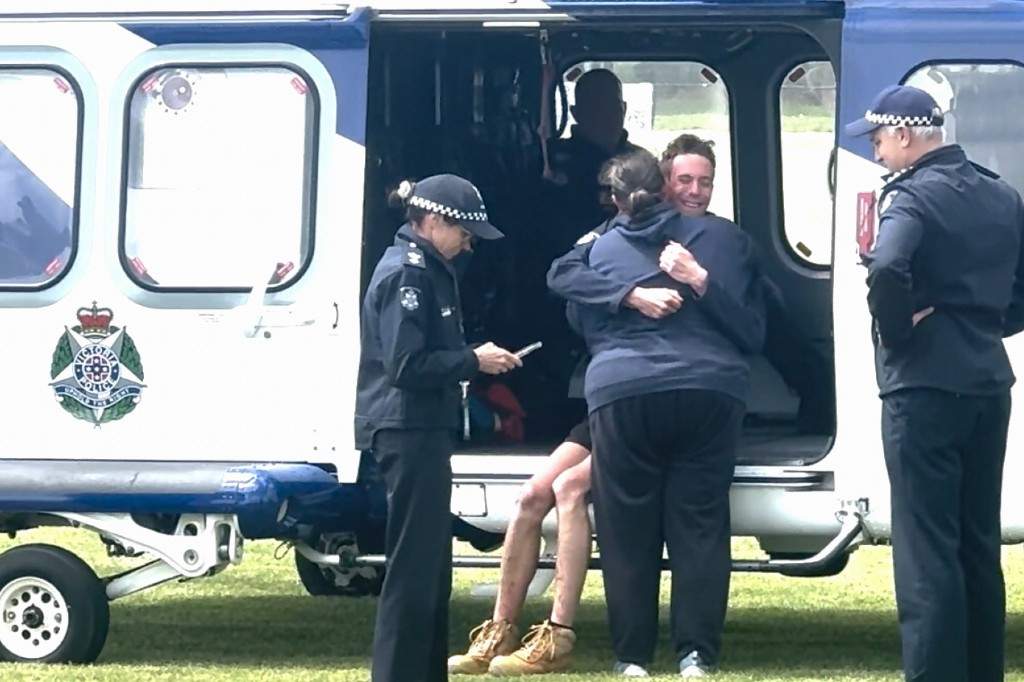
When a missing 17-year-old walked out of the Australian woodlands alive after six days, local headlines celebrated a miracle of youthful grit and emergency response. That narrative misses the uncomfortable truth. Surviving nearly a week in the Australian bush without specialized gear comes down to acute physiological luck, terrain variables, and a search-and-rescue model that routinely struggles against dense eucalyptus canopies and rapid dehydration.
The teenager vanished into rugged timberland, triggering a multi-agency ground and air operation before emerging alive six days later. While relief followed the rescue, the incident exposes a recurring blind spot in how wilderness disappearances are reported and managed across Australia.
The Myth of the Wilderness Miracle
Media coverage of bush rescues almost always defaults to emotional relief. Reporters focus on tearful reunions and praise the sheer determination of the survivor. That framing obscures the brutal math of human physiology in the Australian outdoors.
A healthy human body loses roughly 1.5 to 2 liters of water per day just through respiration and baseline perspiration in mild conditions. Under physical exertion in dry woodland air, fluid loss spikes past 1 liter per hour. Without a reliable water source, cognitive decline begins within 36 hours, and fatal organ failure typically sets in between days three and five.
Surviving six days means the teenager either found accessible surface water, benefited from unusually cool ambient temperatures, or minimized movement enough to conserve fluids. None of those factors are guaranteed by willpower. Calling a six-day survival a triumph of spirit encourages a dangerous misconception among casual hikers and young outdoor enthusiasts that determination alone can outlast hostile terrain.
How the Australian Woodlands Defeat Modern Search Tech
Public perception assumes that modern search teams deploy thermal drones, satellite tracking, and helicopters to spot a lost person within hours. In the Australian bush, those tools routinely fail.
Dense eucalyptus and acacia canopies create a thick overhead barrier that blocks both optical cameras and forward-looking infrared (FLIR) sensors. Even more problematic is ambient thermal clutter. Australian woodlands retain significant heat in rocks, tree trunks, and decomposing leaf litter long after sunset, creating thousands of false heat signatures that mask a human body from aerial scanners.
Ground teams face an equally punishing environment. Thick undergrowth, steep gullies, and featureless ridgelines cut visibility to less than ten meters in many zones. A searcher can walk twenty paces past an immobile or sleeping person hidden behind a fallen gum tree and never see them.
The Behavioral Trap of Lost Teenagers
Search planners rely on lost person behavior profiles to map probability zones. Adults typically follow predictable patterns based on their activity, such as sticking to fire trails or heading downhill toward water. Teenagers are notoriously difficult to model.
Adolescent decision-making under acute stress often swings between impulsive movement and sudden immobilization. Consider a hypothetical example of a 17-year-old realizing they have lost the trail at dusk. Panic drives them to push straight through thick scrub rather than backtracking, carrying them far outside the initial search radius within two hours. By day two, exhaustion sets in, and they crawl into a hollow log or dense thicket to escape wind or cold, effectively hiding themselves from passing ground crews.
When a missing teenager stays mobile during the first 24 hours, every kilometer traveled expands the search area exponentially. A two-kilometer walking radius covers roughly 12.5 square kilometers. A five-kilometer radius balloons to nearly 80 square kilometers of dense bushland.
Where Emergency Response Hits Its Limits
Australian State Emergency Service (SES) volunteers, police search and rescue squads, and local bushfire brigades execute some of the most demanding ground searches in the world. Their commitment is beyond question. Their structural constraints are another matter entirely.
Most regional woodland searches rely heavily on unpaid volunteers who must leave full-time jobs to walk line searches through punishing terrain. Fatigue sets in by day three, reducing visual scanning efficiency across search lines.
Communication infrastructure adds another layer of friction. Cellular dead zones cover vast stretches of state forests and national parks, often starting just a few kilometers off major highways. Without mobile tower pings to triangulate a last-known location, incident commanders are forced to build search grids from rough guesswork and witness timelines.
- Delayed reporting windows: Families often wait hours before alerting authorities, assuming a teenager is with friends or ignoring their phone.
- Battery depletion: Smartphones searching for weak signals in dense timber drain their batteries in a fraction of normal standby time.
- Topographical distortion: Sound carries unpredictably in gullies, causing lost individuals to walk away from rescue whistles and vehicle sirens rather than toward them.
The Gear Gap Nobody Addresses
Whenever a teenager goes missing in the bush, public commentary inevitably turns to personal responsibility. Critics ask why they did not carry a Personal Locator Beacon (PLB), a topographic map, or extra water. That criticism ignores how teenagers actually enter woodland areas.
Most young people lost in Australian scrub did not set out on a multi-day expedition. They went for an afternoon walk, rode a trail bike, or wandered off from a campsite expecting to return before dark. People do not pack $400 satellite messengers for a 30-minute walk behind a suburban fringe or rural property.
Yet Australia's urban-bushland interface puts lethal terrain directly adjacent to residential areas and popular picnic spots. Crossing from a marked walking track into disorienting bush takes less than five minutes. Once visual contact with the trail is lost, identical tree lines and scrub eliminate natural landmarks.
What Actually Keeps Survivors Alive Past Day Three
Analyzing multi-day bush survivals reveals a consistent set of behaviors that separate those who walk out from those who do not. None of them involve heroic endurance.
First is stopping movement early. Survivors who stay put once they realize they are lost preserve critical hydration and keep themselves within the high-probability search zone calculated by police commanders. Second is micro-shelter construction. Hypothermia kills even in temperate Australian regions when overnight temperatures drop and wind strips body heat. Using dry bark, bracken, and leaf litter for ground insulation prevents conductive heat loss into cold soil.
Third is passive signaling. Shouting wastes moisture and energy while carrying only a few hundred meters through dense timber. Survivors who clear small patches of ground, lay out bright clothing in open canopy gaps, or use reflective surfaces dramatically increase their odds of detection by aerial observers.
The Uncomfortable Truth About Future Searches
Celebrating a six-day survival without examining why the search took six days guarantees the same vulnerabilities will repeat during the next disappearance. Thermal technology still struggles beneath heavy eucalyptus cover, volunteer resources remain stretched across massive rural jurisdictions, and casual visitors continue to treat fringe bushland like a city park.
Until public safety campaigns stop romanticizing miraculous endurance and start teaching basic stay-put protocols alongside accessible offline phone tracking, every multi-day woodland rescue in Australia will remain a gamble against dehydration and time.