At 4:12 in the afternoon, Terminal C at Newark Liberty International Airport did not erupt into chaos. It simply froze.
Silence.
That is the detail nobody mentions when they write about modern aviation failures. You expect shouting. You expect frantic gate agents pounding on keyboards and passengers waving paper boarding passes in the air like white flags. Instead, you get the low, fluorescent hum of a terminal holding its breath while forty-two departure screens simultaneously turn into rows of identical yellow blocks reading DELAYED.
Consider a hypothetical traveler we will call Marcus. He is sitting near Gate C102, nursing a lukewarm coffee that cost nine dollars, staring at a boarding pass that was supposed to put him in Chicago in time for his sister’s rehearsal dinner. Across the aisle, a woman in a navy blazer is trying to refresh an airline app that refuses to load, her thumb tapping the glass with a rhythm that grows faster every thirty seconds. Neither of them knows yet that a line of broken code in a server room hundreds of miles away has just severed the digital nervous system of one of the largest airlines on earth.
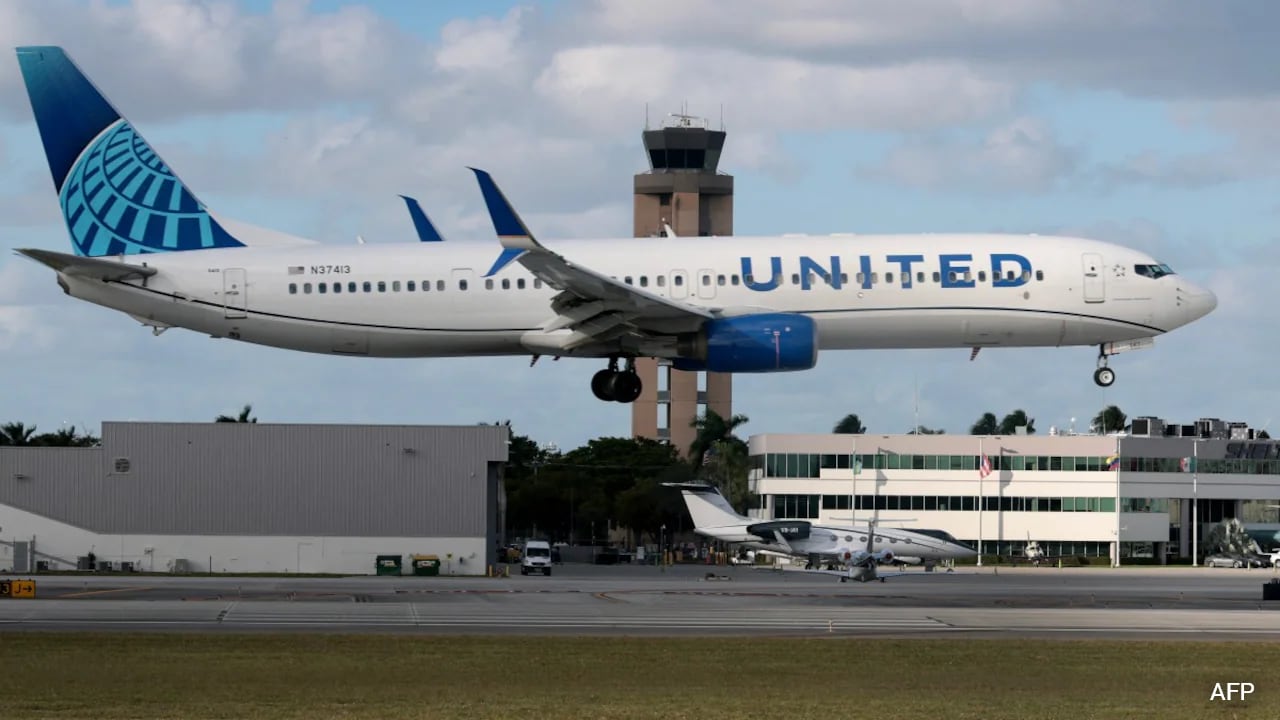
When a carrier the size of United Airlines suffers a widespread technology outage, the press releases always arrive later, scrubbed clean of panic and dressed in corporate sedatives. They talk about "connectivity issues," "system restoration," and "working diligently to resume normal operations." They tell you the problem is resolved. They rarely tell you what actually broke, why an invisible software glitch can pin hundreds of tons of aluminum to the concrete, or what happens inside the human bloodstream when the machinery of modern travel suddenly forgets how to work.
The Architecture of an Invisible Traffic Jam
To understand how a single technology failure brings an airline to its knees, stop thinking about airplanes. Start thinking about a symphony orchestra trying to play a complex piece while blindfolded and wearing earplugs.
An airplane cannot leave a gate simply because the pilot is ready and the fuel tank is full. Before those wheels roll backward by a single inch, a dozen separate software systems have to shake hands in the dark. One database calculates the exact weight of the luggage in the belly to determine how much runway the jet needs to lift off. Another checks the crew’s legal duty hours down to the minute so nobody violates federal fatigue limits. A third files the flight plan with air traffic control, while a fourth confirms that every passenger scanned at the door actually matches a bag in the hold.
Think of the airline’s central computer network as the air traffic controller of the ground. When that system goes dark—or worse, starts stuttering—the physical airplanes are completely fine. The engines work. The weather is clear. The pilots are sitting in the cockpit ready to fly. Yet the entire operation turns into a brick wall because federal safety rules strictly forbid flying blind without verified weight, balance, and dispatch data.
I have sat on the tarmac during one of these digital blackouts, watching baggage handlers lean against their tugs with their arms crossed, staring up at the cockpit window while the captain waits for a piece of paper to be printed at the gate and physically walked down the jet bridge. The smell of jet fuel seeps through the cabin vents. The air conditioning clicks off as the auxiliary power unit cycles down to save fuel. Inside the cabin, two hundred strangers slowly realize that nobody on board actually knows whether they will be sleeping in their own beds tonight or on a carpeted floor next to a Cinnabon.
That uncertainty is the real weight of a widespread outage. It is not the lost hours. It is the sudden loss of agency.
The Domino Effect Nobody Sees on the Departure Board
When United Airlines issues a ground stop—an official order halting all departures across its domestic hubs—the public tends to picture a pause button. You press pause, you fix the computer, you press play, and everyone picks up right where they left off.
Aviation physics does not care about your pause button.
Consider what happens next: a flight scheduled to leave Houston at 2:00 PM is held on the ground for ninety minutes while engineers trace a corrupted network packet or a failing database server. When the system finally comes back online, that plane takes off ninety minutes late. By the time it lands in Denver, the crew working the flight has hit their federally mandated maximum work hours. They are legally required to walk off the plane and go to a hotel.
Now you have a working airplane sitting at a gate in Denver, full of fuel and ready to fly to Seattle, with no pilots to fly it. Meanwhile, the flight attendants who were supposed to staff that Denver-to-Seattle leg are stuck on a different delayed plane sitting on a taxiway in Chicago. Across the country, gates begin clogging up like drains filled with hair. Arriving flights cannot pull in because departing flights cannot push back. Passengers start missing connections by twelve minutes, then forty minutes, then six hours.
Historically, this cascading failure has haunted every major American carrier at one point or another. From the notorious holiday meltdown at Southwest Airlines in late 2022 to the CrowdStrike-induced paralysis that crippled Delta Air Lines in the summer of 2024, the pattern never changes. Modern airlines operate on razor-thin margins of efficiency. Every aircraft is scheduled to fly as many hours a day as humanly and mechanically possible, leaving almost zero slack in the rope. When technology snaps that rope, the recoil hits thousands of miles away from the server that actually failed.
Why Airlines Still Run on Digital Duct Tape
It is fair to ask how a multi-billion-dollar industry can still be felled by a single technology glitch. If your smartphone crashes, you hold down two buttons, wait thirty seconds, and you are back online. Why can an airline not just reboot?
The honest, slightly unsettling truth is that legacy airlines are built like medieval castles renovated with modern drywall. Beneath the sleek mobile apps that let you track your luggage and order a snack box from Seat 14B lies a labyrinth of mainframe architecture, some of it rooted in code written when Richard Nixon was in the White House. Over decades of mergers—United’s own integration with Continental Airlines in 2010 required stitching together two massive, incompatible reservation systems—airlines have layered new cloud interfaces over old foundational databases.
When everything runs smoothly, that hybrid machine is a marvel of logistics, moving hundreds of thousands of people across oceans every single day with a safety record that borders on miraculous. But when one bridge between the old code and the new code collapses, engineers cannot simply unplug the wall and plug it back in. They have to trace millions of real-time transactions—seat assignments, crew pairings, maintenance logs, fuel loads—to make sure restarting the system does not scramble the data and create a safety hazard.
I admit, whenever I stand at a gate during an outage and listen to the automated announcements repeat the same hollow apologies, my first instinct is anger. You feel like a hostage to incompetence. Yet the deeper you look into how aviation safety actually works, the more that anger shifts into a grudging respect for why they stop everything. In almost every other industry, if the software glitches, you push through and fix the paperwork later. In aviation, if the paperwork is wrong, people die. The ground stop is frustrating precisely because the safety net is doing its job.
Surviving the Freeze When the Screens Go Yellow
If you fly often enough, you will eventually find yourself standing in Marcus’s shoes, staring at a frozen gate screen while the airline’s website spins endlessly in a browser tab. Most travelers make the exact same mistake in those first ten minutes: they join the physical line at the customer service desk.
Do not get in that line.
By the time a hundred people form a queue at Gate C102, the single exhausted agent behind that counter is dealing with the exact same frozen terminal screen you are looking at on your phone. Worse, while you stand in line for forty-five minutes, travelers who understand how airline recovery works are already snatching up the last remaining seats on the next morning’s flights.
When a widespread technology issue strikes, treat it like a sudden storm at sea and move immediately on three fronts:
- Call the international support line. While domestic customer service numbers are choked with tens of thousands of panicked callers, an airline’s foreign support desks—such as the numbers listed for the United Kingdom, Canada, or Singapore—often connect to global reservation agents with lower call volumes and the exact same access to rebooking tools.
- Use the app’s automated rebooking tool before talking to a human. Once the core servers come back online, self-service algorithms unlock inventory faster than a human agent can type commands into a green-screen terminal.
- Know your rights under federal rules. Under U.S. Department of Transportation guidelines, when an airline cancels or significantly delays a flight due to a controllable issue—and internal technology failures fall squarely into that category—the carrier is obligated to rebook you on its own flights at no extra cost, and major airlines like United have committed to providing meal vouchers and hotel accommodations when an outage strands you overnight. If you choose not to travel at all because of the delay, you are legally entitled to a full cash refund, not just a travel credit, regardless of what kind of ticket you bought.
The Long Road Back to Normal
When United Airlines finally announces that its technology issue is resolved and the ground stop has been lifted, the headlines move on within an hour. The stock ticker barely twitches. On paper, the crisis is over.
Inside the terminals, the recovery takes another forty-eight hours.
Watch what happens at the gate the moment the yellow DELAYED banner finally flips to BOARDING. A collective sigh rolls down the concourse. Strangers who were glaring at each other over power outlets ten minutes ago suddenly help each other hoist carry-on bags into overhead bins. The gate agent’s voice cracks slightly over the intercom as she thanks everyone for their patience, and for once, you can hear the genuine exhaustion behind the script.
Marcus eventually makes it onto a plane, three hours behind schedule. He will miss the rehearsal dinner, though he will still make the wedding in the morning. As the jet pushes back from the gate and the engines spool up into that familiar, reassuring roar, he looks out the small oval window at the rows of tail fins lined up along the tarmac, each one lit by the orange glow of sodium vapor lamps against a dark New Jersey sky.
Somewhere out there in the night, millions of lines of code are quietly humming again, invisible and weightless, holding four thousand metal tubes in the sky on nothing more than math and trust.