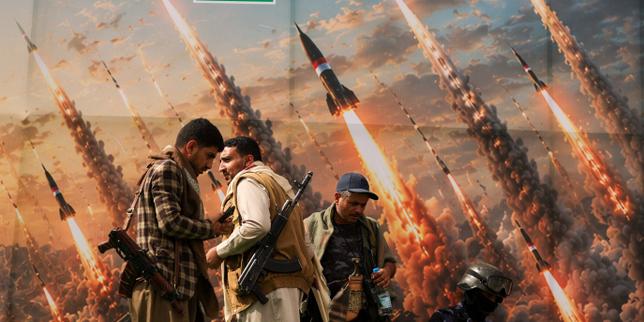
Dawn in the southern reaches of the Arabian Peninsula does not arrive with a gentle gradient of color. It breaks like a dropped plate. One moment the horizon is bruised purple, the stars still sharp as broken glass against the dark, and the next, a blinding, brassy glare strips the shadows from the dunes.
In a quiet control room miles from the nearest tarmac, Tariq listens to the steady, rhythmic beep of a radar sweep. He has heard that sound for ten thousand hours. It is the heartbeat of a vigilance that never sleeps, never blinks, and never truly feels safe. For a more detailed analysis into this area, we suggest: this related article.
Then, the tone changes.
A sharp, jagged squeal slices through the low hum of the monitors. A signature. Small, low-flying, persistent. For broader information on this topic, detailed reporting can also be found at NBC News.
Millions of lives across the globe move in an oblivious rhythm of morning traffic, spilled coffee, and glowing smartphone screens. Yet here, in the fragile architecture of radar echoes and altitude calculations, an invisible thread snaps. The Houthis, backed by the sprawling logistical and ideological apparatus of Iran, have launched another projectile toward the humming machinery of a Saudi Arabian airport.
To read about this in a ticker tape of breaking news is to digest a dry equation. Militants target infrastructure. Interception successful. Condemnations follow. The words slide off the mind like water on oiled glass. They treat geography as a chalkboard and conflict as a distant weather pattern.
We forget the glass.
Consider what happens when a delta-winged piece of crude engineering hits a civilian terminal. Consider the shatter of tempered panes designed to let the morning sun into a duty-free lounge. Consider the flight attendants pulling rolling suitcases toward a gate they will never reach, halting as the air pressure drops and the sirens begin their unholy wail.
Wars used to have frontlines. They were painted on maps with grease pencil, neat little arrows marching across valleys and rivers. Today, the front line is wherever a drone can carry a payload of high explosives, blurring the line between a soldier hunkered in a trench and a baggage handler drinking sweet tea from a paper cup.
The mechanics of this escalation are not born in a vacuum. For years, the conflict in Yemen has ground through phases of diplomatic exhaustion and sudden, violent flare-ups. The alignment between the Houthi movement and Tehran is an open secret of modern geopolitics, functioning through a pipeline of smuggled components, technical expertise, and strategic alignment. Every launch is a calculated message written in fire across the sky, a reminder that local grievances are now deeply tethered to regional power struggles.
When a missile arcs toward an airport in Abha or Khamis Mushait, the target is not merely concrete and runway lights. The target is predictability.
Trade routes falter. Insurance premiums for cargo ships entering the Red Sea spike by staggering margins. Families separated by borders wait weeks longer for flights that are abruptly canceled. A ripple starts in a mountain stronghold in Sanaa and ends with an empty grocery shelf or a delayed shipment halfway across the world.
Tariq does not think about supply chains as he watches the green blip on his screen. He thinks about milliseconds.
His fingers move across a console with the practiced coldness of a pianist playing a requiem. He identifies the trajectory. He calculates the intercept. The system responds, a counter-measure launching into the dawn with a roar that rattles the concrete foundations of the bunker.
Up above, in the pale blue of the upper atmosphere, two creations of human ingenuity collide. One is designed to destroy; the other is designed to protect. The resulting flash is silent from the ground, a brief, violent star blooming for a fraction of a second before dissolving into white smoke.
Silence returns to the control room.
Except the silence is a lie.
Down the coast, oil tankers alter their courses, captains staring anxiously at radar screens, wondering if the next speck on the horizon is a friendly buoy or a floating explosive. In capital cities hundreds of miles away, diplomats curse softly over cold coffee, rewriting press releases that will do nothing to stop the next launch. In mountain villages where children play among the rubble of forgotten airstrikes, another battery is being wheeled into position under the cover of a starless night.
We live in an era that worships speed. We want our news instantaneous, our connections frictionless, our borders permeable to everything except danger. Yet safety is not a natural state of being. It is a thin, frayed net held together by people like Tariq, by millions of invisible calculations, and by the fragile hope that reason might one day outpace ruin.
The smoke above the desert disperses slowly, thinning into nothingness against the vast, indifferent blue. But the wind keeps blowing. And the screens keep watching.

.png?itok=1mb05mKJ)

