Jean-Louis Guichard does not own a smartphone. He owns four hectares of clay and limestone in the heart of Bordeaux, a pair of pruning shears that belonged to his grandfather, and a quiet, bone-deep anxiety that wakes him up at four in the morning. For generations, the formula for survival here was simple. You tended the vines. You watched the sky. You weathered the frost, prayed against the hail, and trusted that if the liquid in the bottle was exceptional, the world would buy it.
Now, the math has changed. Jean-Louis is realizing that the future of his vineyard is no longer being decided by the fickle Atlantic weather or the quality of his topsoil. It is being decided in sterile, air-conditioned boardrooms in Silicon Valley and on the brightly lit stages of political rallies Washington, D.C.
A shadow war is brewing between the Old World and the New. It is a collision between two fundamentally different types of wealth: the physical, slow-yielding tradition of agricultural heritage and the weightless, lightning-fast dominance of digital data. When a government decides to tax a trillion-dollar tech giant, the retaliation does not hit the software engineers or the data centers. It falls squarely on the shoulders of the people who dig their hands into the dirt.
The Cloud Meets the Clay
To understand how a bottle of French wine ended up in the crosshairs of a global trade dispute, you have to look at how the modern economy is built. For decades, international tax laws were designed for physical things. If a company built a factory in a country, sold products there, and used local infrastructure, that country taxed the profits. It was a clear, tangible arrangement.
Then came the internet.
Suddenly, some of the wealthiest corporations on Earth could operate inside a country without ever opening an office there. A teenager in Paris scrolls through Instagram, clicks an ad, and buys a pair of sneakers. The transaction happens entirely in the digital ether. The data is processed in Ireland. The profits flow back to California. The French government looks at this massive economic activity happening within its borders and sees a ghost. Local brick-and-mortar shops pay taxes on their physical storefronts, but the digital giants operate with a ghostly tax footprint.
France grew tired of chasing ghosts. The government introduced a three percent tax on the digital revenues of massive tech companies operating within its borders. It was a direct shot across the bow of American tech hegemony. The logic in Paris was straightforward: if you profit off our citizens' data, you pay for the privilege.
But Washington saw it differently. To the American administration, this was not a modernization of the tax code. It was a targeted strike against American innovation. It was an assault on Google, Apple, Facebook, and Amazon.
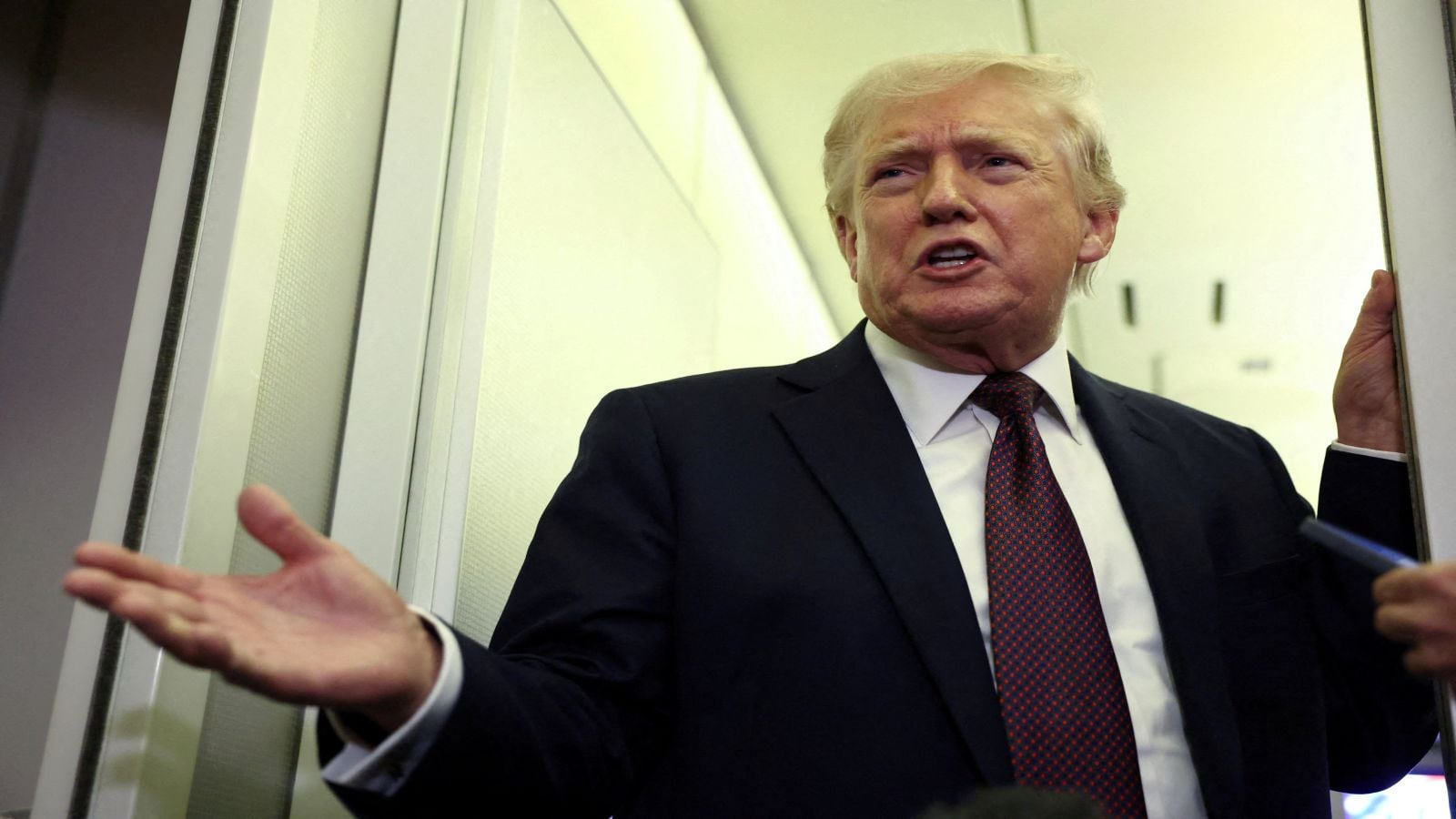
The response was swift, calculated, and asymmetrical. The American president threatened a retaliatory measure designed to inflict maximum cultural and economic pain: a 100 percent tariff on French wines, cheeses, and luxury goods.
Consider the sheer asymmetry of this weapon. A disagreement over how to tax the invisible movement of data bytes resulted in a threat to double the price of a bottle of fermented grape juice on the shelves of wine shops in New York and Chicago.
The Collateral Damage of a Modern Trade War
Trade wars are rarely fought by the people who start them. They are fought by proxy, using industries that have nothing to do with the original grievance.
For an independent French winemaker, the American market is not just a line item on a spreadsheet. It is the lifeblood of their business. Over decades, small estates spend thousands of hours traveling across the Atlantic, hosting tastings in small midwestern towns, shaking hands with distributors, and building relationships based on trust and shared passion.
Imagine a bottle of Bordeaux that costs $20 to produce, ship, and distribute. Under a normal tariff structure, it sits on an American retail shelf for roughly $35. It is an affordable luxury for an American family celebrating an anniversary or a promotion.
Now, apply a 100 percent tariff.
Suddenly, that same bottle costs $70. It moves from the realm of the weekend indulgence to the realm of the untouchable. The consumer does not look at the price tag and think about international digital tax policy. They simply reach for a bottle from California, Chile, or Australia instead.
The pipeline dries up instantly. The American distributor cancels their orders because they cannot sell inventory at double the price. The importer backs away. Back in France, the bottles pile up in the cellars. The bills still need to be paid. The workers who pick the grapes still need their wages. The barrels still cost hundreds of euros each.
This is the hidden friction of globalization. When software companies optimize their tax strategies, the fallout lands on the agricultural working class. The tech executives do not lose their jobs. Their stock options do not vanish. It is the family-owned vineyard, operating on razor-thin margins and dependent on centuries of tradition, that faces bankruptcy.
The Illusion of the Level Playing Field
The debate over the Digital Services Tax reveals a deeper, more troubling truth about the modern global economy. We are trying to govern a 21st-century digital reality using 20th-century geopolitical tools.
Tariffs are a blunt instrument from an era of steel mills and coal mines. They were designed to protect domestic manufacturing by making foreign goods more expensive. But you cannot slap a tariff on an algorithm. You cannot intercept a line of code at a customs checkpoint. Because the digital economy is largely untouchable by traditional border controls, governments resort to holding physical goods hostage.
It creates a strange, distorted reality where the physical world is penalized to protect the virtual one.
Critics of the French tax argue that it unfairly singles out American firms, disrupting the delicate balance of international commerce. They warn that if every nation creates its own bespoke digital tax system, it will lead to a chaotic patchwork of regulations that suffocates innovation. Small tech startups, trying to scale globally, could be crushed under the administrative weight of complying with dozens of different national tax schemes.
There is validity to that fear. The internet succeeded precisely because it was borderless. It allowed an entrepreneur in a garage to reach a global audience overnight. Splintering that ecosystem with localized digital tariffs could slow down the velocity of technological progress.
But the alternative is equally unsustainable. Local communities feel the tangible effects of the digital revolution—the closure of local retail shops, the automation of jobs, the concentration of wealth in a few specific geographic hubs—without seeing the tax revenue necessary to repair the social fabric. A country cannot fund its schools, pave its roads, or support its healthcare system on the promise of an open internet alone. They need cold, hard revenue.
The tension is real. The anxiety is justified.
The Human Cost Behind the Percentages
When these conflicts play out on the news, they are presented as a series of numbers and political soundbites. We hear about "100 percent tariffs," "billion-dollar valuations," and "retaliatory measures." The language is intentionally clinical. It strips away the humanity of the situation, turning a deeply personal crisis into a game of geopolitical chess.
But look closer at the board.
Behind every bottle of wine caught in this dispute is a network of human lives. It is the cooper who spends days curing oak staves over an open fire to build the perfect barrel. It is the truck driver who transports the crates to the port of Le Havre. It is the small-business owner in Ohio who risked their life savings to open a boutique wine shop, whose shelves depend on the predictability of international trade.
These people have no say in how Google structures its corporate tax identity. They do not have a seat at the table when the French parliament debates economic policy. Yet, they are the ones who bear the risk.
The true cost of this standoff is the erosion of predictability. Business requires stability to survive. A winemaker must plant vines today that will not produce usable fruit for five years. They must invest in equipment that takes a decade to pay off. How can anyone plan for the long term when a single tweet or an unexpected policy shift in a foreign capital can instantly double the cost of doing business overnight?
The risk premium is becoming too high for the little guy. The system is tilting in favor of the entities that are large enough, liquid enough, and agile enough to pivot when the political winds shift. A multinational tech corporation can shift its intellectual property to a different jurisdiction with the click of a button. A vineyard cannot move its soil.
A Fragile Balance
The sun sets over the Gironde estuary, casting a long, golden light across the rows of vines. Jean-Louis walks the perimeter of his property, touching the leaves, checking the development of the young grapes. The silence here is immense, broken only by the rustle of the wind and the distant hum of a tractor.
It feels insulated. It feels permanent. But it is an illusion.
The wires that stretch across the ocean floor, carrying petabytes of data between continents, are invisibly tied to these roots. The friction generated by the wealth of the digital age is generating a heat that threatens to scorch the oldest traditions of the physical world.
We are moving into an era where the definition of sovereignty, value, and taxation will be constantly contested. The battle over the digital services tax is not a temporary disagreement between allies; it is the opening salvo in a long, complicated struggle to determine who pays for the infrastructure of the modern world.
As the political posturing continues in distant capitals, the people who work the land can only wait and watch. They are caught in the middle of a war they did not start, fought with weapons they do not understand, over a treasure they cannot see. The grapes will continue to grow, the wine will continue to ferment, but the ultimate destination of the harvest remains entirely out of their hands.